

Members of Congress could be in line for a pay rise after a federal judge weighed in on the potentially thorny issue.
For years, U.S. lawmakers have voted against enacting the cost-of-living adjustment (COLA) rule established in 1989 to keep their salaries in line with inflation, meaning their annual pay has been fixed at $174,000 since 2009.
Representatives and senators have been acutely aware of the optics of voting to increase their salaries, especially at a time when tens of millions of Americans are facing wage stagnation and a cost-of-living crisis. The median U.S. household income is currently just over $80,000 a year.
However, U.S. Court of Federal Claims Judge Eric Bruggink wrote in a preliminary opinion last week that Congress repeatedly voting down the COLA rule violates the 27th Amendment, which states that any changes to congressional salaries cannot take effect until after an intervening election.

Bruggink’s opinion is only preliminary, and any changes to lawmakers’ salaries would likely come only after further legal battles that could last months.
But several lawmakers, including veteran Maryland Rep. Steny Hoyer, have long argued through the courts that congressional salaries should increase in line with inflation and that current pay levels are too low. Speaking to Politico, the Maryland Democrat said the judge’s ruling made “clear that what we were doing is not constitutional.”
One of the main questions surrounding COLA increases is whether members of Congress should receive back pay for the years in which no salary increases were granted. It has been argued that Hoyer, who has served continuously since the COLA law took effect, could be owed up to $420,000.

Bruggink acknowledged in his opinion that several questions must be answered before any salary increases take effect, including whether previous COLA cancellations should be taken into account, voided, or delayed.
“I wouldn’t expect members of Congress to see their next paycheck go up,” Daniel Schuman, executive director of the nonpartisan American Governance Institute, told Politico. “What this court is dealing with is the lawsuit for back pay.”
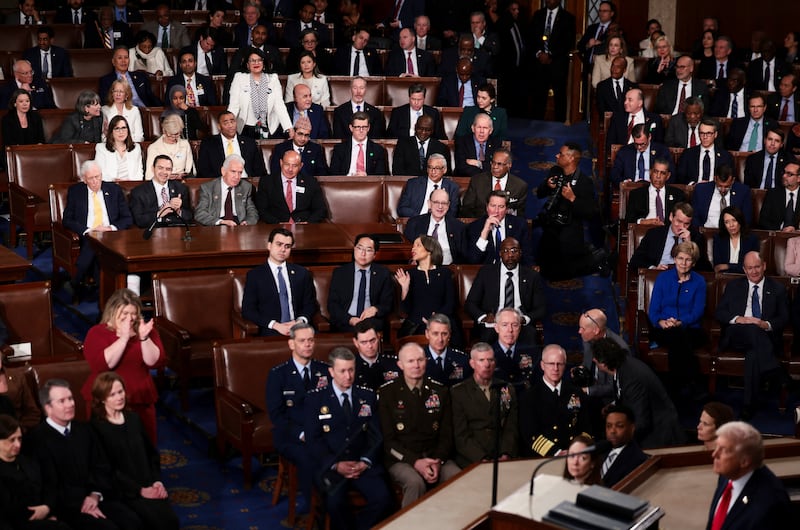
Rep. Rosa DeLauro, the top Democrat on the House Appropriations Committee, acknowledged that it may not be the best look for lawmakers—who already earn far more than most Americans—to vote themselves pay raises.
“The American people, they’re working hard, and their wages have just not caught up,” DeLauro said. “We shouldn’t be taking care of ourselves and not helping... the American people.”
Earlier this month, House Speaker Mike Johnson, who has an annual salary of nearly $225,000 defended members of Congress trading stocks despite ethical concerns, arguing that it helps supplement their $174,000 salaries.
“The salary of Congress has been frozen since 2009. If you adjust for inflation, a member of Congress today is making 31 percent less than they made that year,” Johnson said. “Over time, if you stay on this trajectory, you’re going to have less qualified people who are willing to make the extreme sacrifice to run for Congress.”
“So, the counterargument is, and I have some sympathy, ‘Look, at least let them engage in some stock trading so that they can continue to, you know, take care of their family.’”