White House Press Secretary Karoline Leavitt attempted to walk back President Donald Trump’s call for Republicans to “nationalize” elections after the president’s comments raised constitutional concerns.
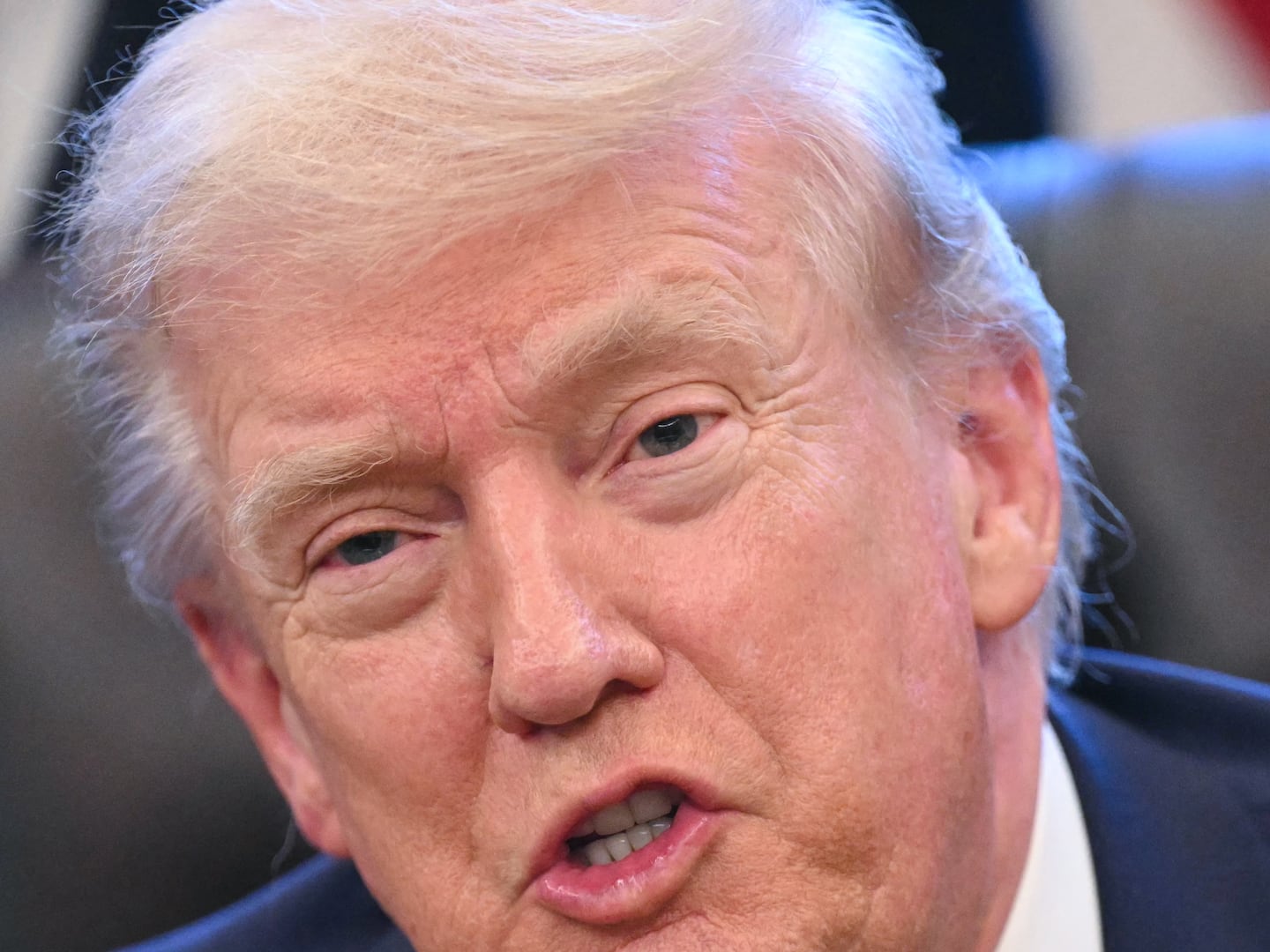
Trump suggested Republicans should take over elections during a podcast interview with former FBI Deputy Director Dan Bongino on Monday.
“The Republicans should say, we want to take over,” Trump, 79, declared while arguing without evidence that immigrants were being brought to the U.S. to vote illegally.
“We should take over the voting, the voting in at least many, 15 places. The Republicans ought to nationalize the voting,” Trump said.
But when asked what the president meant by “nationalizing” voting on Tuesday, Leavitt, a failed Congressional candidate, insisted the president was actually just supporting Congress passing the SAVE Act.
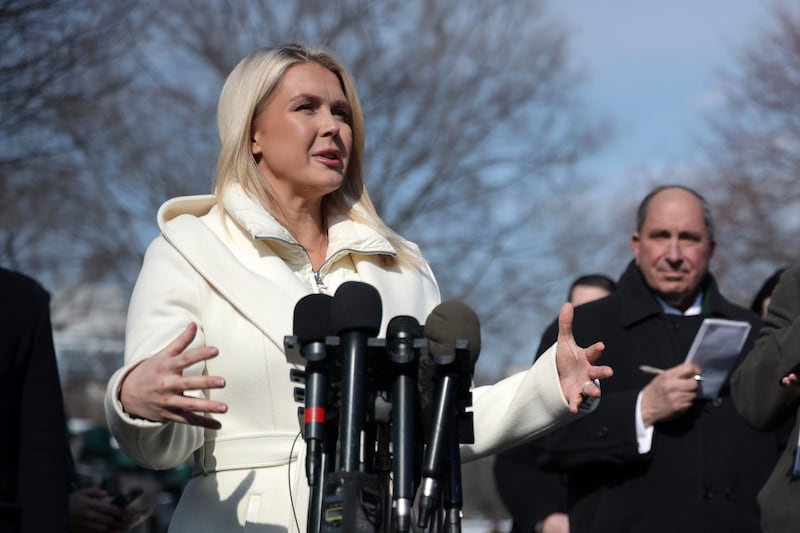
“What the president was referring to is the SAVE Act, which is a huge common-sense piece of legislation that Republicans have supported that President Trump is committed to signing into law during his term,” Leavitt, 28, claimed.
When Trump spoke about voting in the interview, he did not specifically discuss the SAVE Act, and the proposed legislation does not take over elections in specific states.
But Leavitt said that the president had spoken with House Speaker Mike Johnson about the bill.
Asked to specify about the president’s exact comment where he called for taking over voting in 15 places, and what states he was referring to, Leavitt doubled down.
“Again, what I was just telling you is that with the passage of the SAVE Act, voter ID will be implemented across all 50 states. The president was referring to specific states in which we have seen a high degree of fraud,” she argued.
The Trump administration has not produced evidence on its repeated claims of widespread fraud, and his arguments of fraud in the 2020 election have been repeatedly debunked.

But the president’s call to “nationalize” and “take over” voting was met with pushback even from Republican leaders on Capitol Hill on Tuesday.
“I’m not in favor of federalizing elections. I think that’s a constitutional issue,” Senate Majority Leader John Thune told reporters.
House Speaker Mike Johnson, 54, claimed the president was simply expressing frustration with the “problems” in blue states, when he was asked by CNN’s Manu Raju about taking over elections.
Asked specifically about a “takeover,” Johnson responded “no, no, no” as he walked away.
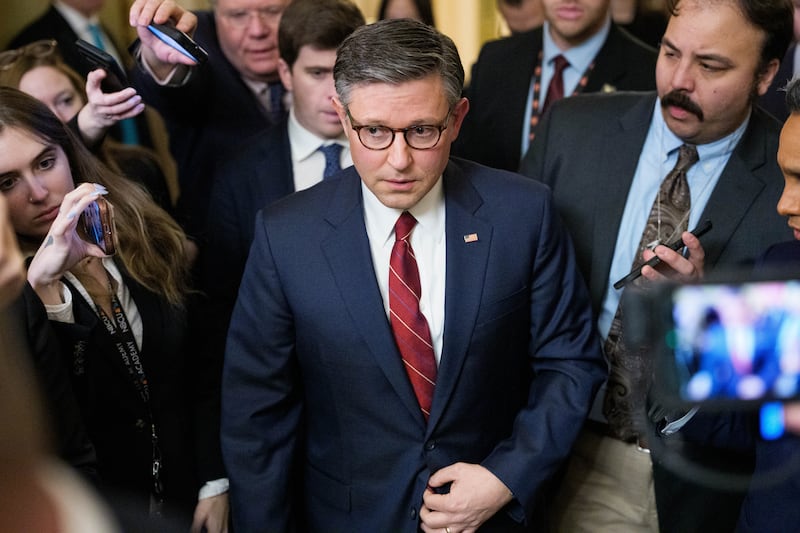
Asked about nationalizing elections again Tuesday afternoon, Johnson said they need “constant improvement” for free and fair elections and that he did not know what the “ultimate solution” would be and would not get ahead of negotiations. He acknowledged he could not provide evidence of fraud but said he was concerned about blue states.
The president’s comment came as the U.S. heads toward the high-stakes 2026 midterms where Republicans are trying to hold on to slim majorities.
It has also been less than a week since federal officials raided the elections offices in Fulton County, Georgia, where the president has long made baseless claims about election fraud.
The FBI ended up seizing records but provided little explanation as the Trump administration continues its search for alleged voter fraud.
Fulton County officials plan to sue in response to the seizure of records.

Even if Trump had been referring to the SAVE Act, as Leavitt claimed, the bill does not provide for the “takeover” of 15 states.
The SAVE Act, or Safeguard American Voter Eligibility Act, would require all Americans to provide proof of citizenship when they register to vote or update their registration.
It shifts the burden to Americans from election officials who are already required to verify eligibility using state and federal data.
Passage of the bill, which made its way through the GOP-controlled House last spring, would upend online and mail-in voter registration. Government-issued driver’s licenses, including REAL IDs, as well as military and tribal IDs, would not cut it.
Republicans argue the bill is necessary to prevent noncitizens from voting in federal elections, which is already illegal, but critics warn it would create a barrier for millions of U.S. citizens from voting.