White House Press Secretary Karoline Leavitt has struggled to defend concerns that President Donald Trump’s latest wild threat to escalate the war in Iran could amount to war crimes.
In a social media tirade before the markets opened on Monday, the president warned that if the Iranian regime did not reopen the Strait of Hormuz, the most critical oil chokepoint in the world, the U.S. would “completely obliterate” their electricity-generating plants, oil wells, Kharg Island, and possibly all their desalination plants.
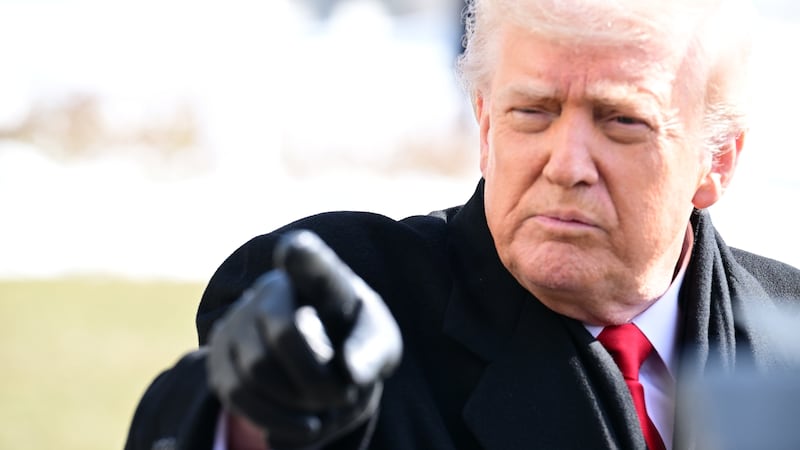
“This will be in retribution for our many soldiers, and others, that Iran has butchered and killed over the old Regime’s 47 year ‘Reign of Terror.’ Thank you for your attention to this matter,” Trump said.
However, the threat is contentious because targeting civilian infrastructure is a direct violation of international humanitarian law. Under the Geneva Conventions and their additional Protocols, parties to a conflict must strictly distinguish between military objectives and civilian objects.
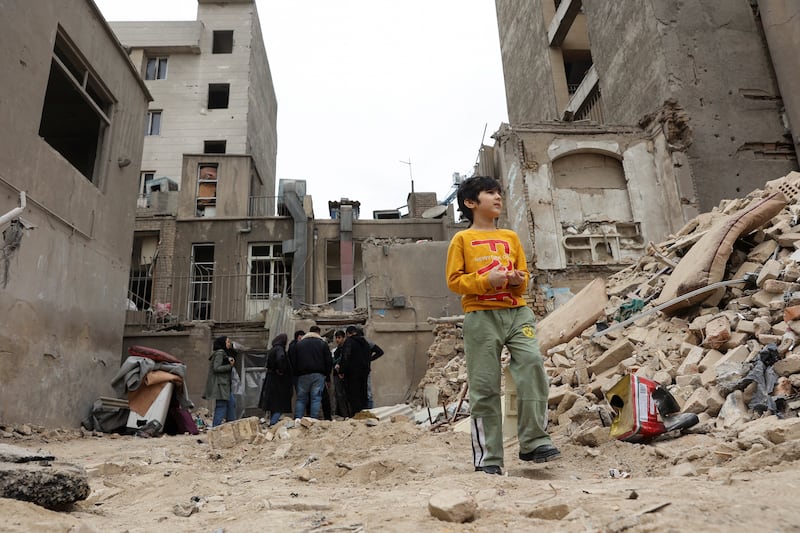
Legal experts and humanitarian groups warn that if Trump were to make good on his threat, it could unleash catastrophic harm on millions of innocent civilians in Iran, who rely on energy and desalination plants for water and electricity.
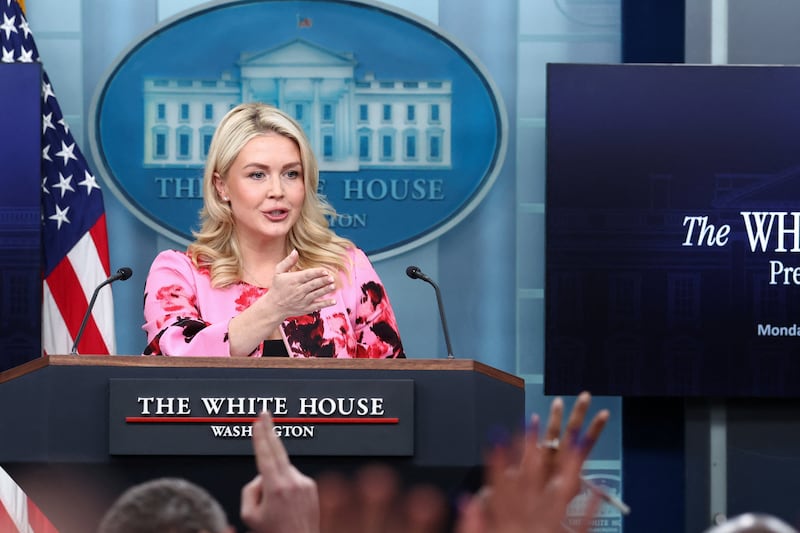
Leavitt was confronted about this during her Monday briefing at the White House, with NBC News’s Garrett Haake asking the press secretary: “Why is the president threatening what would amount to potentially a war crime with the U.S. military, and how do you square that with the administration repeatedly saying that the U.S. does not target civilians?”
She responded: “The president has made it quite clear to the Iranian regime at this moment in time—as evidenced by the statement that you just read—that their best move is to make a deal.
“Or else the United States Armed Forces has capabilities beyond their wildest imagination and the president is not afraid to use them,” she added.

“Including potential war crimes?” Haake pressed her.
“That’s not what I said, Garrett,” Leavitt clapped back.
“And you’re saying the word ‘potential’ for a reason. I’m sure some experts are telling you that in your ear, to try to ask me that question.
“Of course, this administration and the United States armed forces will always act within the confines of the law,” Leavitt continued. “But with respect to achieving the full objectives of Operation Epic Fury, President Trump is going to move forward unabated, and he expects the Iranian regime to make a deal with the administration.”
When Garrett tried to press further, asking which objectives would be met by blowing up Iran’s desalination plants, Leavitt ignored the question and called on another journalist.
The exchange underscored the challenges the administration faces selling a war that Congress did not authorize, and that voters increasingly oppose, according to a slew of opinion polls.
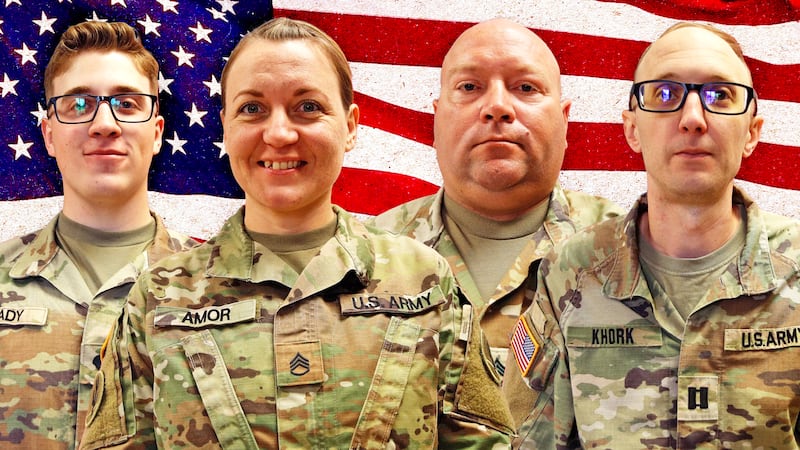
Since Trump joined Israel to attack Iran on February 28, the conflict has now cost at least 13 American lives and triggered a global energy crisis, with the average national fuel price in the U.S. now at $3.99 a gallon.
Trump himself has also fueled confusion about his objectives, claiming on one hand that the war has been won, then threatening to bomb Iran’s facilities if they don’t negotiate. At the same time, he’s declaring that “serious” negotiations are underway and the conflict could be over soon.
But escalating the conflict could have major implications, both on innocent civilians and the Trump administration.
“Going after the water supplies, that would be extremely hard to justify under international law,” retired Admiral James Stavridis, a former NATO Supreme Allied Commander, told CNN.

Meanwhile, the Iranian regime insists it is not engaged in direct talks with the U.S. and continues to use the Strait of Hormuz as leverage to cause global oil chaos—and more pain at the pump for American consumers.
It is also unclear who, if anyone, the U.S. is negotiating with, because Trump and his top officials have refused to say.
“I’m not going to disclose to you who those people are because it probably would get them in trouble with some other groups of people inside of Iran,” Secretary of State Marco Rubio said on Monday during an interview with ABC News host George Stephanopoulos.
Back at the White House, however, Leavitt told reporters that the U.S. had been so successful it was no wonder the Iranian regime was “increasingly eager to come to the negotiating table while they still can.”
“Despite all the public posturing and false reporting, talks are continuing and going well,” she said on Monday.
“What is said publicly is, of course, much different to what’s being said to us privately.”