The three liberal justices on the Supreme Court slammed the country’s highest court for ushering in an era of blatant political corruption with a landmark decision on Tuesday.
In a 6-to-3 decision, the court’s conservative majority lifted the federal limits on the amount of money political parties can spend in coordination with a candidate.
The decision is a victory for Republicans heading into the midterms after the National Republican Senatorial Committee challenged the campaign finance law, arguing the limits violate the First Amendment.
But in a blistering dissent, authored by Justice Elena Kagan, the liberal minority sounded the alarms on corruption taking over future campaigning and slammed the majority for again how it “jettisons a rule needed to protect our democracy’s integrity.”
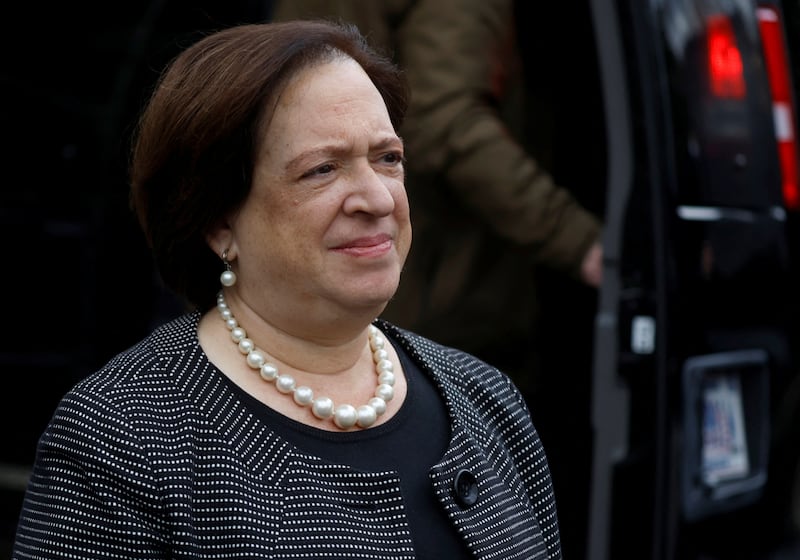
“For over half a century, a federal statute has guarded against actual and apparent quid pro quo corruption in our political system by limiting the amount of money a donor can contribute to a candidate,” Kagan wrote.
“But today, the Court rewrites the rules, to allow circumvention of the contribution limits. The majority invalidates Congress’s restriction of coordinated expenditures, thus enabling a party to serve as an alternative checking account for a campaign,” she continued.
Kagan warned that donors could simply give to the party as much as half a million, and candidates, who are limited to receiving $7,000 in donations directly, can seek such donations to their parties.
“So the Court ushers back in the same opportunities for quid pro quo corruption that the contribution limits were meant to check,” Kagan warned.
The liberal justices argued that the First Amendment permits campaign finance restrictions that are narrowly tailored “to protect against quid pro quo corruption and its appearance.”
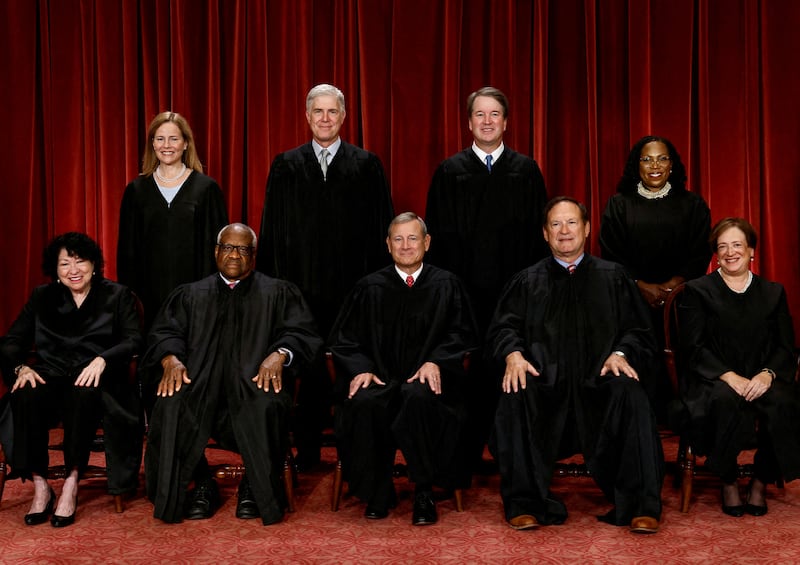
“Caps on a party’s coordinated expenditures pass that test with flying colors,” she wrote. “The caps prevent easy circumvention of contribution limits; and so the former, as much as the latter, are needed to avert corrupt deals between candidates and their supporters.”
The case was not the first time the court has heard arguments about coordinated expenditure limits, but in the 2001 case, the justices in a 5-to-4 decision upheld the limits.
“I’m not sure what to call a remnant of a remnant, but that is what the Court has left today,” Kagan wrote of finance limits. “And the result will be what Justice Breyer warned of: a legal regime increasingly unable to stop political corruption, and thus to preserve our institutions’ democratic legitimacy.”
Kagan blasted the majority’s arguments when it came to addressing concerns about corruption and accused the majority of being unwilling to deal in specifics when it came to campaign finance.

The majority opinion was written by Justice Brett Kavanaugh, who wrote that political-party coordinated-expenditure limits violate the First Amendment. On addressing corruption, he wrote, “For nearly 200 years after the ratification of the First Amendment, parties could spend freely to support their candidates during campaigns and could do so in coordination with the candidates. Notably, no one suggests ‘that these elections were not functional or that they were marred by corruption.’”
He also wrote that after a donor contributes to the party, the party can use the funds as it sees fit and not on the candidate of the donor’s choice. He specifically noted that the NRSC did not dispute the government’s interest in restricting earmarking funds.