Liberia’s Ebola Corpse Squads (PHOTOS)
The International Rescue Committee’s Peter Biro shares some of his photos from the front lines of the Ebola crisis.
Peter Biro/IRC
Get the Beast Digest newsletter delivered straight to your inbox
By clicking “SIGN UP” you agree to our Terms of Use and Privacy Policy.
Close to 5,000 people have died in the worst outbreak of the Ebola virus in history. Nearly 10,000 cases of the disease have been recorded, but the true toll may be three times as high, according to the World Health Organization. Liberia, the country hit hardest by the outbreak, has sufffered more than 2,700 deaths. The International Rescue Committee’s Peter Biro shares some of his photos from the front lines of the Ebola crisis.
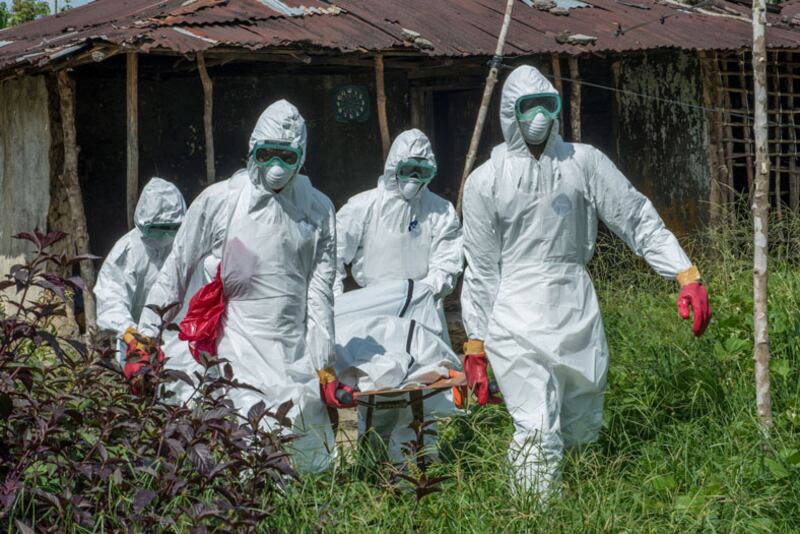
Here, special teams carry out the hazardous work of burying the bodies of suspected Ebola victims, whose corpses are particularly infectious. The teams are made up of Liberian health workers run by Global Communities, one of the IRC’s partner organizations in Liberia.
Peter Biro/IRC
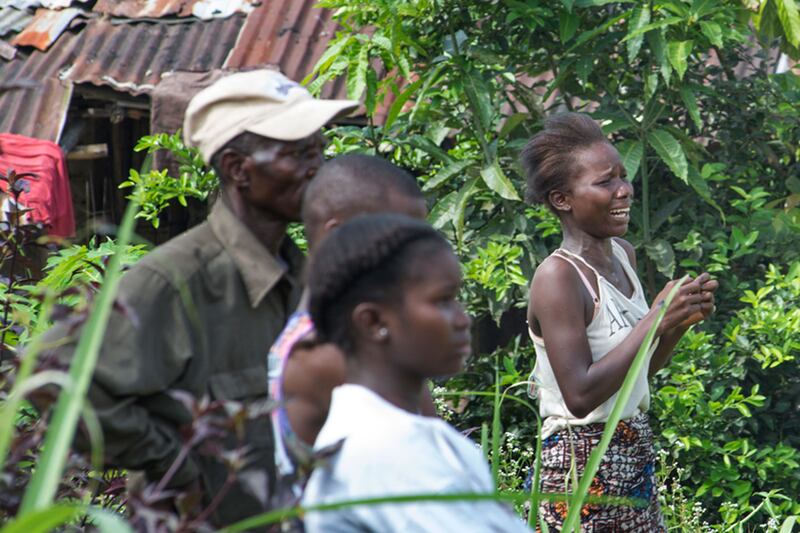
A young woman cries as the Ebola burial team removes the body of her father.
Peter Biro/IRC
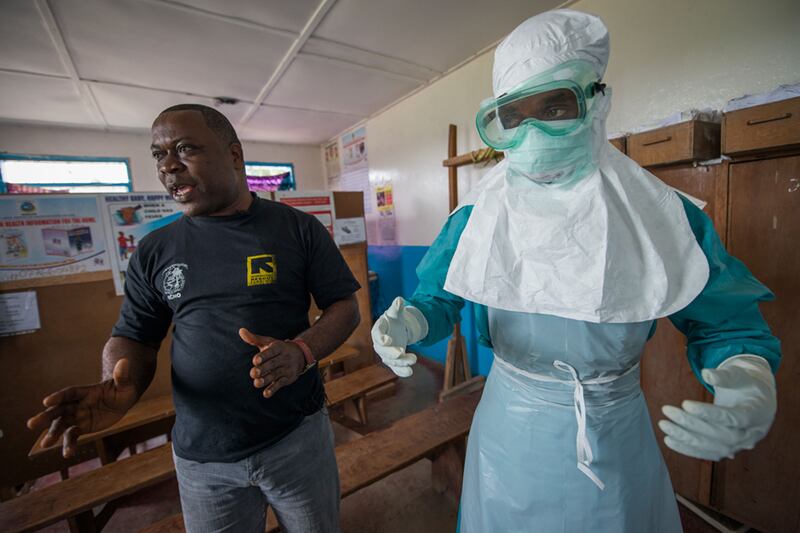
Most new Ebola cases are occurring among health workers and people who have been taking care of sick relatives. Here, Emmanuel Boyah, an IRC’s health manager in Lofa County, train local health workers in the use of protective clothing.
Peter Biro/IRC
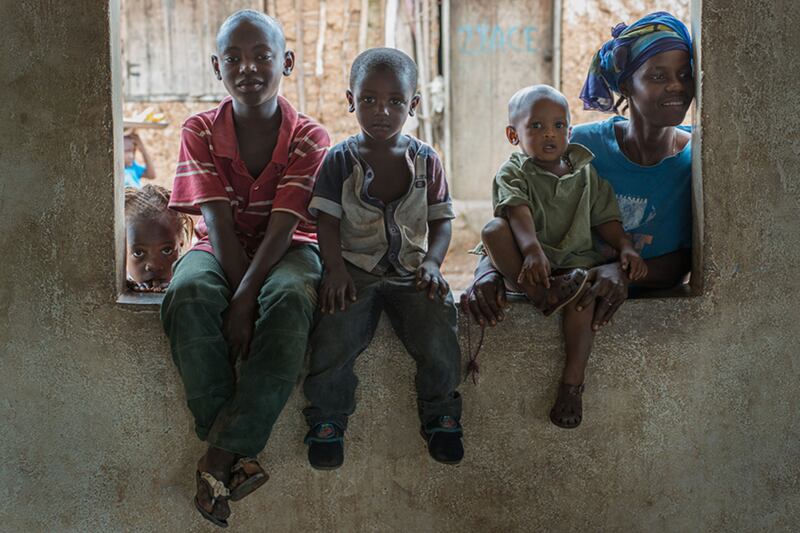
A mother and her children listen to a discussion about Ebola in Barkedu’s town hall. Information sharing is key in the effort to contain the virus.
Peter Biro/IRC
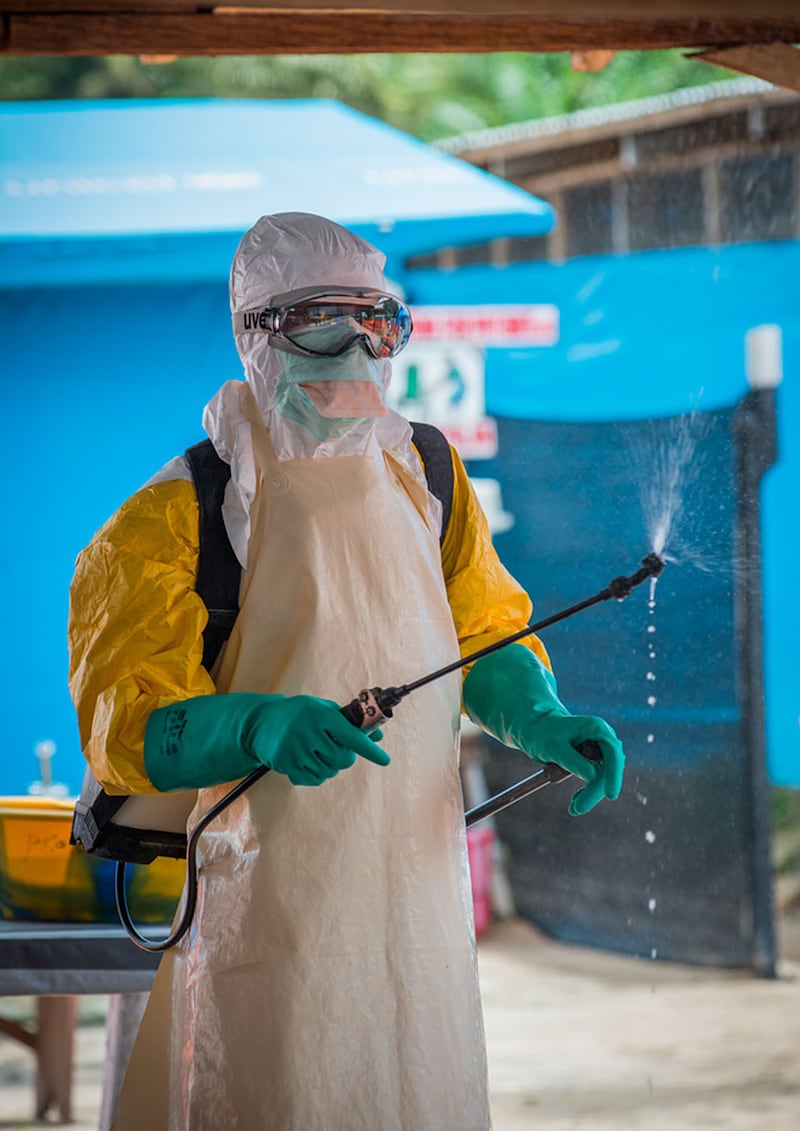
In Lofa, IRC outreach workers and clinics have referred hundreds of suspected Ebola cases to the local care center, run by Médecins Sans Frontières (MSF). The work at the center is risky and temperatures inside the protective suits can reach 155 degrees F (46 degrees Celsius).
Peter Biro/IRC
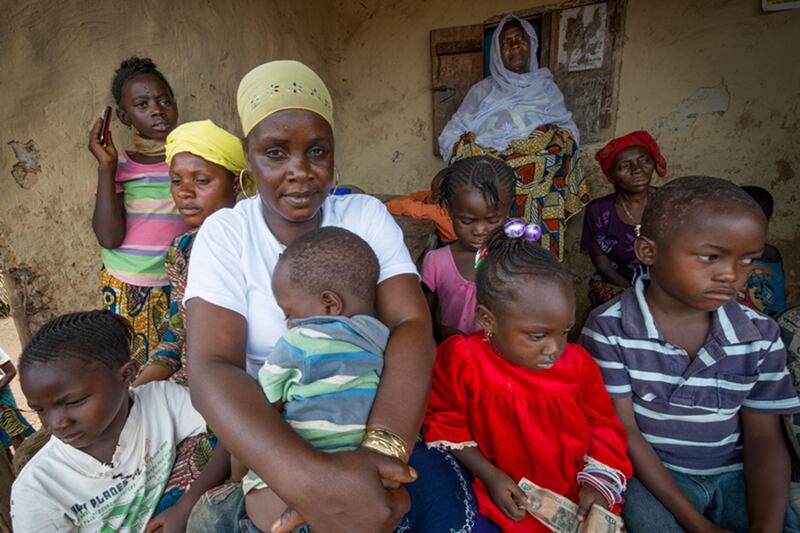
Fatu Kanneh, from the village of Barkedu in Lofa County, lost 37 people in her extended family to the virus—including her husband and her 18-year-old son.
Peter Biro/IRC

A shopkeeper washes his hands in chlorine solution in an Ebola-stricken village in Lofa County.
Peter Biro/IRC
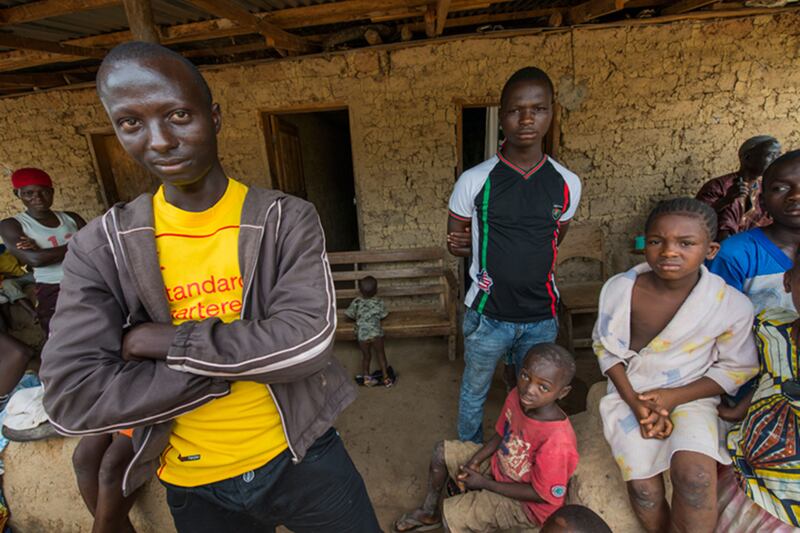
Mamadee Bayour—one of the few people in Barkedu who contracted Ebola and survived. “I’m now helping my community to keep safe,” he says. “If we take care, we will win this battle.”
Peter Biro/IRC
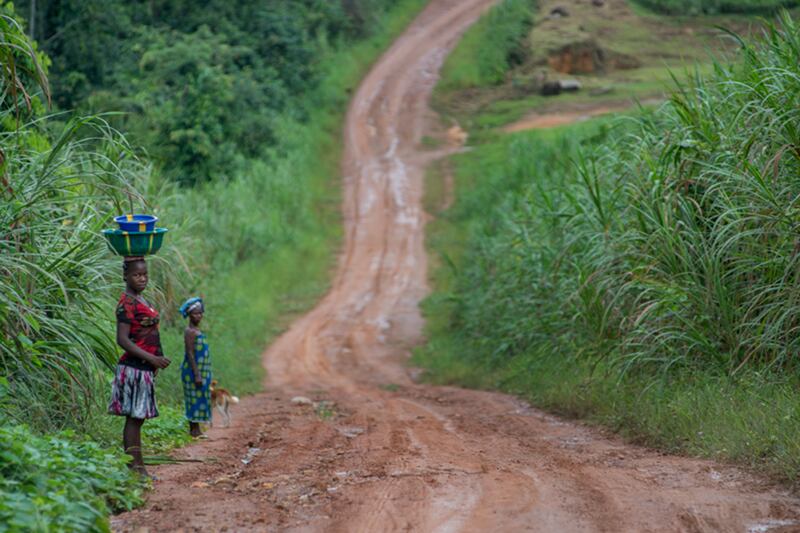
A road in Liberia’s northern Lofa County, where the Ebola virus first entered Liberia from neighboring Guinea in March. Suspected Ebola patients travel on this track to reach the area’s only Ebola care center.
Peter Biro/IRC
See more of our coverage in your search results.

Got a tip? Send it to The Daily Beast here.
Unlock a year of full access to The Daily Beast for $35.
Monthly
$1
First month then $5.99/month
Annual
$35
First year then $59.99/year
Premium
$79
First year then $119.99/year
*Substack access provided by the next business day, using your subscription email. Choosing the Premium plan constitutes your permission to share your subscription email with Substack and your agreement to Substack’s Privacy Policy.
Looks like you already have a subscription!
- Account (completed)
- Payment (completed)
- Confirmation (completed)
You're all set!
Thanks for subscribing.
- 1Account
- 2Payment
- 3Confirmation
Sign in or create an account
Register below to read this article for free or subscribe
to unlock unlimited access to The Daily Beast.
Monthly
$1
First month then $5.99/month
Annual
$35
First year then $59.99/year
Premium
$79
First year then $119.99/year
*Substack access provided by the next business day, using your subscription email. Choosing the Premium plan constitutes your permission to share your subscription email with Substack and your agreement to Substack’s Privacy Policy.
Already have an account? Sign In
Looks like you already have a subscription!
- Account (completed)
- Payment (completed)
- Confirmation (completed)
You're all set!
Thanks for subscribing.
- 1Account
- 2Payment
- 3Confirmation