
Officials within Marco Rubio’s State Department caused major embarrassment after using a map of Africa in a presentation that failed to place a single country in the correct part of the continent.
The Trump administration’s error-filled map was used during a State Department presentation at AIDS 2026, a global conference held in Rio de Janeiro, Brazil, earlier this week.
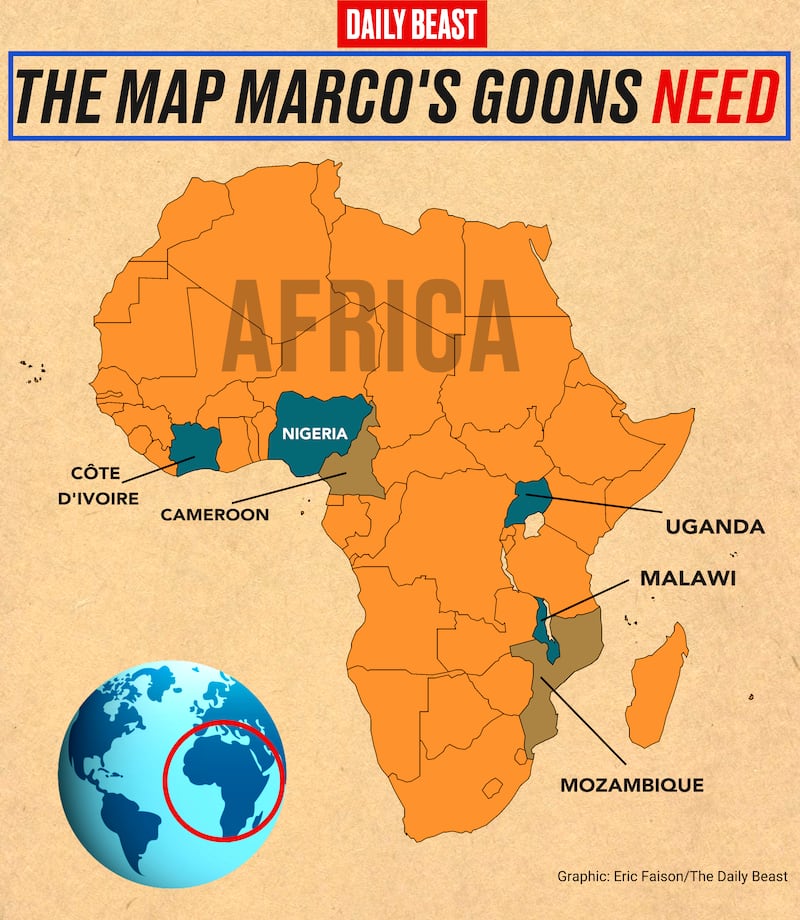
However, the map—which was supposed to display opportunities for Annual Program Statements (APS) in several African countries—mislabels every single one of the countries it highlights.
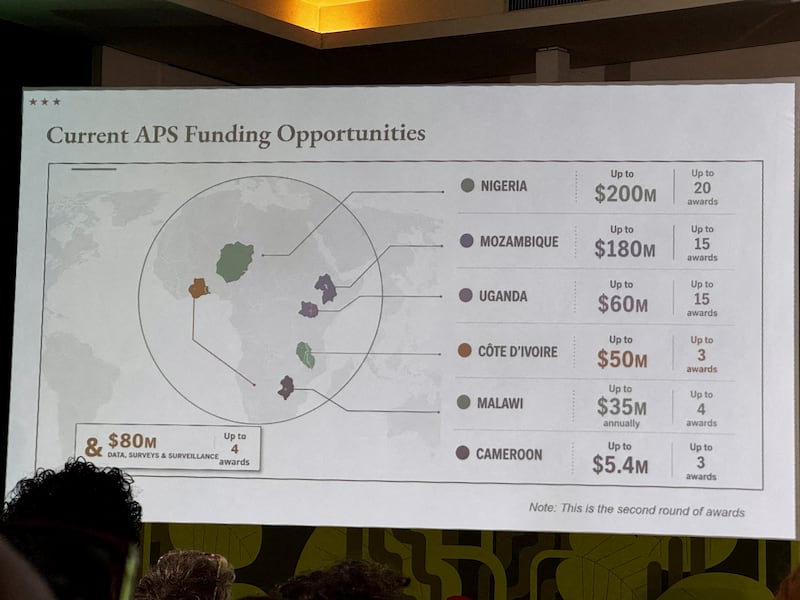
For instance, Nigeria, the West African nation on the Gulf of Guinea, was placed in the Sahara Desert on the State Department’s map.
Mozambique, which is in southeastern Africa, was relocated to the Horn of Africa on the eastern side of the continent, while Ivory Coast, in West Africa, was moved to the eastern part of the continent.

The map also appears to place Malawi in the wrong location while making the country look larger than it actually is. It also depicts Cameroon with an inaccurate border and moves it farther east along the coast than it is in reality.
The errors appear to be the result of someone trying to create the map using AI. A Reuters analysis of the map found that it was made using OpenAI tools and features the company’s watermarks.
Screenshots of the gaffe-filled map first appeared in a Substack post by AIDS expert Emily Bass before going viral on LinkedIn.
“Whoever created and approved this slide did not know where countries in Africa are and did not care to check their work. That latter point means they also *did not care enough* about the subject matter to bother,” Matt Petit, who focuses on AI and geopolitics at the Atlantic Council, posted while sharing an image of the map.
In a statement, the State Department said: “We take full responsibility for the confusion and misrepresentation it caused for attendees, including our African partners.”
The State Department also blamed the map on a team member who had hastily changed the slide deck before the event. It added that the discussions at AIDS 2026 were “substantive and constructive” despite the confusion over the map.