It was meant to be a simple question designed to hype up the MAGA crowd about the stakes of the midterm elections.
“How many of you would like to see impeachment hearings?” asked Trump ally Matt Schlapp on the third day of the Conservative Political Action Conference.

The audience, clearly not understanding the question, began cheering loudly.
“No. That was the wrong answer,” Schlapp replied.
He tried again: “How many of you would like to see impeachment hearings?”
More cheers ensued as Trump’s die-hard fans struggled to realize Schlapp was asking about the prospect of their favorite president being investigated by Democrats if Republicans lost control of Congress in November.
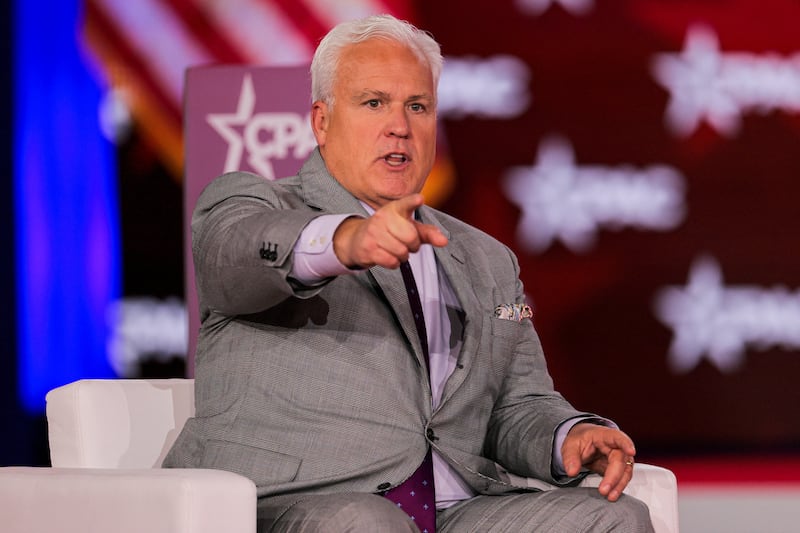
“Noooo!” said Schlapp. “Can someone bring some coffee out?”
The awkward exchange drew a ripple of laughter across the room, but it also underscored a deeper problem facing CPAC this year: confusion, fatigue—and a noticeable lack of its central figure: the president himself.
For a gathering that has long functioned as a de facto rally for Donald Trump, the 2026 edition has felt unusually flat.
Schlapp attempted to fire up the base, but moments like the impeachment mix-up only reinforced a sense that the movement is slightly adrift as the midterm elections loom.
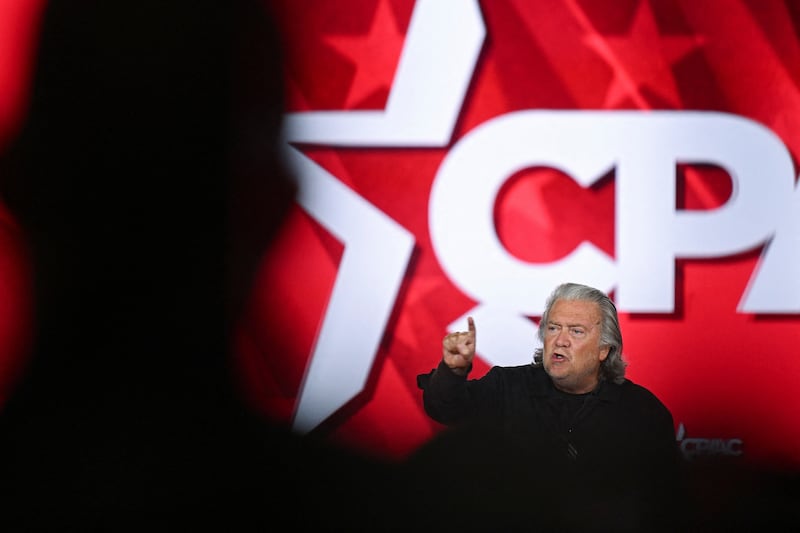
“What’s important is not Candace (Owens) and Tucker (Carlson) and Megyn Kelly or Mark Levin and Ben Shapiro!” a fired-up Steve Bannon said on stage on Friday, referencing the personal feuds between high-profile MAGA identities that have spilled out into the open in recent months.

“What is important is you! You need to come to your own conclusion, to weigh and measure the evidence; to think about the direction of this Republic; to think what America first actually stands for, to think through who are real allies and who are out for themselves.”
At CPAC over the past few days, concerns about affordability, the Iran war and the Epstein files have made Republicans increasingly nervous about next year’s midterms when all 435 seats in the House of Representatives are up for grabs, along with a third of the seats in the 100-member Senate.
If the Democrats were to flip control of the House in November, they could stall Trump’s legislative agenda for the next two years, probe and subpoena his activities, and potentially file articles of impeachment against him and members of his Cabinet.
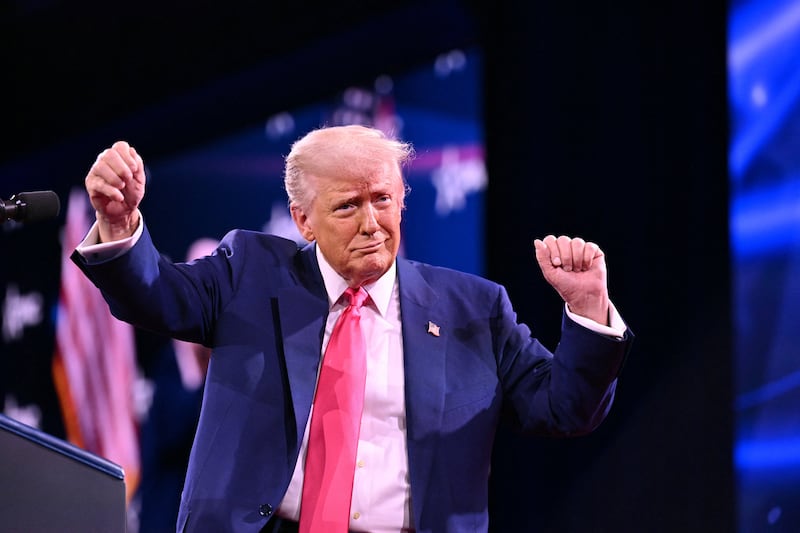
The anxiety is shared most acutely by Trump himself, who told Republicans at a retreat in Washington earlier this year:“You gotta win the midterms ‘cause, if we don’t win the midterms... they’ll find a reason to impeach me.”
Allies say it’s a prospect that continues to loom large over Trump, who was impeached twice during his first term: first in 2019 over his dealings with Ukraine, and again in 2021 following the January 6 Capitol attack.

Privately, advisers say he has never fully shaken the grievances from those episodes, often revisiting them in speeches and conversations as evidence of what he views as political persecution.
Back on the main stage at CPAC, Schlapp tried to ask his question another way.

“We’ve got to keep this House majority. How many of you agree with that?” he asked.
“We’ve got to keep Mike Johnson as speaker, and we got to add to the number of people who will go to the United States House of Representatives and push for the Trump agenda.”
Finally, the crowd got it. And cheered.