The Senate delivered a bipartisan attempt to rein in Donald Trump on Thursday, approving a resolution to bar the president from deploying U.S. forces in Venezuela without Congress’s approval.
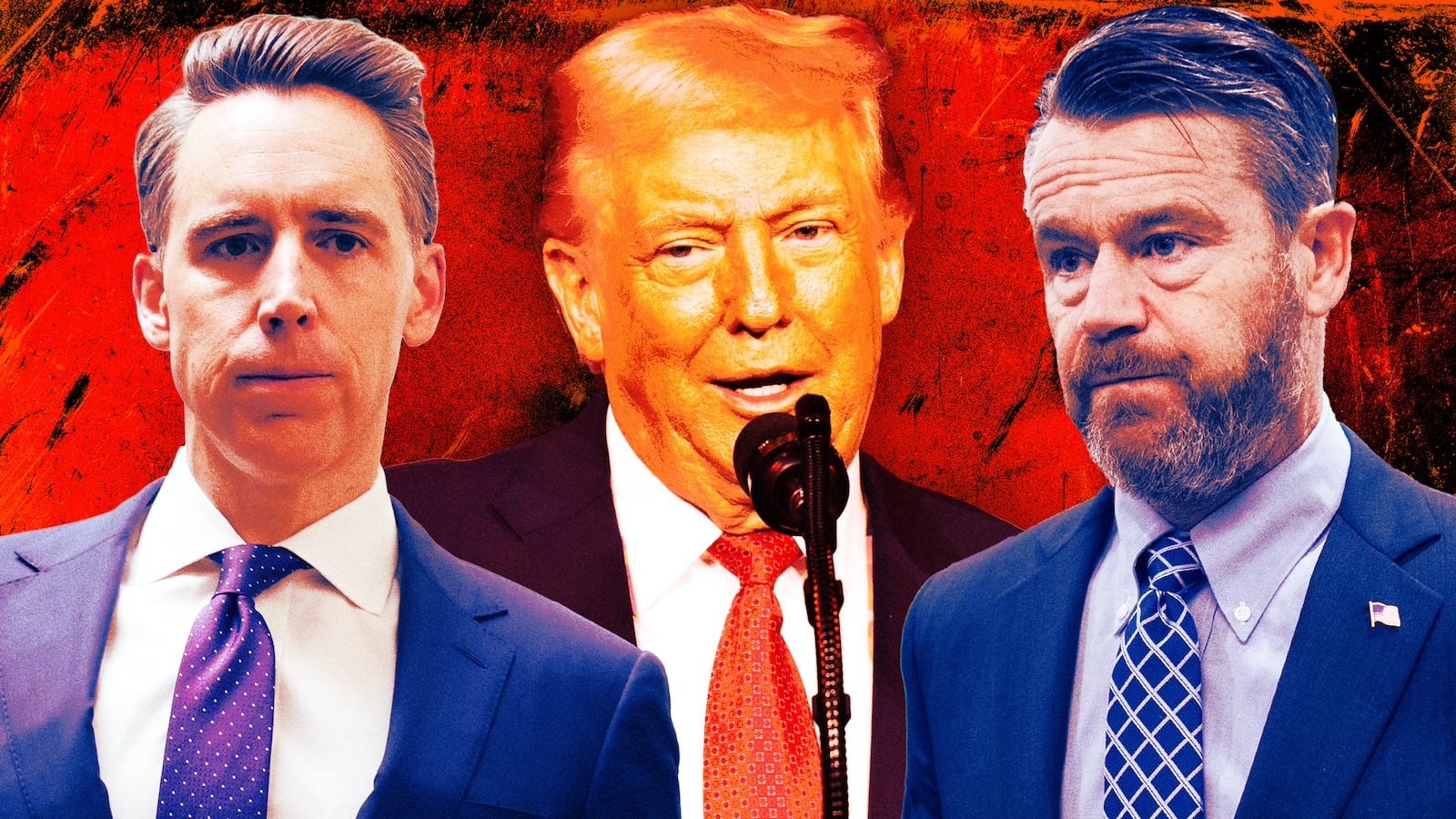
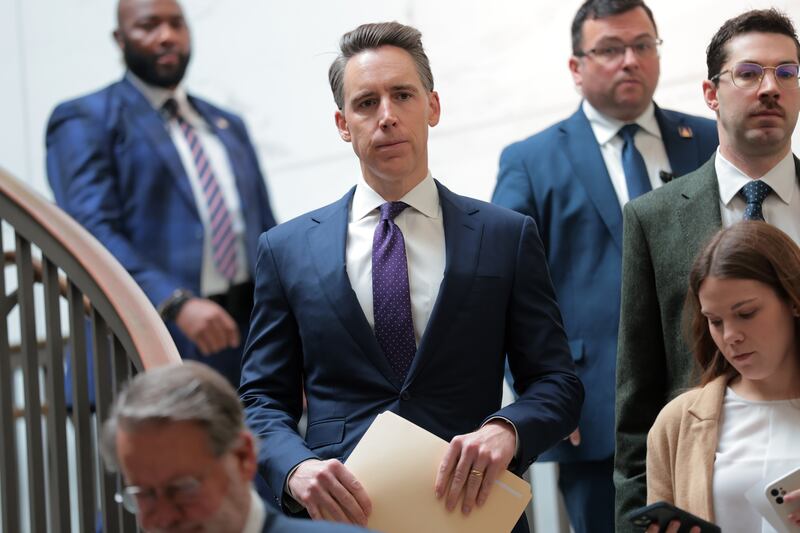
The legislation advanced with a simple majority 52 to 47, with five Republicans breaking ranks to support the measure: Sens. Susan Collins, Lisa Murkowski, Todd Young, Josh Hawley and Rand Paul.
The defections were especially striking from Young and Hawley, both of whom have been steadfast allies of Trump.
Paul, joined by Sens. Tim Kaine and Adam Schiff and Senate Minority Leader Chuck Schumer, introduced the resolution following Trump’s order to strike the South American country and capture its former president, Nicolás Maduro on Saturday.
The president’s claim that the U.S. was “in charge” of Venezuela has raised concerns from largely Democratic lawmakers as Trump has refused to rule out boots on the ground and issued a series of threats to other countries in recent days.
In a lengthy interview with The New York Times Wednesday evening, Trump indicated the U.S. could be running Venezuela for years, saying, “Only time will tell.” Asked if that meant months, a year or longer, Trump replied, “I would say much longer.”

Young released a statement on his decision to vote with Democrats to block the president taking action in the country.
“The President and members of his team have stated that the United States now ‘runs’ Venezuela. It is unclear if that means that an American military presence will be required to stabilize the country,” Young said. “I – along with what I believe to be the vast majority of Hoosiers – am not prepared to commit American troops to that mission."
He said he would be open to persuasion to committing U.S. forces in Venezuela in the future, but he argued it needed to be debated and authorized by Congress.
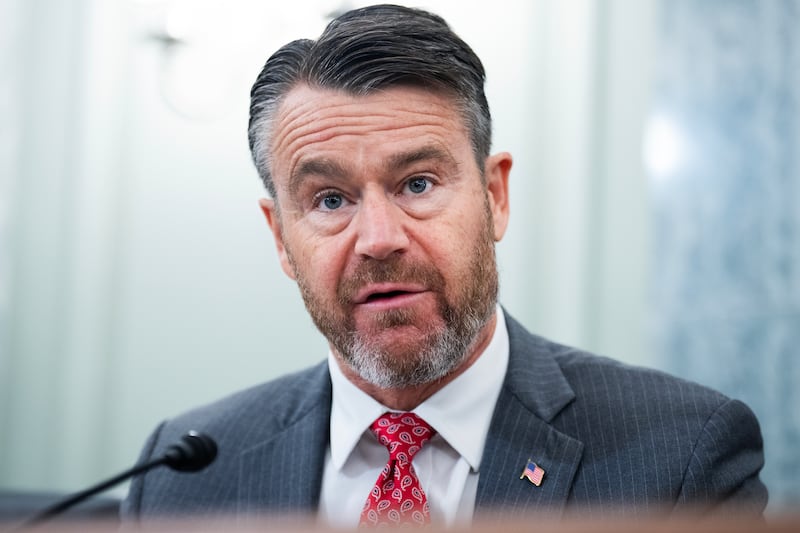
Collins, who was among the Republicans to vote for it, also defended her vote.
“While I support the operation to seize Nicolas Maduro, which was extraordinary in its precision and complexity, I do not support committing additional U.S. forces or entering into any long-term military involvement in Venezuela or Greenland without specific congressional authorization,” Collins said in a statement.
The Senate has a few more procedural steps before final passage. However, it’s not clear whether the joint resolution would get a vote in the House, much less pass. Even if it does, Trump has the power to veto it.
The legislation moved in the Senate on Thursday, one day after Secretary of State Marco Rubio and Defense Secretary Pete Hegseth conducted briefings for the Senate and House on the U.S. plan for Venezuela.
Rubio said it would move forward in three phases with the U.S. continuing its blockade as it sells Venezuela’s oil. The administration claims the money will be used to benefit the Venezuelan people. The second phase was about giving American companies access to the Venezuelan markets, while the third phase would be a transition.

Thursday’s vote was not the first time Kaine introduced the resolution to prevent the president from using military force in Venezuela as the U.S. conducted strikes on alleged drug boats in the Caribbean and built up its military force last year. The previous efforts, however, failed to gain enough Republican support.
Democratic Senator John Fetterman, who previously rejected the resolution, also switched his support to back it on Thursday.
Kaine said the key change was that senators who had once dismissed the effort as premature no longer held that view.

Kaine said while arrest of Maduro might be framed as a law enforcement operation, the deployment of 150 military aircraft from 20 bases—followed by Trump’s vow to “run the country,” seize its oil, and maintain a military blockade—amounted to a massive escalation.

“This was not the surgical execution of an arrest warrant. It was much bigger than that before last Saturday, and it’s going to be much bigger than that from now for the next few years if you listen to the administration,” Kaine told reporters ahead of the vote.
Kaine said he would be introducing more war powers resolutions going forward as the Trump administration has made threats to other countries including Cuba, Mexico, Colombia, Nigeria and Greenland.
The move comes as Trump demanded a massive increase in the military budget for 2027. He called for $1.5 trillion in a post on Wednesday, up from the $901 billion in 2026. Budget experts warned it would add $5.8 trillion to the national debt over a decade.