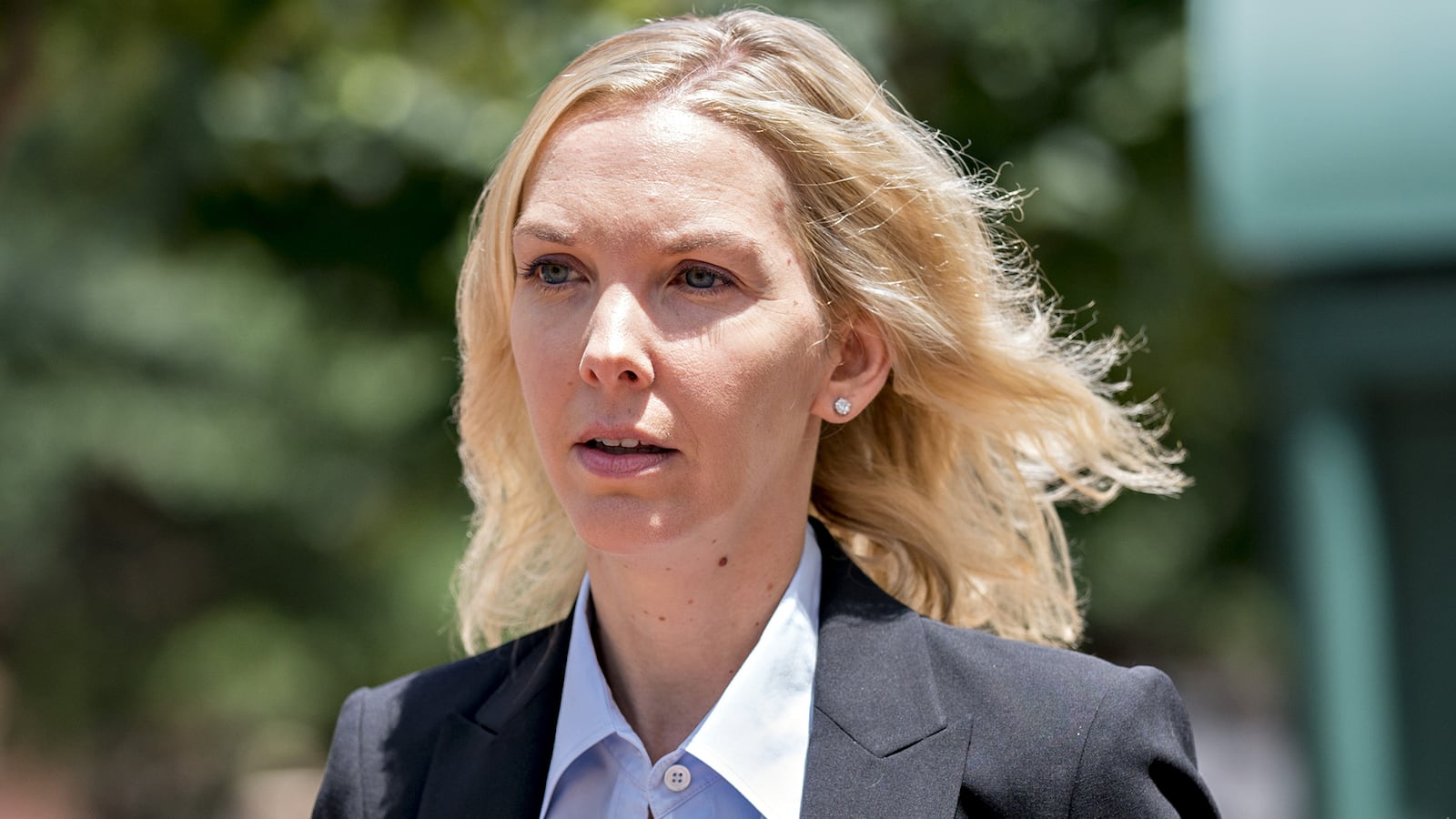
The star witness on Thursday was Heather Washkuhn, who helped the prosecution tie Paul Manafort, President Trump’s former campaign chairman, tighter to the web of shady transactions allegedly hiding his income. The most damning evidence came in the form of a loan application Manafort sent to Federal Savings Bank in Chicago. The implication offered by the prosecution: The defendant conned a bank with a forged document to fill the gaping hole in his income that came when his top political consulting client was overthrown in a revolution in Ukraine and run out of the country.
Welcome to Rabbit Hole, live from the Eastern District of Virginia.
How the other half lives: The first two witnesses of the day offered more of the eye-popping—and somewhat tacky—details of how Manafort spent his money. Big Picture Solutions’ Joel Maxwell, who oversees luxury audio-visual installations, testified that at least $10,000 of Manafort’s $2.2 million bill went for a karaoke machine. Landscaper Mike Regolizio told the court that he was responsible for maintaining an acre to an acre-and-a-half of grounds at his Hamptons property that included “hundreds and hundreds” of flowers, including an arrangement by the driveway that spelled out the letter “M” for Manafort—just in case you forgot whose house you pulled up to.
Oh, and lest you had any doubt, Manafort is a Yankees fan. He dropped a little over two grand on tickets at Yankee Stadium.
All about Rick Gates: So far, the prosecution has introduced a fair amount of damning testimony and witnesses that the defense has been comfortable to let pass without many objections or aggressive cross-examinations. Most of the witnesses so far have been fairly neutral third parties and the defense team has been nothing but polite and cordial in asking questions, no matter how damning their testimony could prove in the end. Why? Because Gates is the centerpiece. As Manafort’s former business partner, he’s the government’s star witness who would be in a position to know all of Manafort’s sins. But he is also an admitted felon with a plea deal, so casting him as the unscrupulous mastermind is the defense’s best shot at getting their client off the hook.
Compartmentalizing: The battle lines, instead, are already being drawn around what Gates had access to and what Manafort knew. Washkuhn and Regolizio both said they had occasionally dealt with Gates on billing and financial issues for Manafort. Prosecutor Greg Andres was well aware that the defense will try to use that testimony to suggest Gates had the opportunity to play games with his boss’s money. When Regolizio said he sometimes bugged Gates to get Manafort to pay up, Andres made sure to draw out in his questions that this had only happened around 2014—years after Manafort had already begun paying his own bills with suspicious wire transfers from offshore companies and well before Gates would’ve had the opportunity for mischief.
One step forward for the defense: Even though Washkuhn testified that Manafort was a detail-oriented money man who approved “every penny” of the bills her firm paid on his behalf, she did label Gates as Manafort’s “right-hand man” and noted that he did interact with her on billing issues—opening the window further for claims that Gates had the opportunity to dupe his boss.
Two steps back: Andres also drew out from Washkuhn that there was something of a wall between the kinds of financial issues that Gates was involved in and the one that Manafort handled personally. In her telling, Gates basically dealt with issues from the Davis Manafort consultancy while Manafort discussed his personal finances. Given that the charges touch on both Manafort’s personal and professional finances, that would once again limit the amount of criminal mischief Gates could’ve gotten up to without his boss’s knowledge.
Hell hath no fury: Judge Thomas Ellis has drawn his red line pretty clearly around the prosecution’s tendency to, in his words, “gild the lily” when emphasizing Manafort’s extravagance. But he snapped on an unpredictable subject when prosecutor Greg Andres asked Washkuhn whether it was possible to change her company’s accounting system from a cash basis to an actual system. When Washkuhn answered “no,” Ellis barked that “it can be done” through “brute force and awkwardness” and chastised Andres for not making his questions more specific.
Ellis continued to needle the prosecution, albeit more playfully, throughout the day. When there was a dispute over whether Manafort’s accountant was qualified to say what counts as “foreign interest,” he invited his favorite target, Andres, to submit a brief on the subject and quipped, “It’ll be a public document and then all of you can read it. I’m going to share my pain.”
Exhibits: The court was emphatic Thursday that the press and public have access to the many, many exhibits offered by the prosecution (and later on, from the defense). Ellis didn’t seem to quite understand that the Special Prosecutor’s Office publishes the exhibits to a cloud storage account at the end of each day and instead encouraged reporters and observers to ask the clerk to see a binder with all the exhibits available in the courtroom. Fortunately for you, your correspondent does understand how the prosecution is making the exhibits public. A few folks have tweeted the link on Twitter, but you can follow along with the new ones through simple addition. Here’s the URL for Thursday, Day 3. Just add one at the end of day on the URL and refresh until it’s updated (usually around 7 p.m.).
Ellis vs. Press: Judge Ellis took a few moments toward the end of session to note that he was not always a fan of the press and makes a point not to speak to reporters. Nonetheless, Ellis said he appreciated the importance of the media’s work in informing the public and copped to some responsibility for the failings he finds in reporting on the court. “I see situations where it isn’t reported accurately and I’ve contributed to it in some ways through comments I’ve made.”
Friday: Day 3 ended just a few minutes into the testimony of James Philip Ayliff, Manafort’s former accountant, who the prosecution expects to testify for around two hours.