
After more than seven weeks out of public view, Mitch McConnell says he has been discharged from a rehabilitation facility and is continuing his recovery at home.
The statement from the 84-year-old senator’s aides on Thursday marks the first significant health update in weeks.
However, it did not include a video or any photographs illustrating the former Senate leader’s recovery.
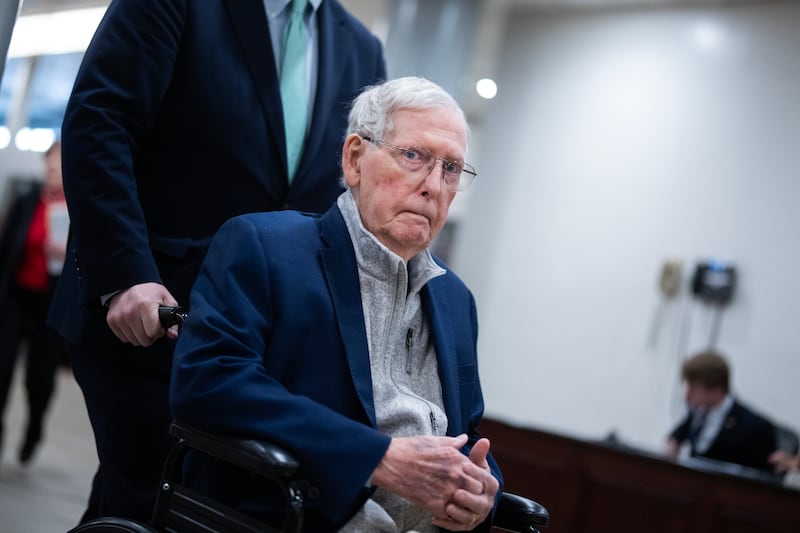
“Earlier today, I was discharged from the rehabilitation center to continue my recovery at home,” McConnell said.
“Elaine and I are grateful for the many well wishes and support from friends, colleagues, and Kentuckians, and for the attentive care I’ve received from excellent doctors, nurses, therapists, and hospital staff.
“On the advice of my doctors, I maintain an intensive regimen of physical therapy from home during the state work period, and I’ll continue to engage with my staff and colleagues on important Senate business.”
The senator was rushed to George Washington University Hospital on June 14 after a 911 call suggesting he’d had a heart attack, was unconscious, and had received CPR.
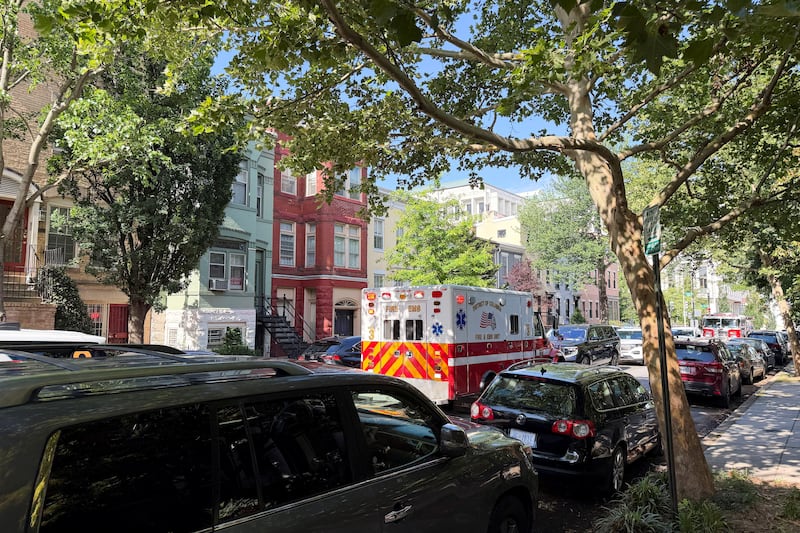
But apart from two earlier “proof of life” statements and photos, McConnell and his team have repeatedly refused to answer basic questions about his condition or when he was likely to return to work.
Those photos, released on July 12 and July 26, were met with deep skepticism, with some suggesting they were AI-generated, and others speculating that the senator was either dead or on life support.

His latest statement also came under scrutiny on Thursday from critics insisting he was part of an ongoing cover-up by his team, led by his $226,000-a-year chief of staff, Terry Carmack.
“He clearly had some kind of major stroke, and they refuse to admit it,” mused an observer on X.
“He released a ‘statement’. Anyone seen him?” asked another.
McConnell has served in the Senate since 1985, making him one of the longest-serving senators in U.S. history.
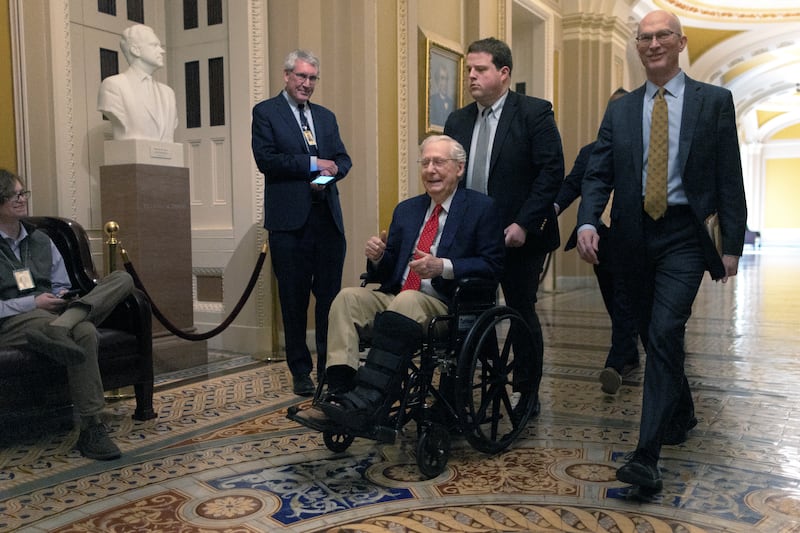
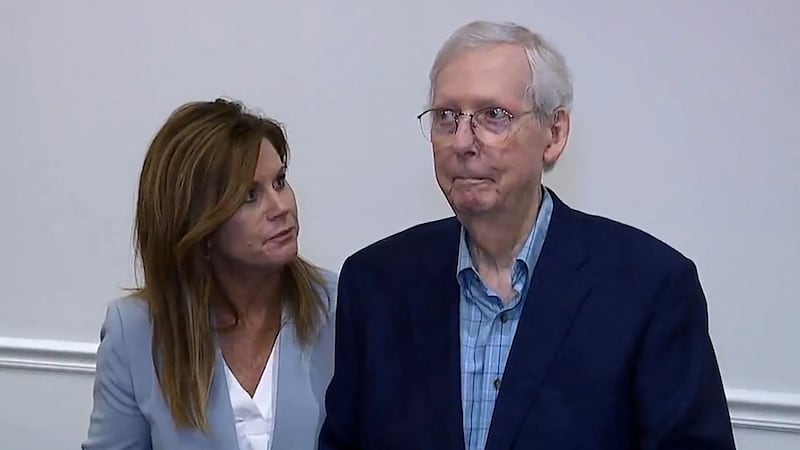
He has also had multiple falls in recent years—often attributed to having polio as a child—and several highly publicized incidents where he abruptly froze while speaking.
Since being hospitalized in June, he has missed dozens of crucial votes on everything from a war powers resolution on Iran to judicial nominations and policies on housing affordability.
But his absence this week could also decide the fate of Donald Trump’s pick to be the next attorney general, Todd Blanche.
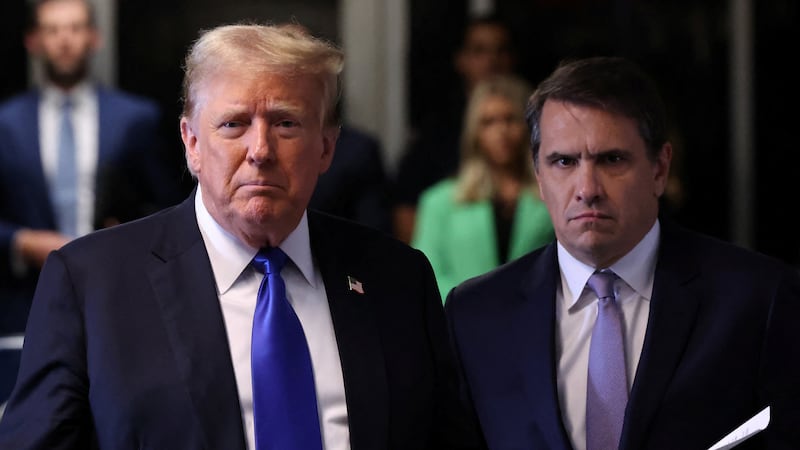
With Maine Senator Susan Collins planning to oppose the nomination—and fellow Republicans Lisa Murkowski and Bill Cassidy yet to reveal their hand—Blanche’s nomination now hangs in the balance as the party scrambles to confirm him before the Senate’s summer recess begins on Friday.
If Blanche’s nomination were to fail, it would amount to a major rebuke for Trump, who has demanded the GOP back him.
McConnell’s disappearance also reignited the debate for new laws to deal with incapacitated members of the Senate or House who can no longer fulfill their duties.

Florida Governor Ron DeSantis was one of several Republicans who renewed calls for fixed terms in Congress, declaring that the U.S. Senate “looks like an old folks home”—a reference to politicians from both sides of the aisle sticking around even when they are too old or ill to serve their constituents.
McConnell’s fellow Kentuckian Thomas Massie also joked that Congress needs a “three strokes and you’re out” rule, while Tennessee Republican Tim Burchett called for an “incapacitation clause” allowing lawmakers who are medically unable to perform their duties to be replaced.
The mystery over McConnell’s health deepened further last week after his office refused to say whether a letter sent to President Donald Trump was personally signed by the missing Republican—or by autopen.
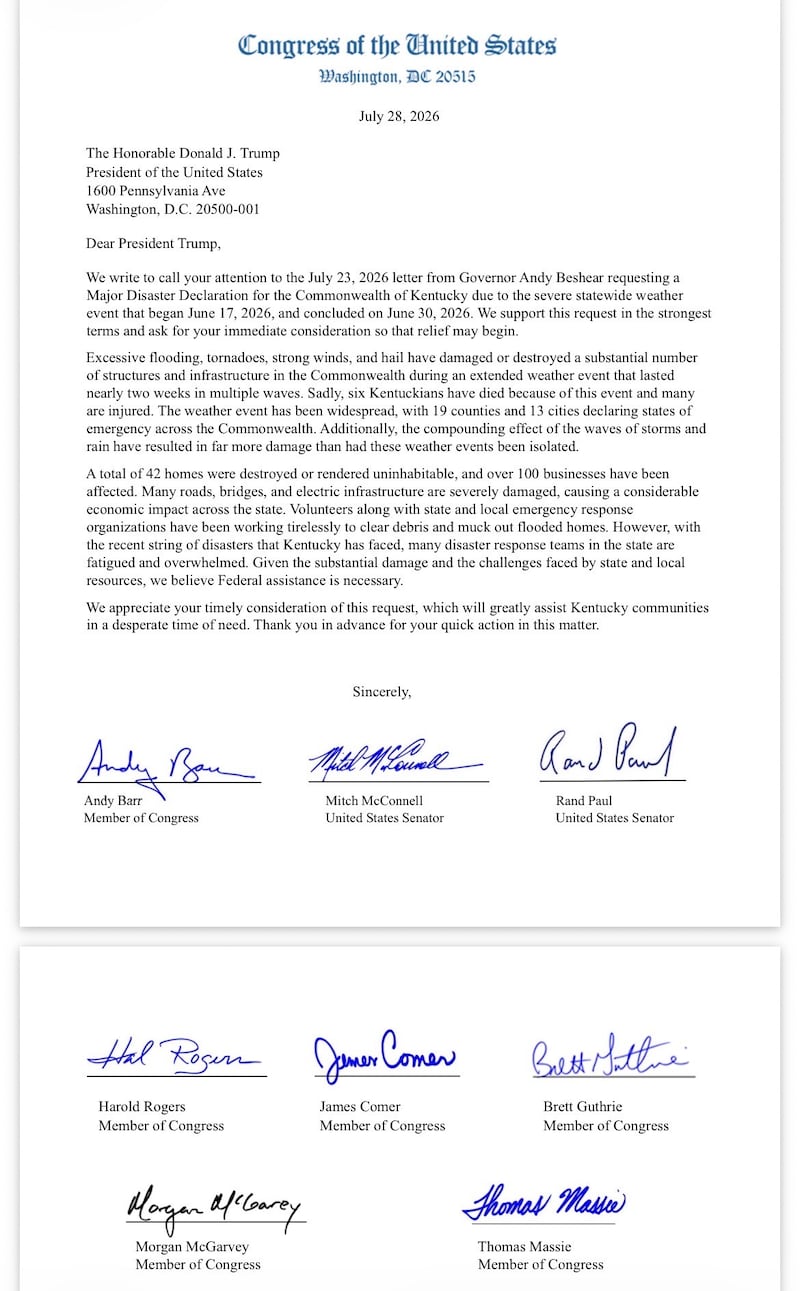
The July 28 letter, signed by McConnell and every member of Kentucky’s congressional delegation, urged Trump to approve a request from Kentucky Governor Andy Beshear for a major disaster declaration following devastating flooding in the state.
But when The Daily Beast asked McConnell’s office whether the signature was handwritten or produced using an autopen, his team once again declined to answer.