Get Lost in the Hypnotic Glow of the Ring Nebula—Thanks to NASA’s Webb Telescope
Who knew the death of a star could be so joyous to watch?
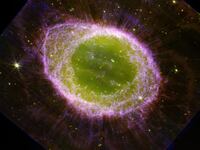
NASA, ESA, CSA, JWST Ring Nebula Team photo
NASA’s James Webb Space Telescope continues to deliver the goods we were promised. On Thursday the agency released photos the telescope took of the Ring Nebula, an object located 2,200 light-years away. The photo shows the nebula oozing with a hypnotic green glow, adorned by an expanse of wispy purple clouds forming a ring. Nebulas are the glowing remains of dead stars, and the Ring Nebula in particular shows the aftermath of a white dwarf star that imploded billions of years ago. By studying objects like these, NASA hopes to know more about the life cycle of stars and what future of the solar system might look like. But that won’t be for several billion years from now—long after we’re dead, of course. “We are witnessing the final chapters of a star’s life, a preview of the sun’s distant future so to speak, and JWST’s observations have opened a new window into understanding these awe-inspiring cosmic events,” University College London astronomer Mike Barlow said in a statement. “We can use the Ring Nebula as our laboratory to study how planetary nebulae form and evolve.”
Register below to read this article for free or subscribe
to unlock unlimited access to The Daily Beast.
Monthly
$1
First month then $5.99/month
Annual
$35
First year then $59.99/year
Premium
$79
First year then $119.99/year
*Substack access provided by the next business day, using your subscription email. Choosing the Premium plan constitutes your permission to share your subscription email with Substack and your agreement to Substack’s Privacy Policy.
Already have an account? Sign In
Looks like you already have a subscription!
You're all set!
Thanks for subscribing.