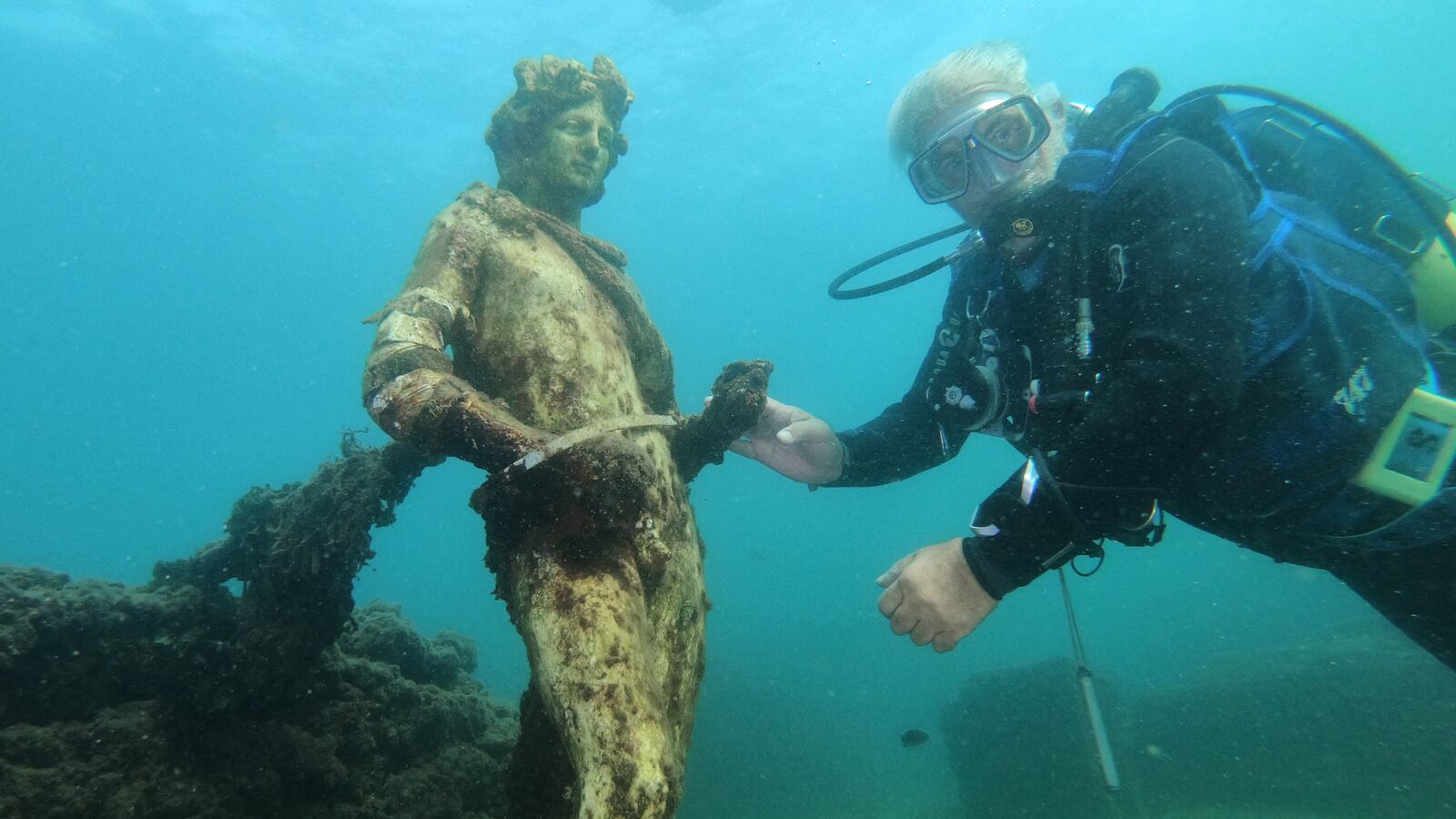
A remarkably well-preserved Roman bathhouse submerged about 10 miles off the coast of Naples, Italy, might have belonged to one of Rome’s best-known orators and statesmen, Marcus Tullius Cicero.
According to Archaeology News, the bathhouse was discovered among the ruins of Baiae, a notoriously luxe and hedonistic resort frequented by the most elite Romans, including Julius Caesar and his adopted son Augustus. Classical writings document a Baiae villa belonging to Cicero, who is remembered as the greatest Roman orator for his innovations in rhetoric. If speculations prove correct, this site will be the first physical evidence of his villa.
The bathhouse had advanced technology for the time, including a complex heating system. Known as the suspensura system, the architectural innovation involved circulating hot air through pillars beneath the floor and through hollow tiles in the walls, which heated the ancient saunas.
Baiae was also equipped with other bathhouse luxuries, including thermal springs, which were thought to have healing properties, and ancient casinos. Dozens of rooms in the resort town were designed for bacchanal partying and feasting, which are now playgrounds for crabs, fish, and other local fauna.
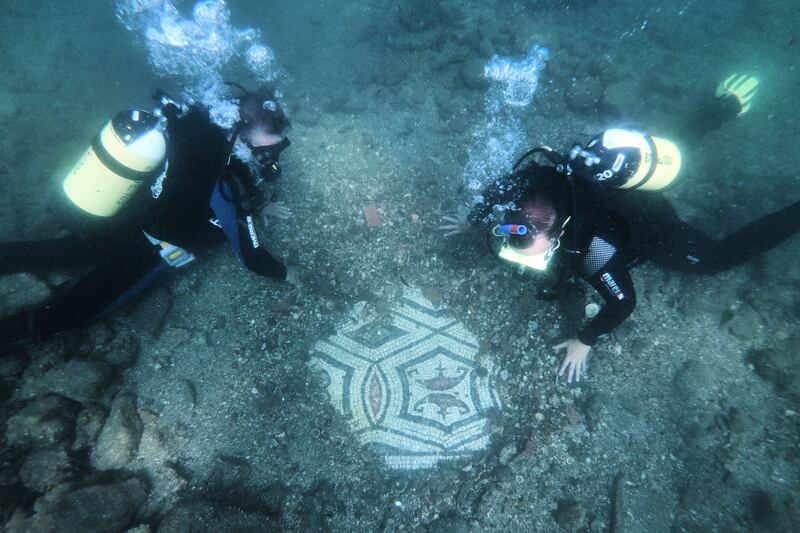
The newly discovered bathhouse also has an intact mosaic floor and partially recovered wall paintings. Ceramic fragments discovered at the site may reveal the bathhouse’s construction date, intended use, and reasons for abandonment.
Baiae, also known as Campi Flegrei Archaeological Park, is situated in a volcanic area and is thought to have been submerged by volcanic activity after Muslim raiders pillaged it in the 8th century. Researchers believe it was entirely deserted by 1500 C.E. due to an outbreak of malaria.
The site was rediscovered in the 20th century. In the 1920s, wholly intact marble sculptures were discovered during a dredging operation meant to clear out sediment and shape water channels. Inspired by the discovery, fascist leader Benito Mussolini suggested draining the area to uncover the rest of the site. Then, in the ’40s, an Italian air force pilot spotted the site from above, describing it as a “strange ghost town,” The Guardian reports.
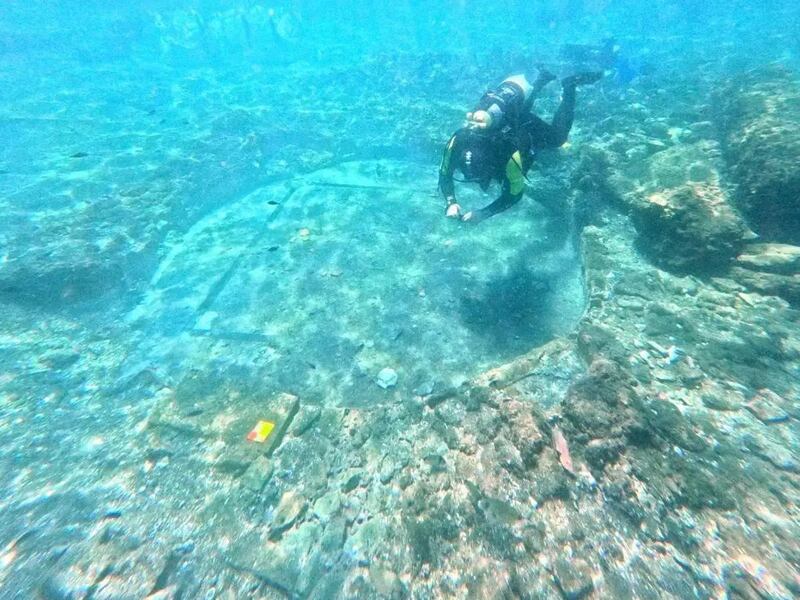
At less than 12 feet below the surface, the archaeological site has now become a popular tourist destination for divers.