It seemed inconceivable when Richard Nixon won a historic presidential election victory in 1972 that his own Republican Party would turn on him two years later and drive him from office.
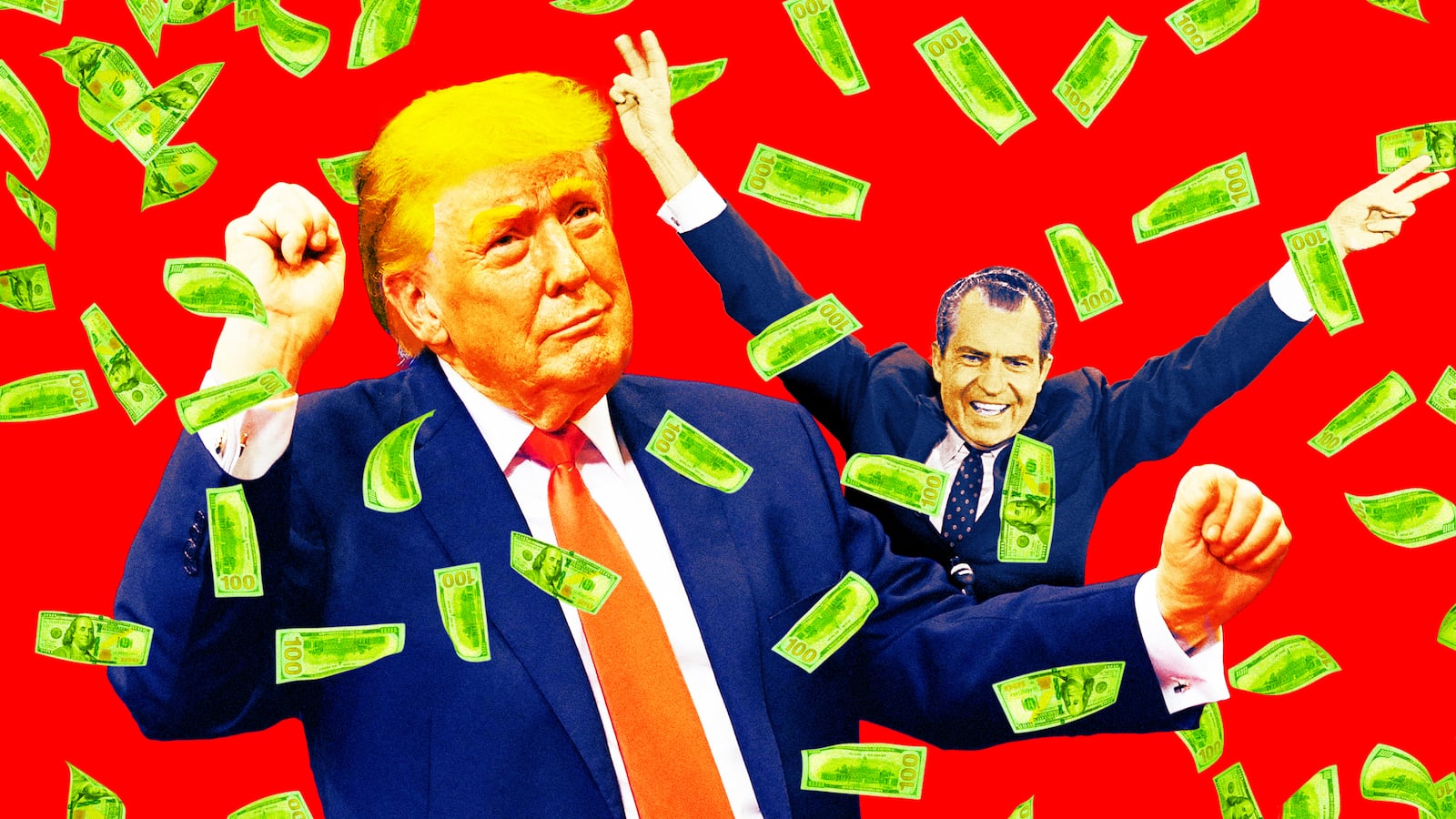
There was the subsequent Watergate break-in of the Democratic National Committee headquarters, of course, and the discovery that the president bugged the Oval Office. But it was Nixon’s secret $700,000 slush fund that was the final nail in the coffin.
He used this money from rich friends—including $100,000 from reclusive millionaire Howard Hughes—to pay for the dirty tricks exposed by Washington Post journalists Bob Woodward and Carl Bernstein.
Nixon famously declared, “I am not a crook.”
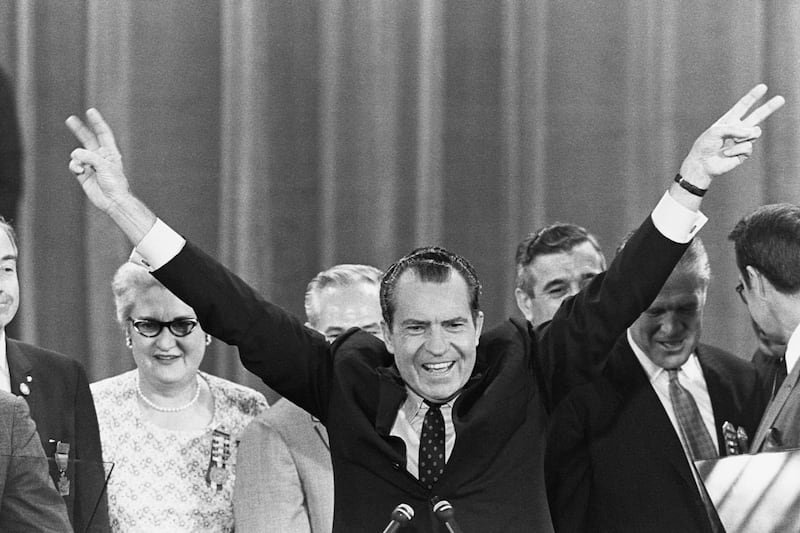
But he was, and that quickly became apparent as his White House scheming unraveled and his clandestine slush fund was exposed.
On Aug. 7, 1974, a Republican delegation composed of Senator Barry Goldwater, Senate Minority Leader Hugh Scott, and House Minority Leader John Rhodes met with Nixon at the White House to deliver an ultimatum.
“There’s not more than 15 senators for you,” Goldwater told Nixon. His impeachment was almost certain.
Nixon announced his resignation the following evening.
When Donald Trump swept into the White House for a second time on the back of a decisive 2024 victory and proceeded to bully his own party into submission in Congress, he also appeared untouchable.
As recently as this week, the president was able to force out two old-school Republicans, Bill Cassidy and Thomas Massie, by corralling his base to successfully primary them, and to humiliate another, John Cornyn, because he wasn’t sufficiently MAGA.
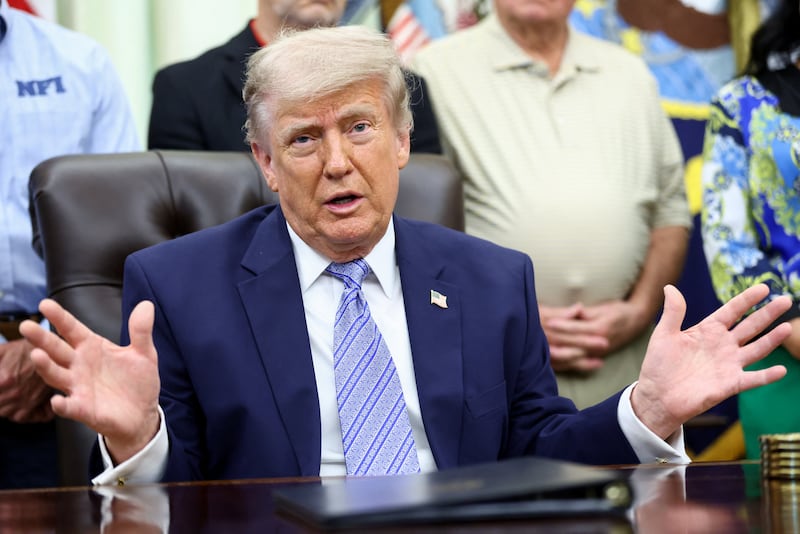
But a week is a long time in politics.
There were the usual moans from Congress and around the country on Monday when Trump’s acting attorney general, Todd Blanche, announced an unprecedented settlement accompanying the president’s decision to withdraw his $10 billion lawsuit against the IRS over the disclosure of his tax records (which most presidents make public willingly).
A $1.776 billion fund would be established to compensate people who claim they have been politically targeted by the government.

By government, he meant the Obama and Biden administrations. Blanche sent a clear message of defiance by refusing to rule out rioters pardoned of Jan. 6 offenses as potential beneficiaries.
In effect, Trump was the plaintiff in the suit, and his own government was the defendant. Although he claimed to know nothing about it, the president was also party to the final outcome. The scheme was seen as a method of funneling cash to his political allies.
Perhaps we have become immune to the excesses of the Trump administration and its grifting, but there was a general sense of helplessness in the country. Even apathy. This is what he does, seemed to be the takeaway from most jaded observers.

On his podcast on Wednesday, Jon Stewart pointed out the obvious distinction between the Nixon slush fund and the Trump one.
Talking about Watergate, Stewart remarked: “Think about that in comparison to $1.8 billion of taxpayer money, at least I think Nixon’s slush fund was donors! At least it was stand-up bribery.
“This is f---ing OUR money. I mean, it’s—do we even have a Congress or a court?”
Outraged, he continued, “It’s all Orwell. It’s all a ‘f--- you’ troll. Everything they’re doing is a ‘f--- you’ troll to us. ‘This is against the weaponization of it and it’s patriotic.’ They’re trolling us. His entire career is a troll.
“They’re going to give it to people that sprayed MACE at police officers and pretend that they’re rewarding patriotism.”
Democrats echoed Stewart’s outrage, as did a few Republicans already on the outs with Trump or planning to stand down before November’s midterms.
But then on Thursday, something seismic happened in Congress. Republican senators found a spine.
According to numerous reports, more than 25 outraged GOP lawmakers met with Blanche to express their anger and dismay at the “weaponization fund” that would come from the public purse.
They went on to hold Trump’s treasured $72 billion immigration enforcement bill hostage. It is meant to pay for ICE, border patrol, and other immigration operations, but the senators left for the Memorial Day recess without voting it through.
The senators were also grumbling about a previously undisclosed $1 billion that Trump wanted to pay for a six-story bunker beneath his White House ballroom, which he had promised would be financed by donors.
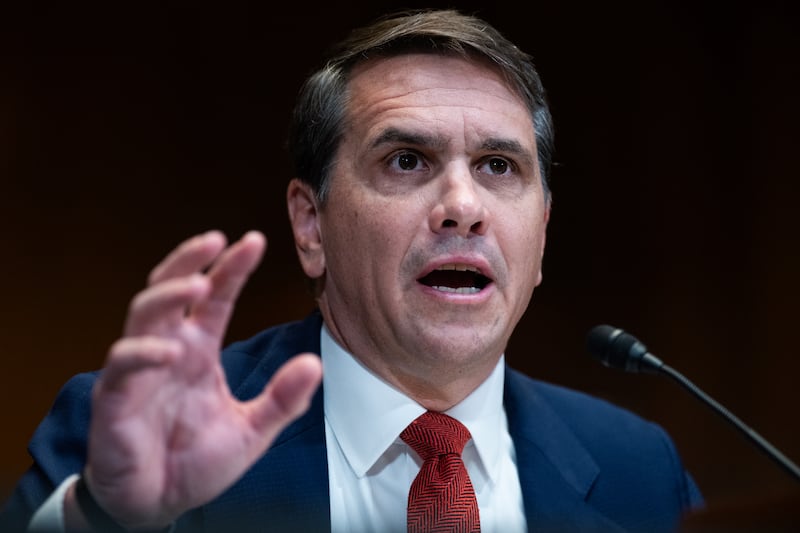
Even Trump had to concede he wasn’t sure if he still had control of the Senate.
There are 53 Republicans in a 100-member Senate. The margins of control are slim.
“Is it possible on May 21, 2026, Republicans finally found an ethical bridge too far?” asked Democrat Sen. Richard Durbin.
In 1972, Nixon amassed one of the biggest landslides in American history. He won more than 60 percent of the vote and captured 49 of the 50 states.

With a record victory margin of nearly 18 million votes, Nixon’s total of 520 electoral votes was close behind Franklin Roosevelt’s record-breaking 1936 re-election and Ronald Reagan’s re-election in 1984.
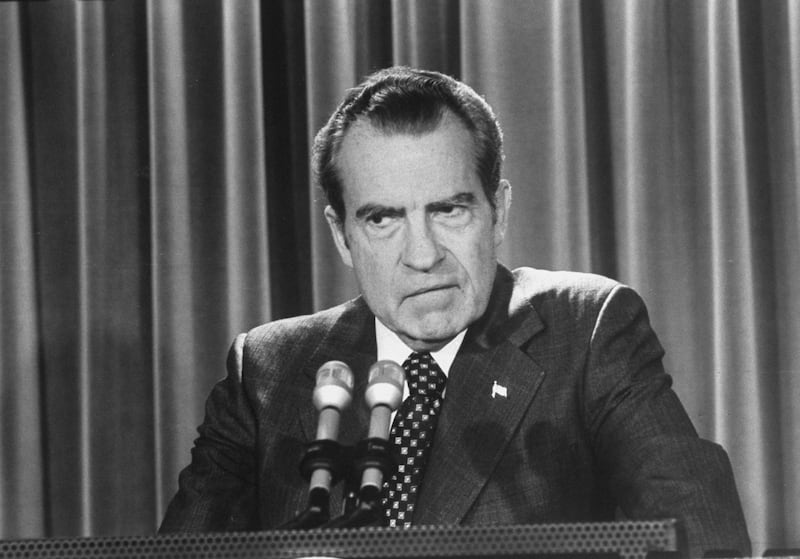
His victory stance ended up being a middle finger to those who voted for him.
Have the Republicans in the Senate reached a tipping point with Trump?
We may have to wait until the midterms to find out. But if Trump’s Republican Party has the disastrous election some are predicting, expect them to come back snarling.
And then Trump could have something else in common with Nixon. His own party could turn and tell him it’s time to go.