Workers Setting Up Scaffolding at Notre Dame Cathedral in Paris Discover Ancient Tomb
Crews preparing to repair the ancient spire that was destroyed in the devastating 2019 fire have found ancient tombs with perfectly preserved mummies.
Julien de Rosa/AFP via Getty Images
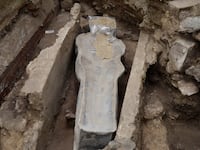
Workers racing against a tight deadline to reopen the devastated cathedral of Notre Dame by Easter 2024—after it was nearly destroyed in a fire sparked by an electrical short three years ago—were shocked to find an ancient graveyard that included a “completely preserved, human-shaped sarcophagus made of lead” in the spot they were trying to set scaffolding.
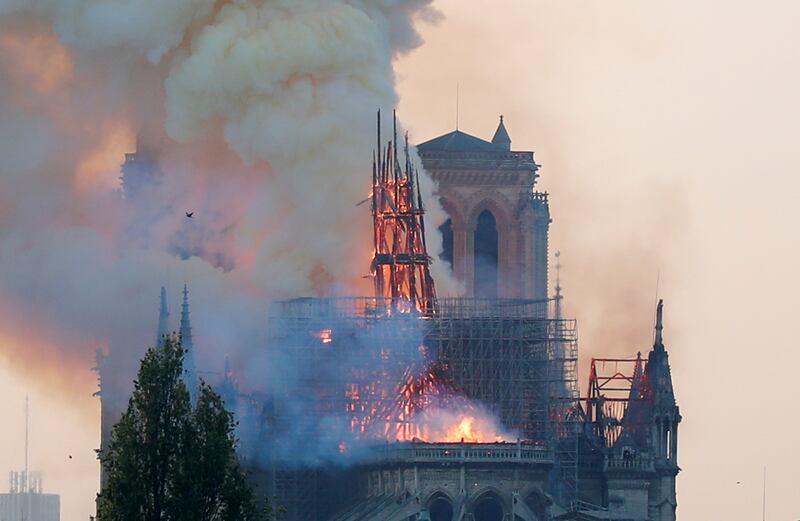
The roof and spire of the historic Parisian church were destroyed when a fire swept the structure in 2019. Since that time, more than 1,000 historic oak trees have been felled to rebuild the ancient roof. But as workers started the delicate work to rebuild the ancient spire that crumbled as the church was consumed by fire, they hit a lead coffin while digging the footing holes for the tall scaffolding needed to erect the new spire.
Charles Platiau/Reuters
Archeologists working on site—as is the practice in France when working on ancient structures—quickly identified the area as an ancient graveyard full of tombs, according to a statement by France’s cultural ministry. The centerpiece was the lead sarcophagus that had buckled under the weight of the church built above it, but remained perfectly sealed.

Using a tiny endoscopic camera, workers were able to glimpse inside, where they noted what appears to be a perfectly mummified corpse, complete with hair and clothing. Archeologists on site say it was likely a senior dignitary buried in the 1300s, about 100 years after the cathedral was built. “You can glimpse pieces of fabric, hair and a pillow of leaves on top of the head, a well known phenomenon when religious leaders were buried,” Christophe Besnier, the lead archaeologist, told AFP. “The fact that these plant elements are still inside means the body is in a very good state of conservation.”
Julien de Rosa/AFP via Getty Images
The remnants of the graveyard are of “remarkable scientific quality” France’s culture ministry said Tuesday in Paris, where a handful of journalists were allowed on the site. The dignitary and others were buried directly below the central nave, above which the original spire was built in 1220. The spire that was destroyed in the fire was built in the mid-19th century after the ancient spire started to decay.
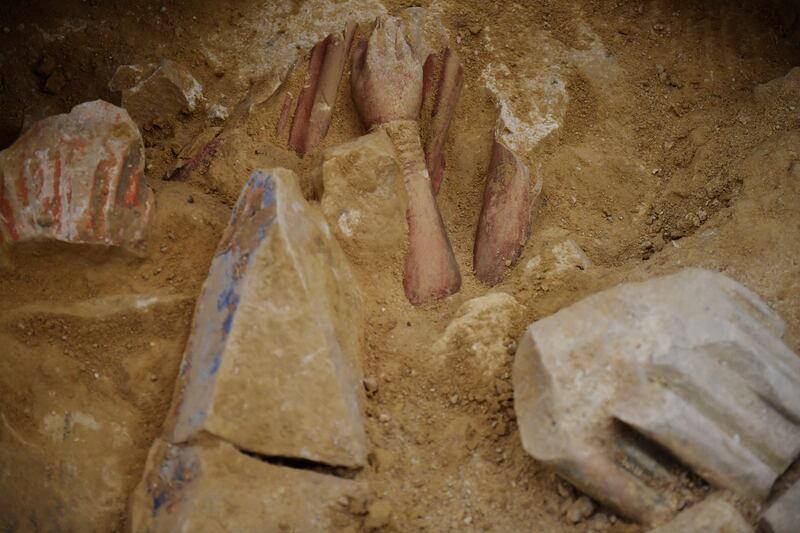
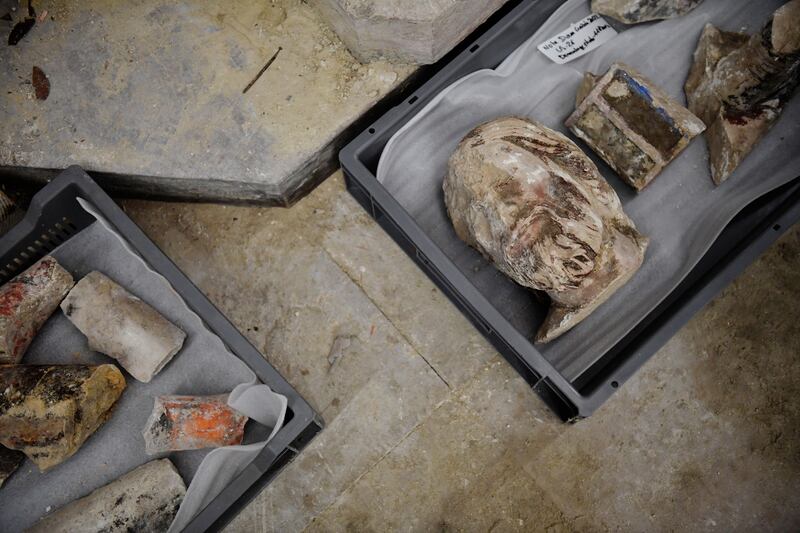
Beside the lead coffin, archeologists have so far unearthed painted sculptures that include a pair of carved hands, vegetables, and the bust of a yet-unidentified bearded man. Other artifacts included remnants from the original church, which has been restored numerous times in its 800-year existence.
Julien de Rosa/AFP via Getty Images
To stay on track to reopen the cathedral on time, archeologists with the National Institute for Preventive Archaeological Research have been given a deadline of March 25 to remove the artifacts—or rebury them for the next generation to find.
See more of our coverage in your search results.

Got a tip? Send it to The Daily Beast here.
Register below to read this article for free or subscribe
to unlock unlimited access to The Daily Beast.
Monthly
$1
First month then $5.99/month
Annual
$35
First year then $59.99/year
Premium
$79
First year then $119.99/year
*Substack access provided by the next business day, using your subscription email. Choosing the Premium plan constitutes your permission to share your subscription email with Substack and your agreement to Substack’s Privacy Policy.
Already have an account? Sign In
Looks like you already have a subscription!
You're all set!
Thanks for subscribing.