Antoni Porowski Is Taking His ‘Queer Eye’ Tears Worldwide
We chatted with the emotional foodie about his new TV show “Best of the World,” what he learned from “Queer Eye,” and his surprising full-circle moment.

Photo Illustration by Eric Faison/The Daily Beast/Nat Geo
The Gilligan’s Island jokes write themselves.
It was the first time I had ever commuted to an interview by ferry. The trip was only a surprisingly short eight minutes from Lower Manhattan to Governors Island, but it was for what was meant to be a three(ish) hour “tour,” of sorts.
I was to spend the afternoon and early evening with Antoni Porowski, who is following up his 10-season stint as one of Queer Eye’s Fab Five with his second National Geographic series, Best of the World With Antoni Porowski. We had a lovely interview on the waterfront, gazing at the Manhattan skyline, attended a cocktail-making class, and sat for a dinner he was hosting with Nat Geo on behalf of the series. Then the heavens opened up.

It was as if a cartoon character was up in the clouds and pulled a lever, suddenly dumping all the rain the sky could hold on our dining tent, all while another minion turned the dial on a wind machine up to maximum speed. Workers scrambled to batten down the hatches—the first time I’d seen that phrase employed in real life—tying down tent flaps that were billowing in the storm, as diners alternated between nonchalantly eating their salmon and giggling while filming the melee.
Waiters, soldiering on with service, scurried in and out of the tent with trays of gourmet food on platters guarded by umbrellas. The event’s photographer ran out to capture the scene, admirably undeterred as his hat flew off and blew away.

If you’ve seen Porowski on Queer Eye or his previous Nat Geo series, No Taste Like Home, you wouldn’t be surprised that Porowski was a giddy combination of “wow, look what’s happening” and “show must go on” in response to all this. He apologized that the planned s’mores, which he told me in our interview are “America’s greatest contribution to the world,” were now going to be plated for dessert instead of roasted on a campfire with the city lights twinkling in the background.
Sign Up for our Unmissable Newsletter
By clicking “SUBSCRIBE” you agree to our Terms of Use and Privacy Policy.
As the storm calmed and we were whisked back to the ferry in golf carts, it became clear how uncanny the delightful chaos was as a representation of Porowski and this show.
Earlier, we had talked about the full circle moment of hosting an episode of Best of the World about New York City 15 years after first moving here, and how his childhood wanderlust and his time on Queer Eye worked in tandem to prepare him to host a show that views travel not through the lens of an Instagram filter or TikTok video, but that of curiosity, experience, and memory. And what did we just have but an epic memory?
“We want the show to be educational and informative, but we also want it to be fun and exciting and really have that sense of adventure,” he said. “For me, who’s approximately 50 percent golden retriever, I just get excited by so many different things.”
***
Best of the World, which premieres June 7 on National Geographic and streams the next day on Disney+, unleashes Porowski’s golden retriever energy globally, zooming through four cities—Mexico City, London, Paris, and New York City—to search for the most authentic and most indelible local experiences. While some familiar destinations pop up in the episodes, the proverbial guidebook is thrown out on the hunt for food, encounters, and the intangible sense of place that makes those booming locales so singular.
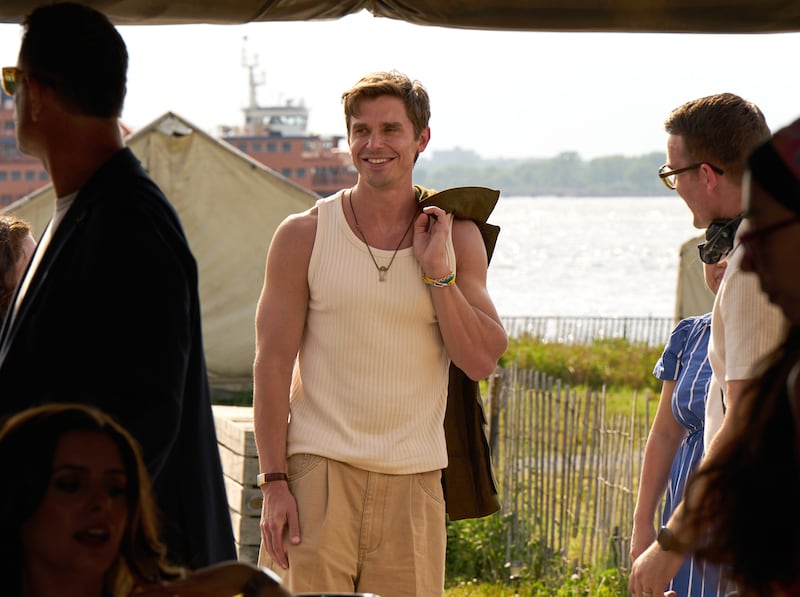
GOVERNORS ISLAND, NY - MAY 20: Antoni Porowski at National Geographic’s experience inspired by the upcoming series “Best of the World with Antoni Porowski” at Collective Retreats on Governors Island in New York City on May 20, 2026. (Photo by Bing C. Guon/PictureGroup for National Geographic)
Bing C. Guon/PictureGroup for Na/Bing C. Guon/PictureGroup for Na
“The title itself kind of terrified me at the beginning,” Porowski tells me. “What is the best of the world can be so incredibly subjective.”
For one person, “staying in a yurt on Governors Island, looking at the city, and then being able to be downtown less than an hour later, having a slice of really good pizza or going for dim sum is their idea of the ultimate,” he continues. “For other people, it’s thread count and a Swarovski crystal chandelier in a five-star hotel. It runs the gamut. So in tackling that, what I learned from Queer Eye, it’s like at the end of the day, it’s always about the people. It’s that human connection, and it’s what I’m drawn to most whenever I travel.”
We are in one of those said yurts on Governors Island at Collective Retreats, what is essentially a glamping resort with views across the harbor to Lower Manhattan. It is golden hour and we are staring at the Statue of Liberty while we talk about how Best of the World encourages a break from the trend of travel as social content and sightseeing from behind an iPhone screen. In Best of the World, Porowski has perfected the art of gazing lovingly at a breathtaking sight, but nary a selfie is taken.
“Thankfully, I cannot take a photo or video for my life,” he says. “I’m not even kidding. I don’t understand framing. Everything is always backlit. Anyone who asks me is always deeply offended. They’re like, ‘Is this really how you view me?’”
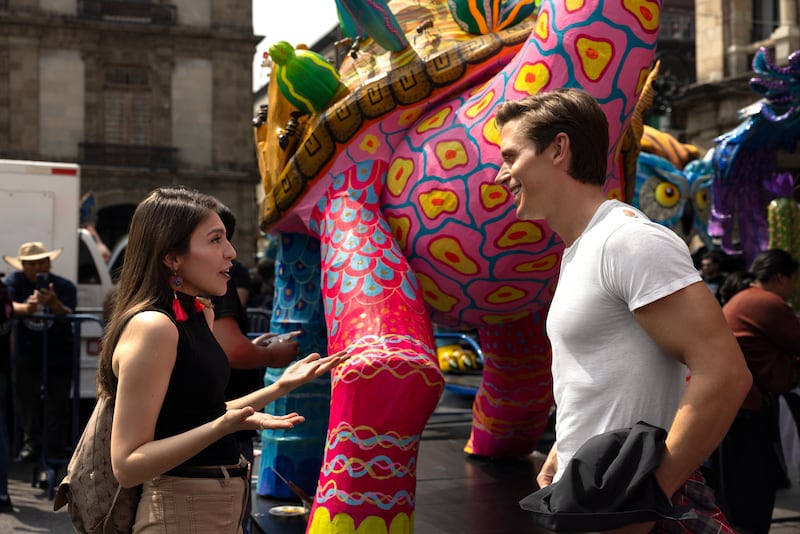
Fernanda explains the history and significance of the Alebrijes Parade to Antoni. (National Geographic/Alicia Vera)
Alicia Vera/National Geographic/Alicia Vera
Almost as if on cue, two Staten Island Ferries heading in opposite directions crossed with Lady Liberty perfectly framed between them.
“That’s pretty epic,” he says. It really is. The setting sun is reflecting off the water into his wide, amazed eyes. The golden retriever is popping out. “Imagine I take my phone out and I just start recording, dead center, and it’s like a beautiful shot, and you’re like, ‘Wait, I thought you were terrible at this!’”
Governors Island features heavily in the New York City episode of Best of the World. Porowski and his dog, Neon, who he credits with discovering the 172-acre island for him (Neon’s dog camp are frequent visitors), stayed a night a Collective Retreats in the yurt we’re speaking in. Porowski had the reaction of any New York resident who, after vaguely hearing about Governors Island over the years, finally takes the ferry for the first time: How does this place exist this close to Manhattan?
Beginning in the 1750s, the island was a military base before it was decommissioned and redeveloped as what is essentially a massive park. Navigating through the old army buildings, you’ll find endless green spaces dotted with hammocks, gardens, food stalls, arts shows, bike paths, and what may rank as the city’s most unique spas.
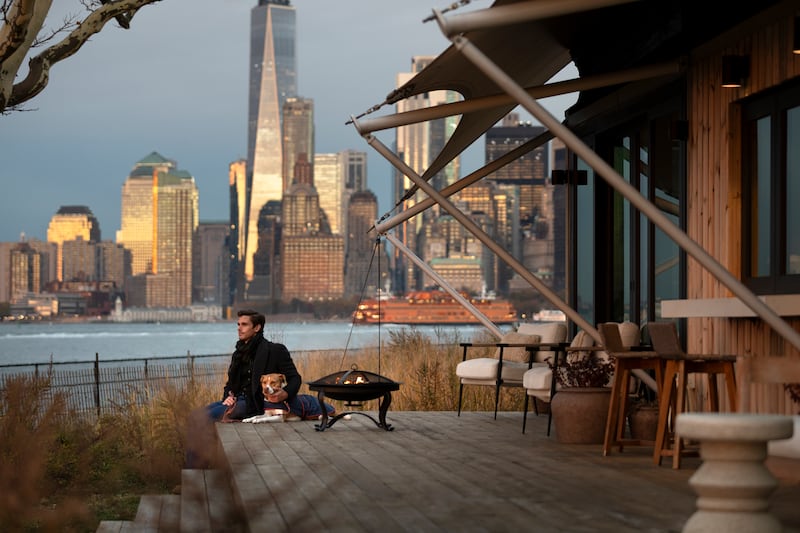
Antoni Porowski visits Collective Retreats on Governor's Island with his dog Neon. (National Geographic/Jose Alvarado Jr.)
Jose Alvarado Jr./National Geographic/Jose Alvarado Jr.
“You come here, and it’s steeped in history,” Porowski says. “There are all these old guard buildings and houses, which are definitely haunted. Then you get to sleep in a yurt and wake up and see the entire southern Manhattan skyline. It feels like we’re out in nature with the tall grass and all of the native species that they’re trying to rehabilitate. So you’re kind of away from the city, but it’s also literally right there.”
While Best of the World is brand-boosted by its association with National Geographic’s iconic “Best of the World” franchise, it’s certainly not the first globe-trotting series fronted by a personable celebrity. Porowski is joining a red carpet’s worth of hosts in the genre, including Stanley Tucci, Eva Longoria, Eugene Levy, and Jason Momoa. Did he have to think about what would be his version of this kind of travelogue that would differentiate it?
“Whenever I’ve tried to do that historically, it typically fails because I don’t feel authentic doing it,” he says. “This is something that I think I learned, to go a little back, on Queer Eye. My formula is definitely, like, lead with a little bit of self-deprecation, but then just travel with curiosity.”
In Best of the World, that leads him to laughing about how “the best foods are the messiest” when he clocks grease dripping down his chin while eating tacos in Mexico City, or being moved to tears by a cultural sculpture festival and parade. There are moments like that in all of the cities; heck, Porowski even tears up again simply talking about a bite of food that made him cry while tasting it. But it was filming in New York, where the Montreal-born son of Polish immigrants has called home for 15 years, that was especially profound.
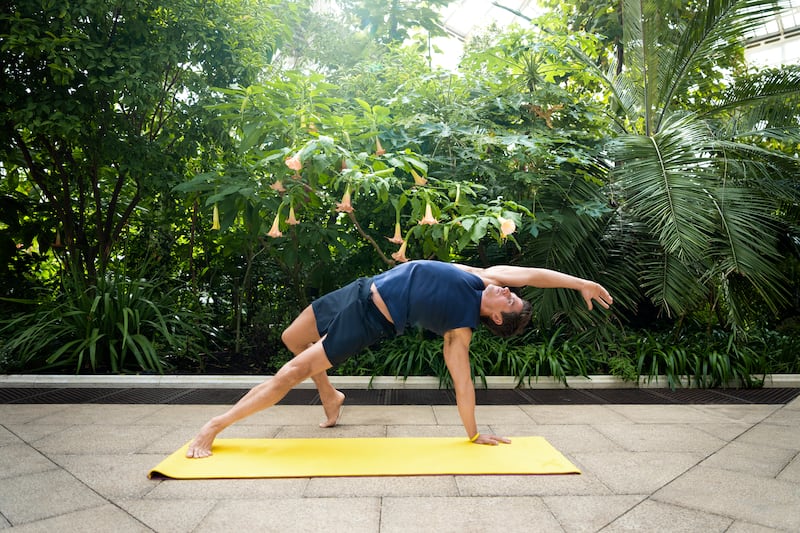
Antoni Porowski does yoga in the Temperate House at Kew Gardens, as seen in Best of the World with Antoni Porowski. (National Geographic/John Wendle)
John Wendle/National Geographic/John Wendle
After shooting wrapped in November at Collective Retreats, Porowski’s partner Zacharias Niedzwiecki joined him at Neon at the yurt. Niedzwiecki plays a larger role in the episode. There’s a segment that takes place at the New York City Marathon, during which Porowski travels all over the race course to meet the runners and volunteers who make the event, which is such a fabric of the city’s identity, happen. (The runners cried. He cried. I cried. We all cried.) And he’s at the finish line, where he greets Niedzwiecki, who ran the race.
Having his partner be a part of the show, Porowski says, was “literally the biggest contradiction.” After Queer Eye, he decided to stop sharing about his personal life. “I always feel like whatever I shared of myself historically, publicly, it was no longer just mine anymore.”
But then the marathon coincidence happened. And producers were telling him that the show, particularly that episode, should be personal, that audiences should be getting to know him through his experiences in the city. “So it was sort of like why wouldn’t I show that? Why wouldn’t I want to just be a cheerleader for my guy who just accomplished this like incredible thing?”
So Porowski tells me about when he and his guy were at Collective Retreats at the end of the shoot. They were gazing at the Manhattan skyline. “I was thinking like, ‘S--t, I remember when I moved here from Montreal,’ and I was thinking, ‘I’m gonna be here for two years.’” He was studying acting at the Neighborhood Playhouse School of the Theatre, and then was going to head back north to Canada to find screen work. “But I moved here and fell deeply, madly in love with the city.”
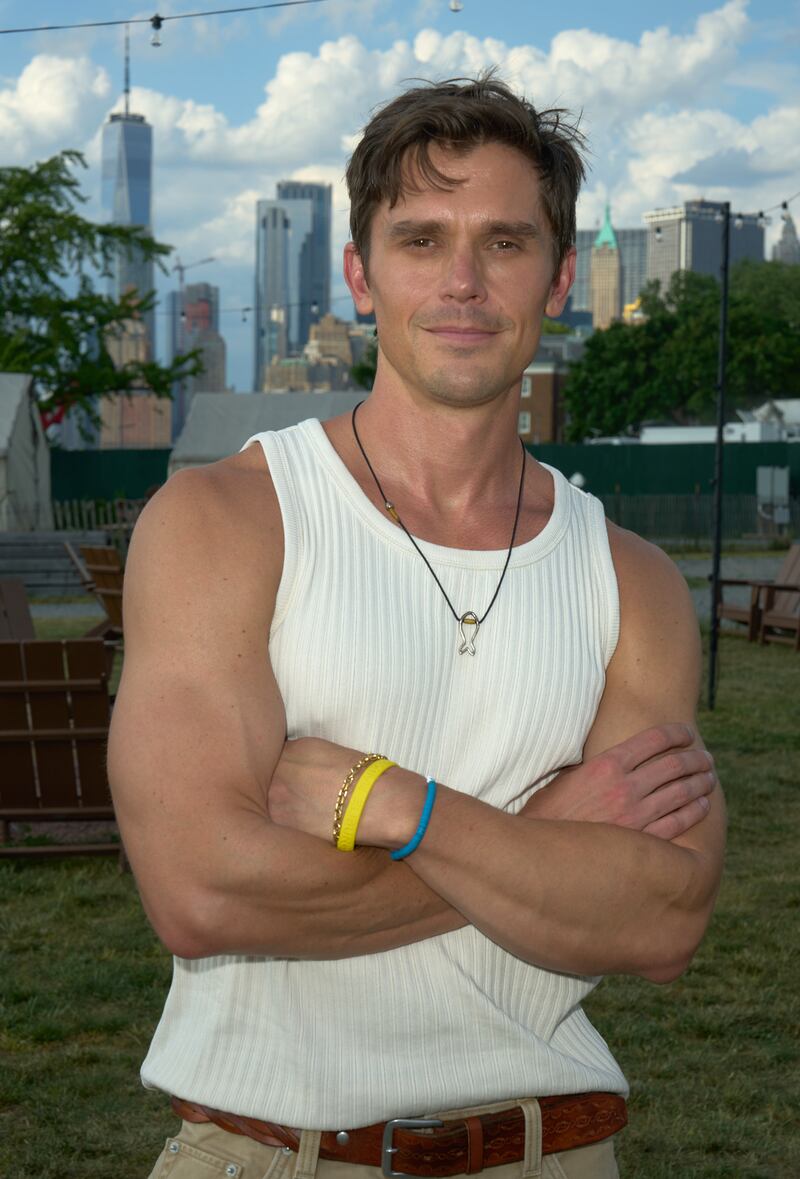
GOVERNORS ISLAND, NY - MAY 20: Antoni Porowski poses for a portrait during National Geographic’s experience inspired by the upcoming series “Best of the World with Antoni Porowski” at Collective Retreats on Governors Island in New York City on May 20, 2026. (Photo by Bing C. Guon/PictureGroup for National Geographic)
Bing C. Guon/PictureGroup for National Geographic/Bing C. Guon/PictureGroup for National Geographic
While he was hustling to make it as an actor, the city proved challenging for him.
“I was so violently confused by the subway system, where you can’t understand anything that they say, and suddenly they’re switching tracks,” he says. “In Montreal, it’s a perfect tic-tac-toe that’s color-coded, and it ends at midnight. That’s all you need to know. In New York, it is not that at all. It’s like that on steroids. And I was like, ‘I’m gonna make the subway my b---h. I wanna be a local here in this city and figure out, and I’m gonna do whatever I can to make that happen.’”
Fifteen years later, he was looking out at the city that he was shooting a dedicated TV episode for National Geographic—“the only piece of literature that my parents didn’t have to force down my throat”—and he realized that he did, in fact, make it happen.
“I was meant to be an actor when I came here, or at least I thought I did,” he says. “I ended up in unscripted TV, and now I’ve pivoted to documentary storytelling while taking the lessons that I learned from Queer Eye, what I learned in acting school, and all of that. It didn’t make any sense at the time, but that’s where I’m very, like, should I start leaning into some kind of spirituality soon? Because there’s clearly things that are going on out there that are so much more powerful and bigger than I am, that I owe thanks to.”
Obsessed with pop culture and entertainment? Follow us on Substack and YouTube for even more coverage.

Got a tip? Send it to The Daily Beast here.
Register below to read this article for free or subscribe
to unlock unlimited access to The Daily Beast.
Monthly
$1
First month then $5.99/month
Annual
$35
First year then $59.99/year
Premium
$79
First year then $119.99/year
*Substack access provided by the next business day, using your subscription email. Choosing the Premium plan constitutes your permission to share your subscription email with Substack and your agreement to Substack’s Privacy Policy.
Already have an account? Sign In
Looks like you already have a subscription!
You're all set!
Thanks for subscribing.
Sign in or create an account
Login dialog
Loading comments…