Takashi Miike (Audition, Ichi the Killer, Blade of the Immortal) should own the trademark for the term “gonzo,” considering that the ultra-prolific Japanese auteur (who has more than 100 feature directorial credits to his name) is cinema’s preeminent over-the-top auteur. There isn’t an artist alive who more enthusiastically relishes lunatic extremism, and he brings his hallmark madman verve to Bad Lieutenant: Tokyo, an amusingly outrageous and gory film noir about a ne’er-do-well up to his neck in nastiness.
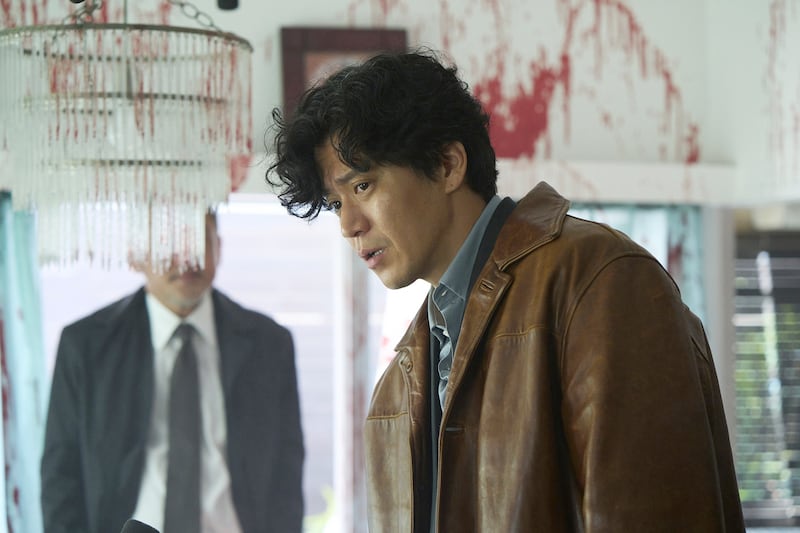
The third installment of a loose anthology that includes Abel Ferrara’s 1992 cult-classic original and Werner Herzog’s wackadoo Nicolas Cage-headlined 2009 Bad Lieutenant: Port of Call New Orleans, Bad Lieutenant: Tokyo—world premiering at the Toronto International Film Festival—is of a piece with its predecessors, spinning a tangled yarn of cops-and-robbers deviance and duplicity that revolves around a police officer who, per the title, is exceedingly naughty. In this instance, that’s Yabuki (Godzilla vs. Kong’s Shun Oguri), a Japanese detective who’s a compendium of every vice known to mankind.

“Welcome to the world of low-life scum,” says a yakuza henchman to Yabuki, and Bad Lieutenant: Tokyo is all too happy to be there. In a leather jacket and with a permanent hangover sullying his mood, Yabuki is off the rails, dropping off his two kids at school and then, before pulling away, snorting cocaine in front of their passing classmates.
At home, he discovers that his wife has left him. Given what we subsequently learn about him, it’s amazing that she stuck around long enough to have his children. Yabuki loves drugs of all sorts, whether they go up his nose or into his arm, and he additionally has a taste for two call girls, one of whom pleasures him against a ping-pong table while the other films their escapades on her smartphone.

Working from Daisuke Tengan’s playfully depraved script, Miike doesn’t stop there, revealing that Yabuki has a gambling problem that’s landed him deep in debt, such that the crime boss he owes gives him one week to settle up before things turn ugly. Yabuki is concerned about this, but only to a point, since he carries himself with a nonchalant self-destructive streak a mile wide—a consequence of feeling damned for a terrible betrayal fifteen years earlier that put him in bed with the city’s reigning yakuza clan.

Although the yakuza have supposedly disbanded and gone underground, the Tokyo depicted by Miike is a seedy, shadowy realm populated by cretins, and Yabuki is dragged back into the muck—or, at least, a different division of it—when he’s asked to take a look at a naked corpse whose neck has been horribly snapped. Yabuki doesn’t want anything to do with the case, whereas he’s intrigued by a separate slaying of a woman who, in a grisly discovery, was chopped up and pounded into meatballs that were then spread out on an apartment building roof as a feast for crows.

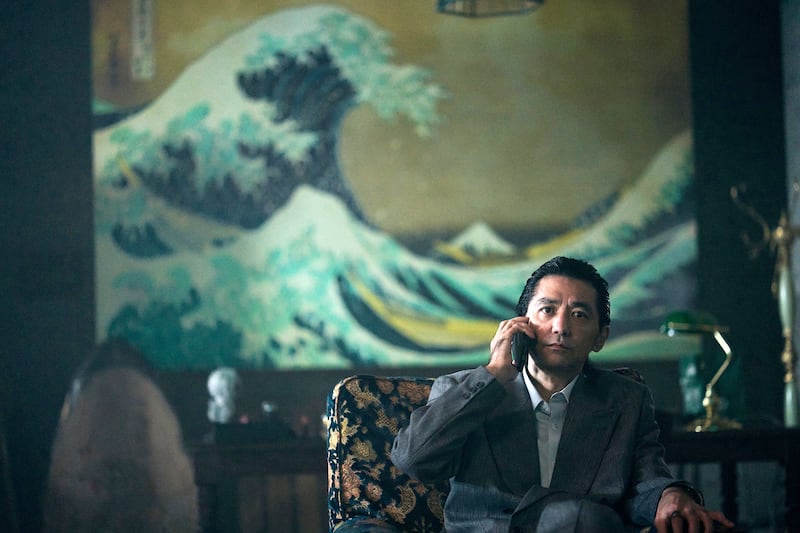
Yabuki and his associates immediately deduce that the culprit is the woman’s husband, Ishizuka (Shotaro Mamiya), an ex-yakuza heavy who just got out of prison and is on a vengeful warpath to slay those who harmed him. Their search for the psycho is made more urgent by the fact that he’s kidnapped his 10-year-old son.

Miike gleefully splatters blood over his name in the opening credits, and that tongue-in-cheek attitude guides Bad Lieutenant: Tokyo, which soon pairs Yabuki with Gwen (Lily James), a visiting FBI agent who’s on the hunt for Megan (Liv Morgan), the sushi- and tattoo-loving daughter of the United States government’s Speaker of the House (and potential VP candidate).
At first glance, the British James seems totally out of place in these debauched gangland environs. Yet wearing black-and-white suits, sporting a thick southern accent, and exuding the badass cockiness of an action movie hero, she quickly fits in, adding to the proceedings’ everything-goes approach to its crazy crime plot.
The respective pursuits of Ishizuka and Megan are destined to dovetail in Bad Lieutenant: Tokyo, as well as become complicated by conflicting personal problems. Both protagonists are hopelessly compromised individuals who break the rules as often as they breathe. Miike mires them in a complicated web of intrigue and treachery that’s punctuated by grim, squelchy slayings by its fiends, one hilariously gratuitous nightclub brawl in which Gwen demonstrates her fondness for crotch shots, and a sex scene set against a window looking out on neon-drenched Tokyo that’s as casually gorgeous as the rest of Miike’s visuals.

The First Love filmmaker has never shied away from gruesomeness, but he rarely indulges in it without his tongue planted somewhat firmly in his cheek, and black comedy is a key component of Bad Lieutenant: Tokyo. Oguri’s lead performance has an insouciant dissoluteness that’s routinely funny, such as when he agrees—out of a desire for his prostitute friend to complete her, ahem, services—to pose as a young child’s father at a school concert where he’s called on stage, disheveled and miserable, to sing a cheery tune. Sniffing meth, borrowing money and a car from his dealer, and shaking down retired yakuza bigwigs with blasé amorality, he’s a riot who embodies Miike’s mordant sense of humor.

As with many of his finest works, Bad Lieutenant: Tokyo pushes things past the point of good taste and yet simultaneously hews to Hollywood conventions, be it revelations about Gwen’s true circumstances or Yabuki’s climactic ethical dilemma. Having made movies in every conceivable genre, Miike has a deep knowledge of cinematic tradition and a peerless gift for delirious, adrenalized stylization, and with Yabuki and Gwen’s saga, he riffs like a jazz maestro, freely combining and reconfiguring clichés to construct something overblown and electric.
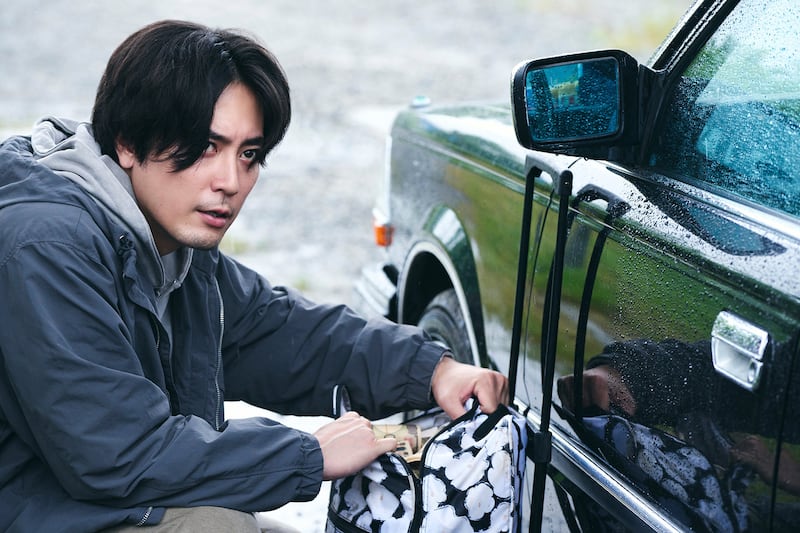
A cross-cultural affair rife with shootouts, car chases, and fantastical drug-fueled hallucinations, Bad Lieutenant: Tokyo gets its rocks off by wallowing in the filth and grime that its antihero calls home, even as it holds out hope for salvation—a notion that comes equipped with Miike’s typically jaded wit and noir’s signature fatalism. It’s as bad as they come, which is to say, very, very good.