Friends star Lisa Kudrow gave insight into life on the set of the most famous sitcom of the ’90s, revealing some of its darker sides.
Kudrow, 62, spoke to The Times of London about the “mean stuff going on behind the scenes” of Friends, the ensemble comedy where the cast became and remained friends in real life. The issue, she shared, was really in the writers’ room, which consisted of 12-15 staff members, most of whom were men, Kudrow said.
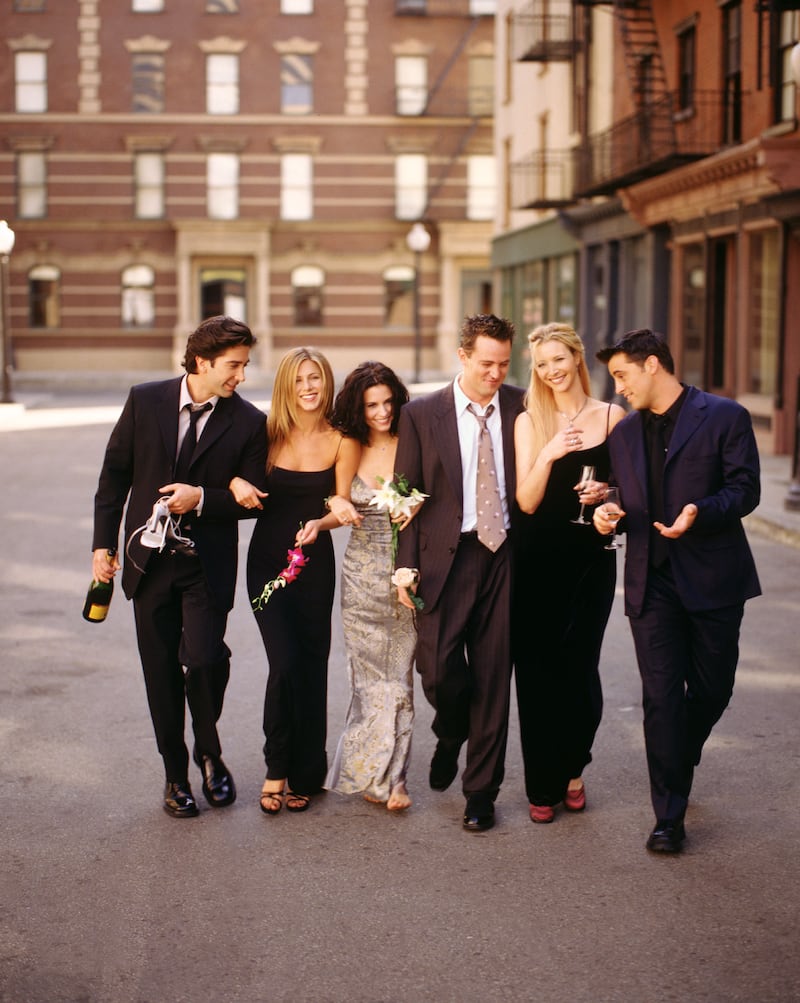
“Don’t forget we were recording in front of a live audience of 400, and if you messed up one of these writers’ lines or it didn’t get the perfect response they could be like, ‘Can’t the bitch f---ing read? She’s not even trying. She f---ed up my line,’” Kudrow said.
“And we know that back in the room, the guys would be up late discussing their sexual fantasies about Jennifer and Courteney. It was intense,” she continued.

Amaani Lyle, a writer’s assistant for Friends, brought a sexual harassment case in which she alleged that the show’s writers discussed sleeping with the female stars, drawing lewd pictures, and simulating masturbation. In 2006, the California Supreme Court unanimously dismissed the claims, holding that such humor is necessary for workplace creativity.
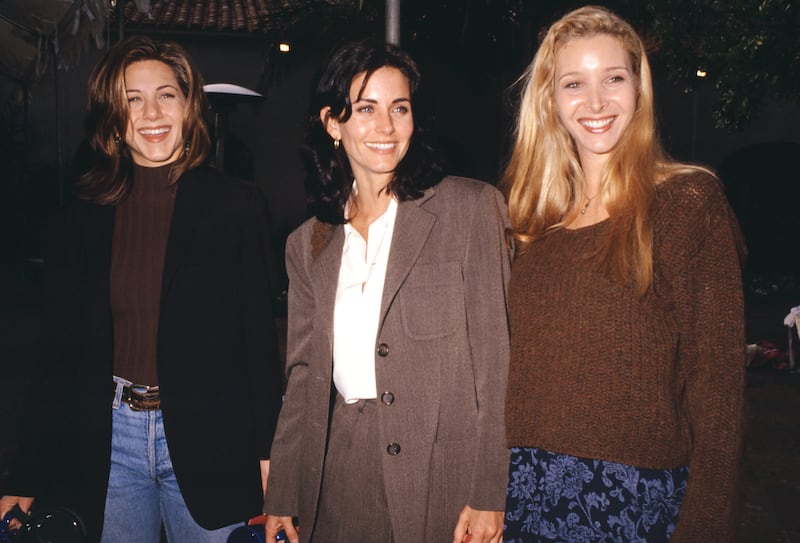
Kudrow said that she and her co-stars “took care of one another” during the course of the NBC series, which ran between 1994 and 2004.
“We experienced incredible success with each other,” she said. “We took care of one another. How you survive that level of exposure and degradation alone is just a mystery to me.”
Kudrow added of the writers, “Oh, it could be brutal, but these guys—and it was mostly men in there—were sitting up until 3 a.m. trying to write the show, so my attitude was, ‘Say what you like about me behind my back because then it doesn’t matter.’”
The actress is reflecting on the entertainment industry at a crucial moment, with her revived series, The Comeback, now airing on HBO.
The sitcom is a satirical look at the entertainment and television industries. In a review of the new season, the Daily Beast’s Kevin Fallon wrote, “The show is sometimes a funhouse mirror reflecting the cynicism, contraction, and commercial chaos poisoning the great art of making television, but it is more often a startling, transparent window into that world and all its comedic lunacy.”