Welcome to UNMISSABLE, the Daily Beast’s Obsessed’s guide to the one thing you need to watch today. Whether it’s the most gripping streaming show, the most hilarious comedy, the movie which you’ll never forget, or the deliciously catty reality TV meltdown, we bring you the real must-see of the day—every day. Sign up for our daily UNMISSABLE newsletter now.
Baby Reindeer creator Richard Gadd’s new show Half Man, another portrait of tortured and toxic masculinity, drips with homoeroticism. Sexiness, however, is in short supply, as the creator/writer/star’s latest (April 23, on HBO) is a six-episode saga of domination, humiliation, need, self-loathing, intolerance, and violence whose anguish and anger are matched only by its obviousness and repetitiveness.
Gadd may have bulked up to play the part of a villainous aggro alpha, but the eagerly awaited follow-up to his Emmy- and Golden Globe-winning hit is, by and large, a slight and transparent tale of closeted torment and co-dependent craziness.
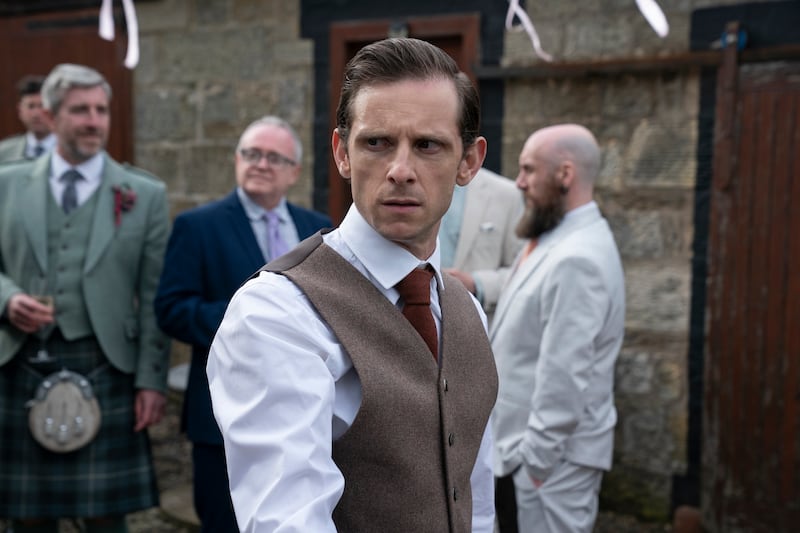
Baby Reindeer was famously (and controversially) based on Gadd’s own stalker ordeal. And in Half Man, aspiring writer Niall Kennedy (Jamie Bell) is told by his agent to “write about what you know.” Alas, that life-inspiring-art element is merely a tacked-on aside in Gadd’s miniseries, which opens at Niall’s wedding at a rural country estate.
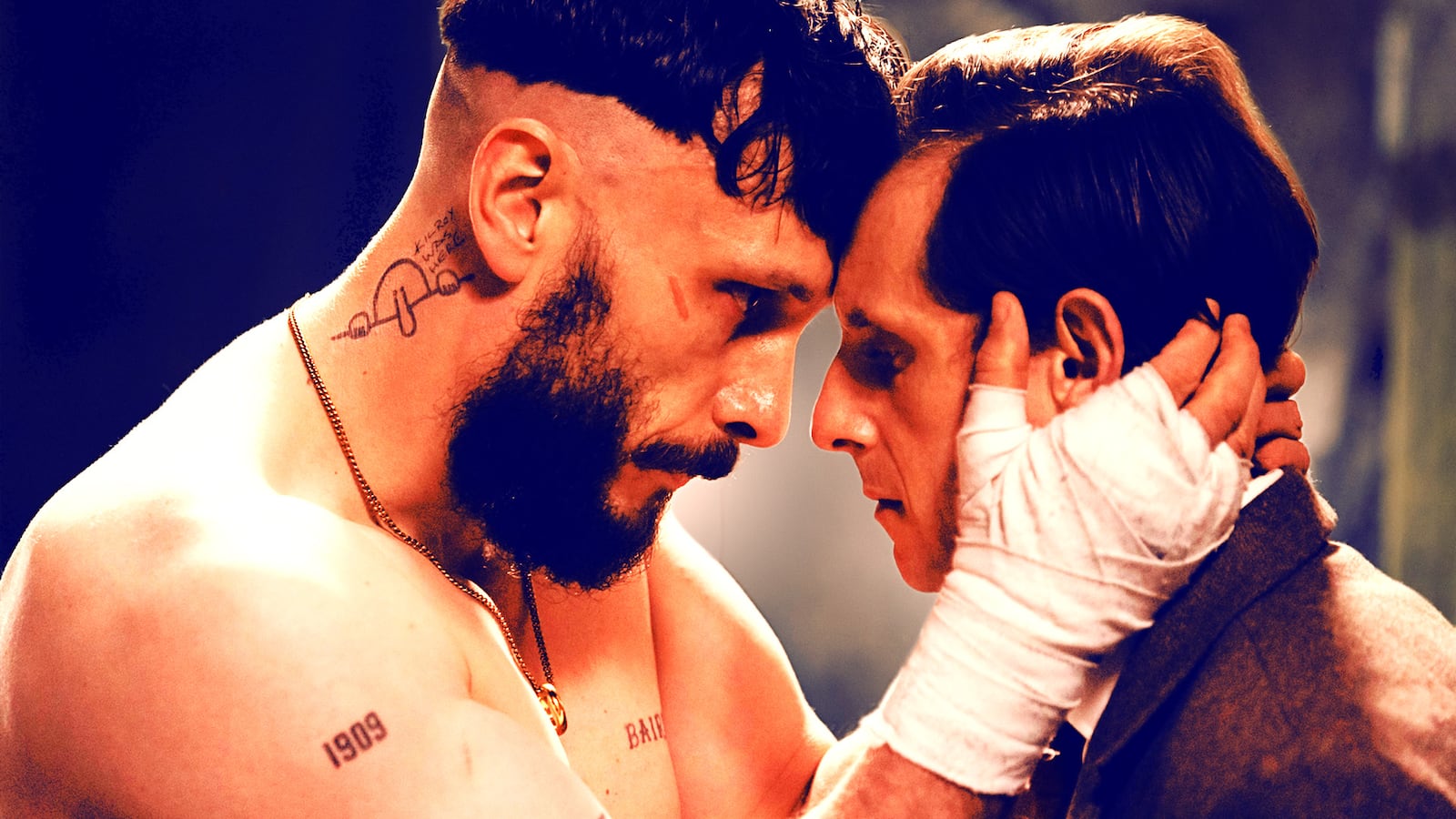
The partner with whom he intends to tie the knot is, at least initially, a secret. Yet it’s no mystery that the festivities are destined to go off the rails, given that as guests gaily dance outside, he faces off in an empty barn with Ruben Pallister (Gadd), a bearded, burly, shirtless bruiser who tells Niall that he looks gorgeous, tries to grab his crotch, calls him his “brother from another lover,” and then slugs him in the face.
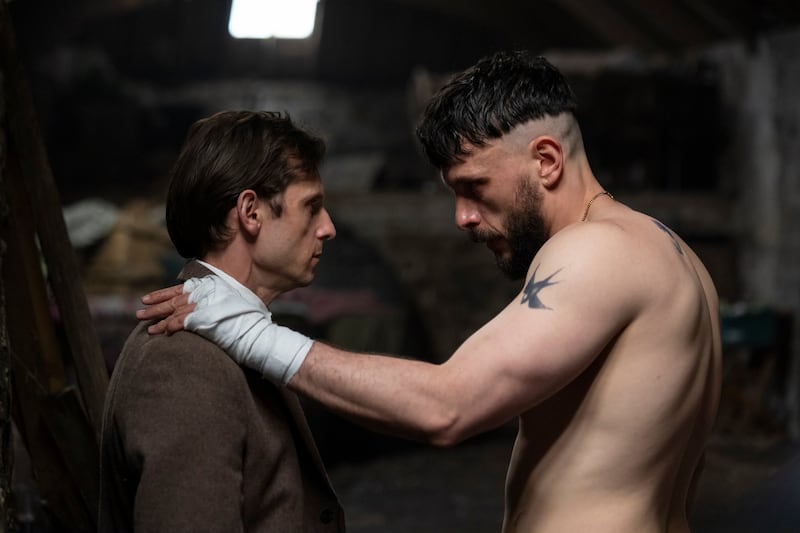
That mixture of maniacal male affection, desire, and brutality is the lifeblood of Half Man, whose story promptly flashes back to the miserable ‘90s childhood of 15-year-old Niall (Mitchell Robertson) in Scotland. Niall is beset by homophobic taunts at school from the local bully, and his family situation isn’t more pleasant, since he’s now being joined at home—and in his bedroom—by older teen Ruben (Stuart Campbell), the son of his jerky mom Lori’s (Neve McIntosh) even jerkier girlfriend Maura (Marianne McIvor).
Just released from a young offenders’ facility, Ruben is a scary figure who immediately starts calling Niall “Bambi” and replaces his geeky room decorations with posters of shirtless young boxers. The quasi-sexual menace continues when Ruben chokes Niall out. They wake up lying together in bed, Niall’s shorts wet.
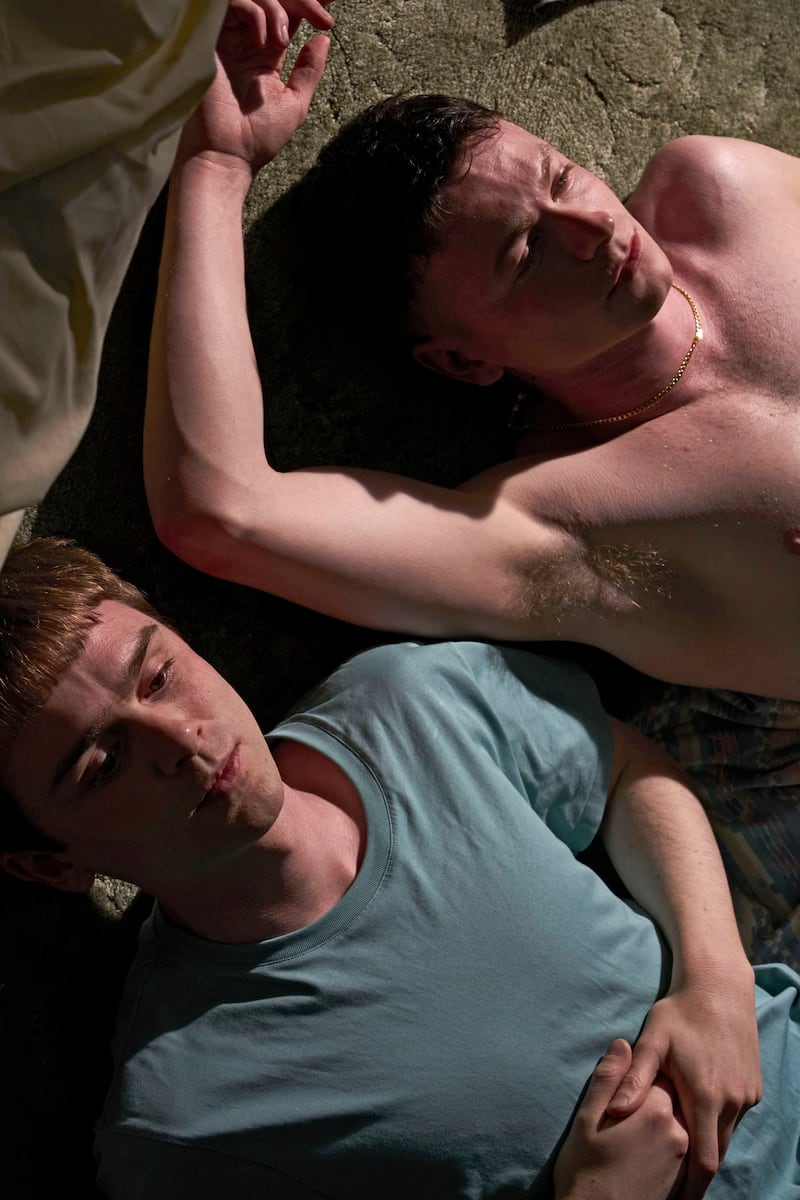
Strong, intimidating, virile, and unwilling to take crap from anyone, Ruben is everything the wimpy Niall isn’t. It’s not long before the two strike up a knotty bond that’s simultaneously fortifying and unhealthy, complete with Ruben helping his buddy lose his virginity to a woman in the most highly charged manner imaginable.
Following a three-year time jump, Niall heads off to college, where he does his best (at his mother’s behest) to cut ties with Ruben. That’s not to be, as Gadd’s plot is predicated on up-and-down swings between camaraderie and conflict, with the duo repeatedly coming together (pun intended?) and tearing apart over the course of the ensuing decades courtesy of a variety of carnal and identity-related issues.
The elephant in the room is that Niall is interested in men as well as women, and his deep shame over these urges causes him to hide them from the volatile Ruben, whom he fears will blow his top if he discovers that his mate is gay.
In its early going, the show captures a raw sense of Niall’s self-suppression and the agony it begets, not to mention how the concept of manliness (and, consequently, self-worth) is tangled up with sensitivity and viciousness, honesty and deception. With Campbell and Robertson giving compelling yin-yang performances as the young protagonists, Gadd captures a distinctive brand of messy macho dysfunction.
Unfortunately, his depiction of Niall and Ruben’s screwy dynamics is terribly unsubtle, and following a gnarly incident that forces Niall to make a momentous choice, the proceedings begin to grow monotonous.
Years later, Niall is struggling to be an author, wrestling with his sexual preferences, and coping with substance abuse. His life is complicated by the reappearance of Ruben, who’s none too pleased with his former sidekick. Nonetheless, they make amends, at least until other incidents turn them antagonistic, after which they again reconnect—a seesawing pattern that speaks to Niall’s desperate and self-destructive yearning to be (and be seen as) something he’s not, but which quickly proves tiresome and unconvincing.
Niall, you see, thinks he’s half a man, hence the series’ title, and Gadd is similarly blunt about Ruben, whose inner turmoil is rooted in similar feelings of incompleteness. Gadd strikes a frightening pose, but Ruben is such an unhinged psychopath that, no matter how hard the story tries to sell it, Niall’s attraction to him rings false. That’s particularly true as Half Man hurtles toward its final crises, with Niall doing so many different, intertwined reckless things that it all comes across as strained and excessive.
All the while, Gadd cuts back to his present-day framing narrative as a way of creating intrigue—over why Ruben has crashed these nuptials and Niall and his spouse-to-be are shaken by his arrival—as well as suspense, considering that they’re not likely to both survive this encounter.
This device, however, swiftly peters out, as does the primary material, rife as it is with twists and turns whose over-the-top intensity—in terms of sex and violence—resounds as calculated. Yo-yoing wildly between calm and chaos, it loses its grip on reality. Not helping matters are assorted half-formed subplots that make the show a case of both too much and not enough.
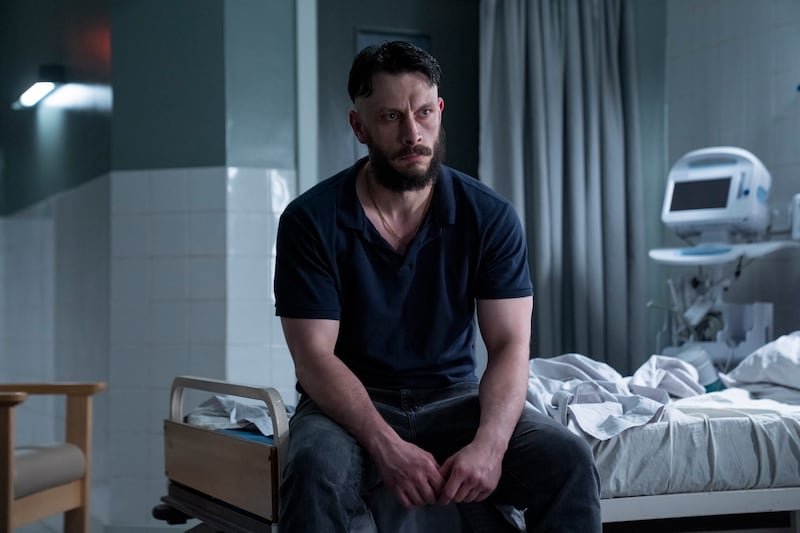
Worst of all is that after setting up multiple potential cataclysms, Gadd has little idea how to wrap up Niall and Ruben’s relationship, resorting to pulling the rug out from under viewers, and then concluding things with a shrug-ish grunt.
Bell and Gadd’s commitment to their roles is never in question. At a certain point, though, the series’ schematism becomes so pronounced that it renders them mere pawns in a contraption designed to underscore, at every turn, the corrosiveness of homophobia and, also, the resultant act of hiding and hating your true self.
Despite its characters’ tumultuous confusion, it’s a drama whose thematically neat-and-tidy investigation into What It Means to Be a Man is stultifying—as is, ultimately, its sameness.