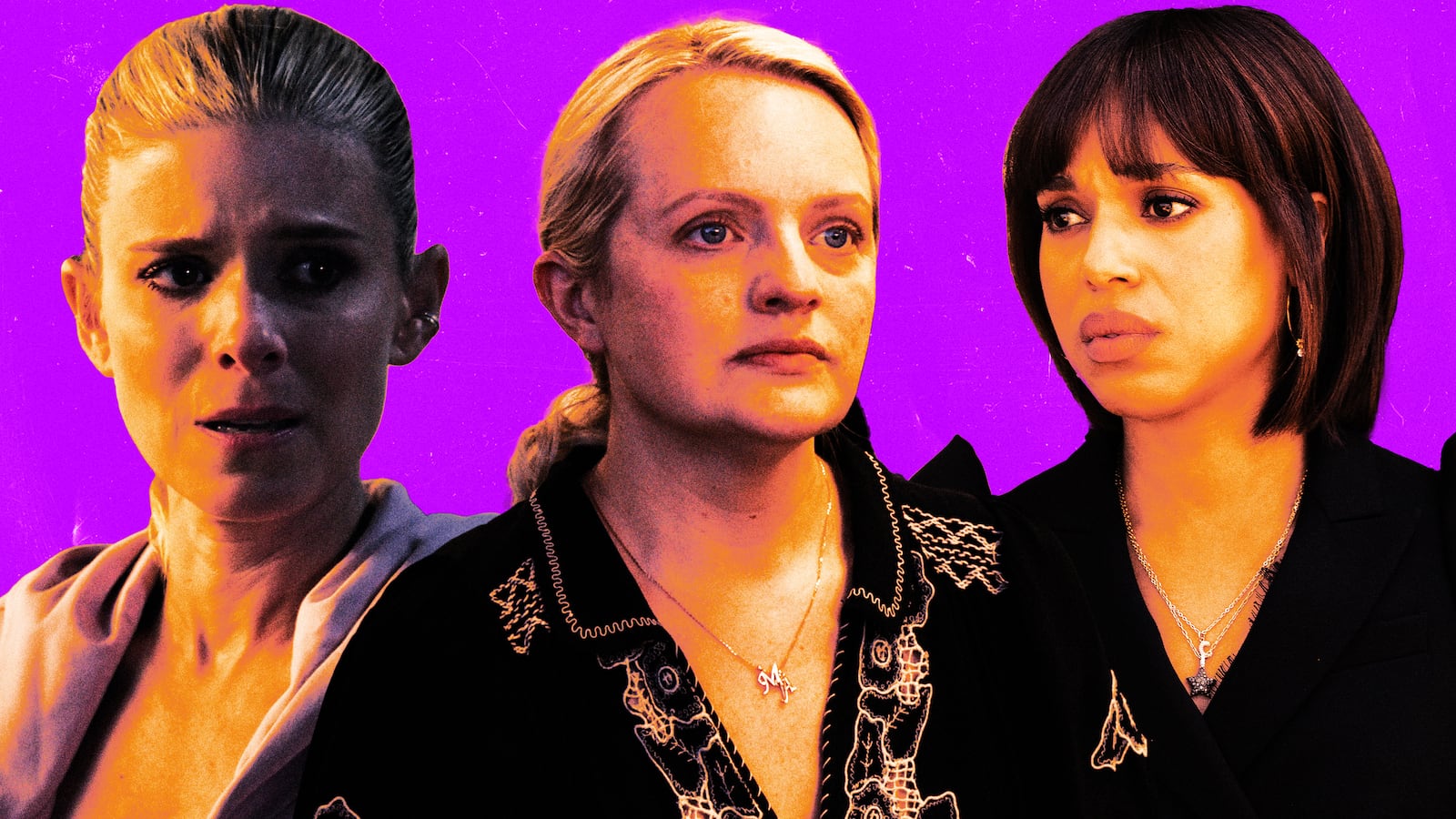
How is your blood pressure doing after that Imperfect Women finale?
The Apple TV series, starring Elisabeth Moss, Kerry Washington, and Kate Mara, may rank among the most twist-filled thrillers there’s ever been. You’d be forgiven if your throat is hoarse after gasping so much during the just-released conclusion.
(Warning: Spoilers ahead.)
The series, adapted from Araminta Hall’s 2020 novel, is the juiciest in the spate of recent murders-and-secrets mysteries that have surged in popularity.
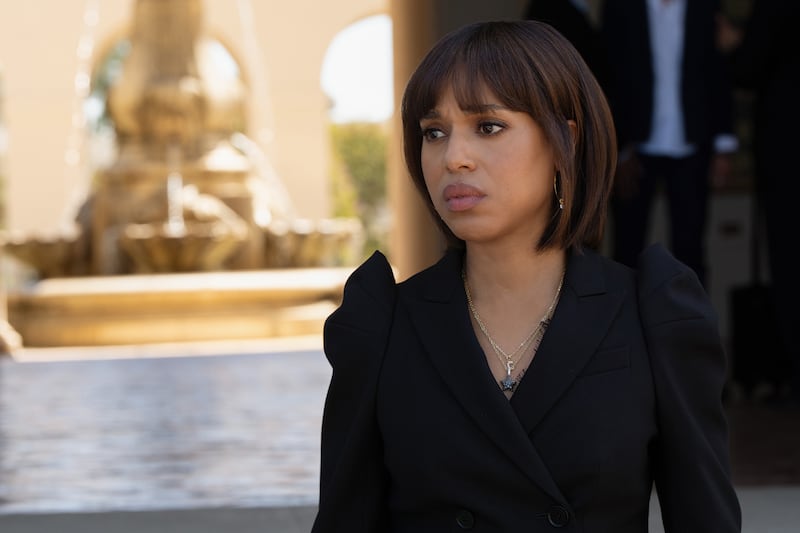
Mary (Moss), Eleanor (Washington), and Nancy (Mara) are best friends, living rich and fancy lives in Los Angeles. But nights of swilling white wine, gossiping, and giggling are upended when Nancy is found murdered. In their attempt to find out what happened to their dear friend, Mary and Eleanor uncover shocking secrets she kept, which in turn unravel their own darkest truths.
Everyone, from their husbands to even themselves, becomes a likely culprit. And as the audience, you believe wholeheartedly that any one of them could have done it, could have killed Nancy.
By the time the finale aired, audiences had already learned about who was sleeping with whose husbands, who was perhaps psychopathically obsessed with the other person, and why the police department practically had a detective permanently stationed at each of their houses. But that bowline knot of twists was just a warm-up for what happens in the last moments.
The pulse-spiking final act finds Mary about to be murdered by her husband, Howard (Corey Stoll), Eleanor coming to her rescue, and, in spite of everything that unfolded before, maybe—just maybe—closure. All this while Nancy’s husband, Robert (Joel Kinnaman), continues to be impossibly hot.
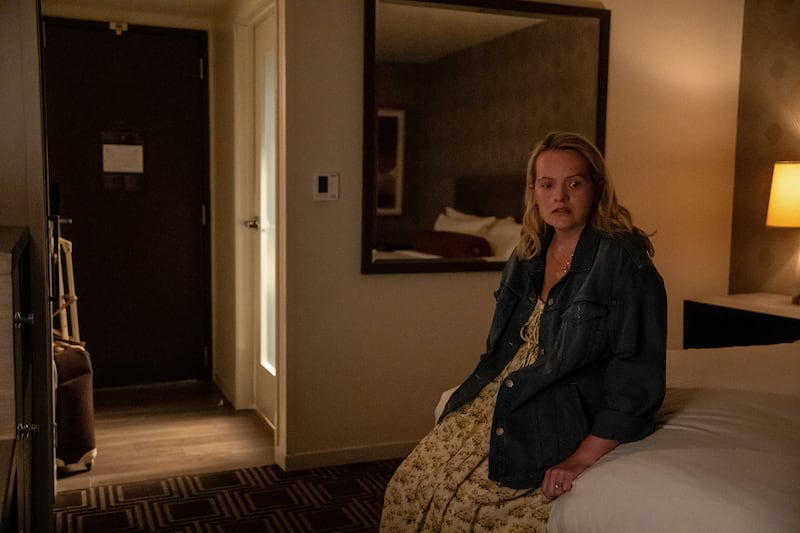
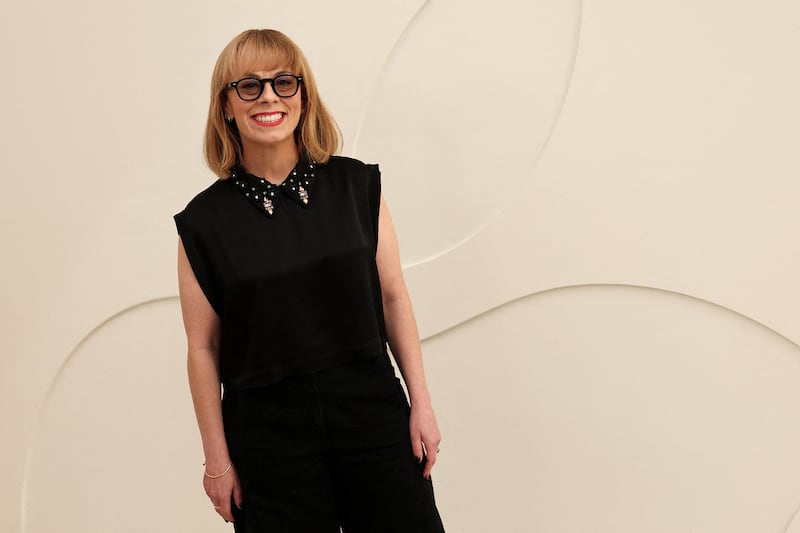
It’s a summer beach read translated to TV, with deep things to say about female friendship, grief, patterns of domestic violence, forgiveness, and healing. We had a long chat with series creator Annie Weisman, unpacking everything from the show’s casting to that wild last showdown and comparisons to Big Little Lies—specifically, whether that is as annoying and reductive as it sounds.
When there’s this show, and obviously this book, called Imperfect Women, that label telegraphs something, and likely puts pressure on who to cast as the quote-unquote imperfect women. Why do you think this trio of actresses fits that label?
There was the wonderful challenge of starting with an actress of Elisabeth Moss’ caliber and then saying, “OK, we need to find a trio that rises to her level.” Then it turned out to be a beautifully smooth process because it turns out that leading ladies don’t get to work with each other a lot. They admire each other from afar, but you ask them, and they say, “I don’t know her. I’ve never worked with her. There’s usually only one of us.”
In continuing this conversation about casting, Joel Kinnaman and Corey Stahl are so fascinating as these men. I mean, Joel Kinnaman is just so freaking hot…
Oh yes.
…but you also have to believe that maybe he could have done this. And with Corey Stahl, we watch him evolve from the adorable husband into this insidious monster. What does it take to find men in these roles that can pull off that balance without tipping off the audience to the monster they might become—or the innocent man they might become?
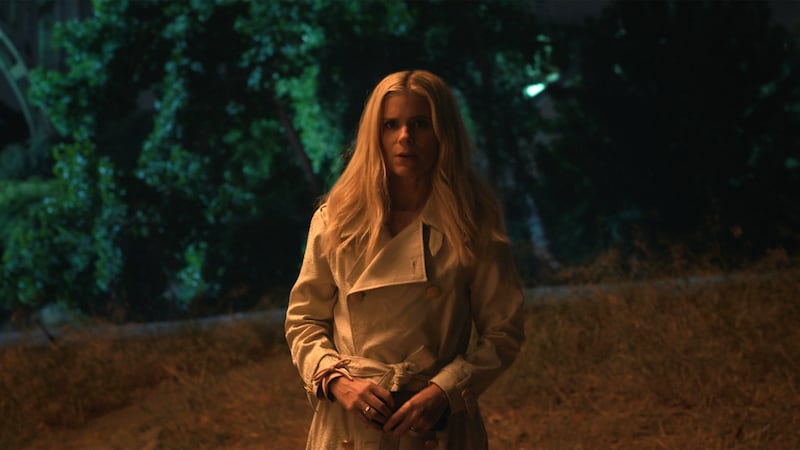
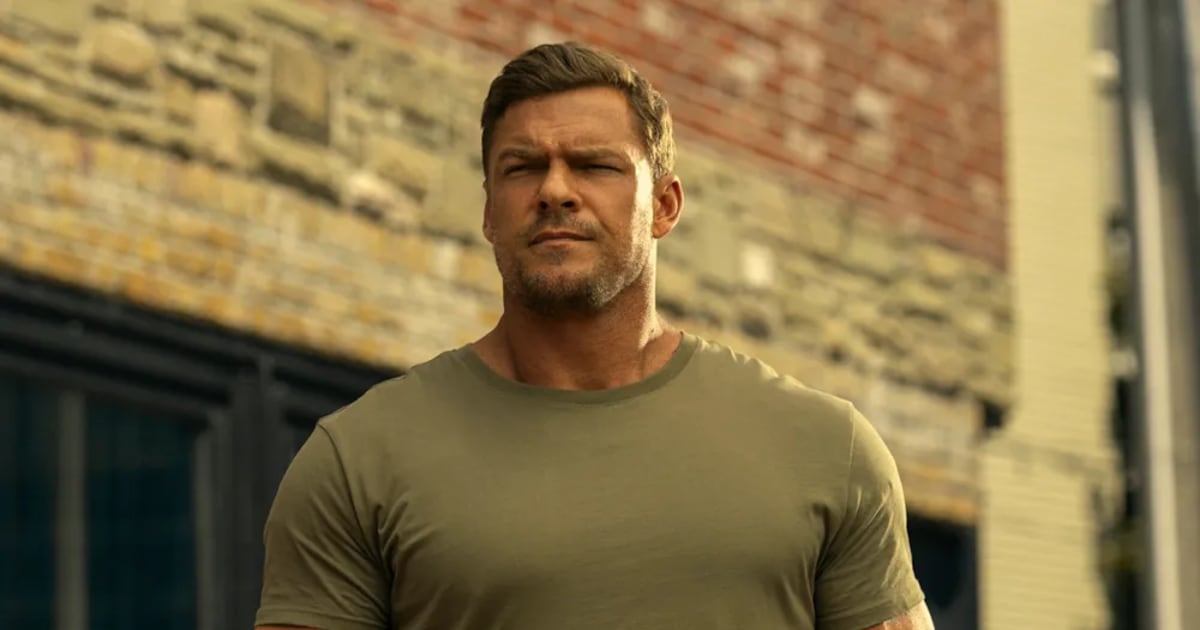
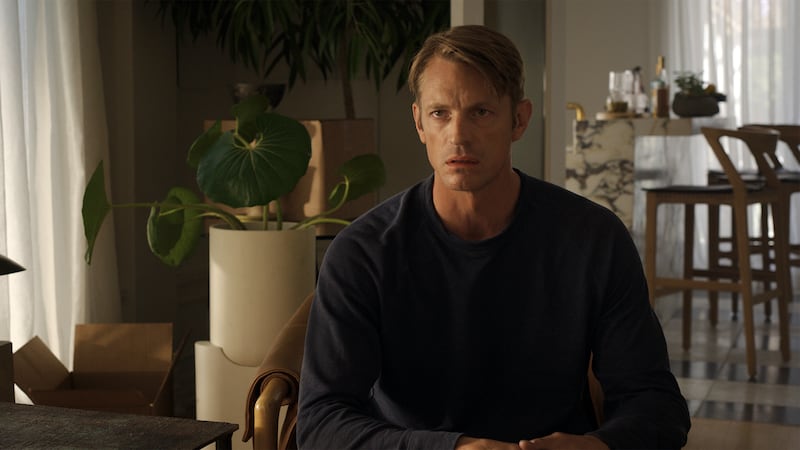
It was really about looking for actors with that tremendous range. Do they have that range of totally charming and lovable to completely dangerous? Are you going to believe all of it? Linda Lowy, our wonderful casting director, said from the very beginning, “What about Joel Kinnaman?” He felt ideal for the part in the way that he embodies a certain kind of uber masculinity. You know, Scandinavian big man.
Oh, trust me. I know.
You put him in a suit, and he can seem like the president of the world. Once we met with him, we realized he’s this really complicated person with a complicated identity. He’s part American, part Swedish. He has a really interesting outsider take on American masculinity from his Swedish upbringing. So he has this ability to perform the role of this big tough guy, RoboCop, but he’s, in fact, kind of like a Burning Man, artsy weirdo.
My crush is only intensifying.
Then, on the other hand, is Corey, who certainly goes toe-to-toe with all of these actors, and yet you believe him as an underdog. It is really important that you believe him as a sort of intellectual and an underdog from a class perspective. But he can also be dangerous. So it’s like the underdog who’s dangerous.
This isn’t the first series to have this mix of tones, but I’m always so fascinated by a thriller or mystery like this, where there’s so much grief and sadness and secrets that are really upsetting. But then there’s also so much horniness. I was wondering if you could talk about that. Like, all these women are f---ing each other’s husbands.
[Laughs] They are. The book contains a great deal of horniness, and also the deep emotional connectedness of friendship. And I like both. I don’t want it to be one or the other. It’s very true, I think, to how people behave around grief and trauma and tragedy. There’s this desperation for connection. Grief doesn’t always just look like sadness and hand-wringing. Sometimes it looks like acting out. It felt true to express that people don’t always behave honorably. In fact, often the reaction to a sudden terrible thing is to think, “Oh my God, there’s no time. I must act on my impulses.” It can be a self-destructive thing.
Throughout the series, we learn that these women betrayed each other, kept secrets, and behaved in ways that would typically lead people to stereotypically label them as bad people. When you were writing the scripts and thinking about the show, was there a betrayal or a behavior that happens that you thought, “Oh, geez, we have to really figure out how not to lose everybody because this thing just seems so bad”?
Well, certainly, Eleanor sleeping with her dead friend’s husband feels like something. I really love character challenges like that. It puts a lot of pressure, in a great way, on us as writers to say, “OK, how are we going to earn this? How are we going to earn this and believe this and still love her?” Good people do bad things, you know? How do we justify it? How is she making sense of it in herself?
Along those lines, when you make a list of all of the things that Mary and Eleanor confessed and what they found out that Nancy had done, without context and without seeing an emotional journey, you would think, “How in the world would Eleanor and Mary ever want to be friends again? And how in the world would they ever forgive Nancy?” But then, in the end, you see they do come together; they still do love and miss their friend. Can you talk about how hard it is to reconcile the fact that, given everything we find out about them, these women still, in the end, have that connection?
We wanted to tell a story of betrayal, but also redemption. Where does redemption come from? Where does forgiveness come from? And I think it comes from understanding and seeing the source of the bad behavior that led you astray. As long as there’s accountability, and I think there is, then there can be forgiveness and there can be redemption. You see that what led everyone to their bad behavior was shame. It was always shame that drove it. So once the shame is gone, once people are able to overcome shame, then they start behaving with more integrity. When there’s a deep bond like these women have with each other, there’s an opportunity for forgiveness.
Let’s talk about the climax of the finale. Mary is thinking on her feet as she’s basically being led to her death by Howard, and makes up that lie that Detective Ganz was going to meet them at her hotel room, drops the phone, and says dead zone. Can you talk about how Mary discovered the cleverness to think so swiftly?
I think what it comes down to is that Mary’s secret talent is storytelling and understanding characters. That’s why we started her chapter with her writing. She’s got the storytelling brain. She tells stories to her children. She knows how to captivate. We have that flashback where you see her captivating her siblings with a story. She knows how to do it. We like the idea of what do we have if, as women, we’re going to be physically overpowered? You still have your brain. You have acute observation and knowledge of this person that you’ve been with for decades, and she uses that. That’s her power. And perhaps that’s a little bit aspirational on our end as women, as female storytellers. [Laughs] I’ll cop to that.
That climax could have ended with the cops arriving to save her, or with Eleanor making the kill on Howard. Why do you think it was important that it’s Mary who gets the knife and finally kills him?
That just felt, honestly, like the most satisfying ending. We just wanted her to have that moment. She’d been so lied to and betrayed, and she just felt like the one who needed that release.
Logistically, was she faking being strangled, or did she have, like, a come-back-to-life moment?
I don’t think she was faking it. I guess she recovers somewhat heroically in that moment. Adrenaline is a powerful thing. We wanted them to save each other. Eleanor saves her, and then she saves Eleanor.
This is a show that is chock-full of twists. Is there one that, when you were reading the book or working on the scripts, shocked you the most?
I was truly shocked by who “David” was. I was truly shocked by the affair between Nancy and Howard. And that was the, that was the thing that made me go, “Oh, I love this. This is cool.” [Laughs] Because I read a lot of female thrillers, and that just felt like the most interesting because it located all of it within this friendship and desire. The litmus test I try to give with a twist is: Does it truly shock me? And then did it feel true? It’s easy to do something unexpected, but you feel a little cheated if it doesn’t feel plausible or true. So for it to feel both surprising and yet inevitable, that’s where it gets really exciting. That’s what I loved about that Howard twist was, like, you think, “No way, Nancy, no.” And then you go, “Oh, wait, of course.”
With that same criteria of something being shocking, but then, when you think about it’s plausible: For me, when Artemis is in the hospital because she ate all of that Adderall, I was like, “I wonder if Howard force fed them to her, but no, he couldn’t have.” And when you find out he did, it is shocking. You’re like, “Oh, you’re, like, a bad bad guy."
That was our writer’s room addition to the story. We thought, “Well, how bad can he be? How far would he go?” And the very worst he could do would be to harm his child. So that kind of earns his death.
Totally earned.
I never thought I would be capable of any kind of violence until I became a mom. And then I instantly realized, oh, I could absolutely stab a man a million times if he harmed my child. There’s no question. So for Mary, we knew that even the killing of her friend wouldn’t justify or trigger that kind of violence, the way endangering her child would.
Lastly, I want to ask about something I think about a lot. So many times, when thriller series that center women’s stories come out, they’re inevitably called some sort of version of Big Little Lies and compared to it. I’ve always been curious about how that comparison or boxing-in feels for the people involved in the show. If it’s great, if it’s a burden, if it feels restrictive.
You know, comparison is sort of inevitable for everybody, especially women. We’re always getting compared. I think it’s part of being in the arena. I think it’s unfair because there’s room for many stories. Just like there can be a lot of space movies, there can be a lot of domestic-based thrillers. This is part of our imaginative life as women, so it’s a little cheap and unfair to just compare women-authored things to one another, which have to do with domestic violence. There shouldn’t just be one a decade, and we’re done. And so it feels a little like that. Like, “You already had that story with ladies.”
No one’s telling Dick Wolf, “You already had your police show.”
“We already did the cops one.” [Laughs] Right? Listen, Big Little Eyes was quite a long time ago, and a wonderful show. This is a different one.