
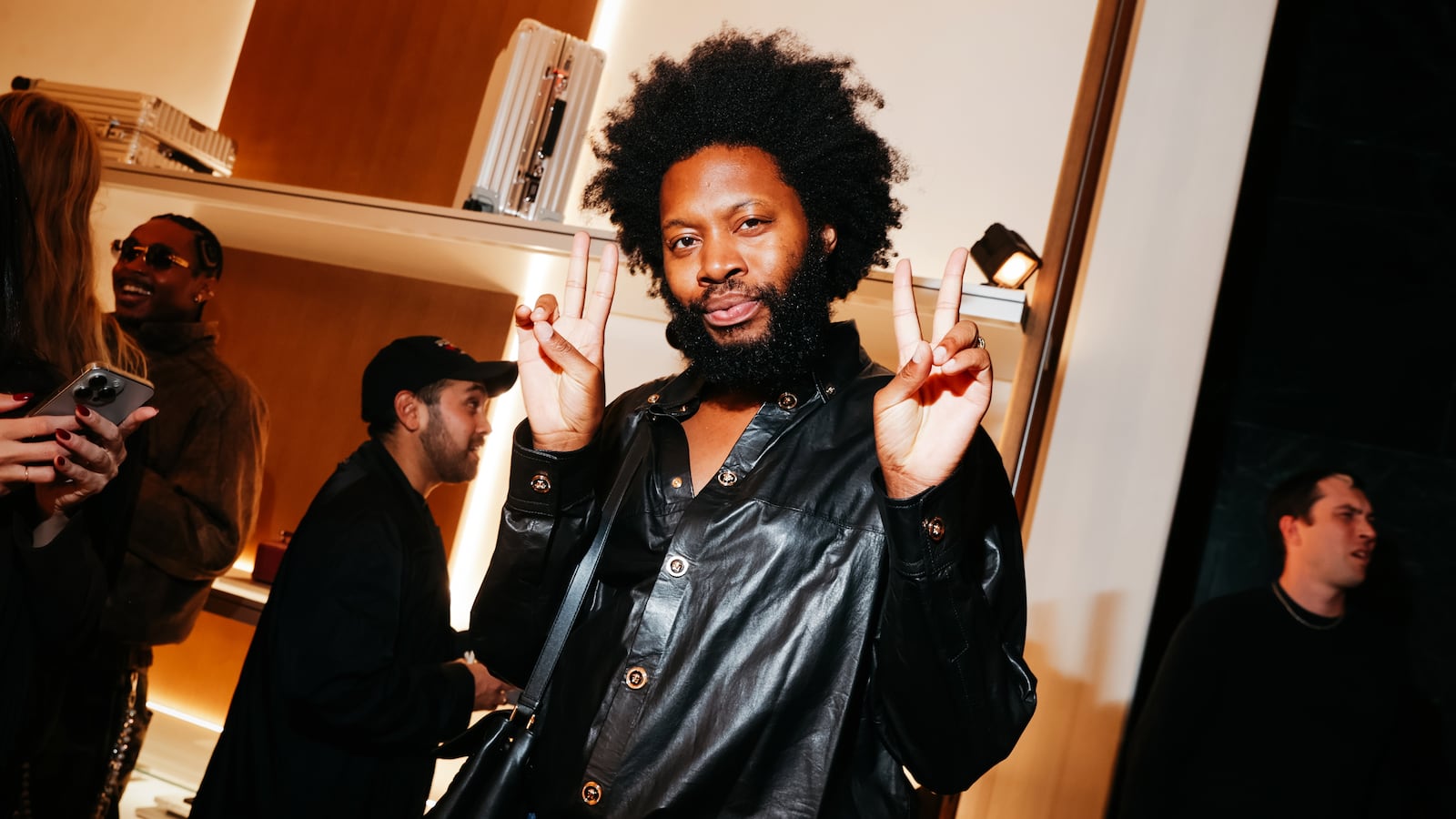
I’m so used to talking about Jeremy O. Harris, that it was a startling shift to actually talk to him.
Harris is one of the most provocative people working in the entertainment industry. I first encountered his work when his plays Slave Play and Daddy were both running in New York. Then I went to the Sundance Film Festival, where his movie, Zola, was premiering. The tagline, inspired by real life: “Y’all wanna hear a story about why me and this b---h here fell out????? It’s kind of long but full of suspense.”
As an actor, Harris has appeared in buzzy projects like Emily in Paris and the Gossip Girl reboot, but it’s as a creator where he really prods the zeitgeist.
“There came a different point when it felt like, because I was making things that were being talked about in that room, the best place for me to be was like in a different room, you know?” Harris told me in the new episode of Obsessed: The Podcast.
“No one prepares you or lets you know that you’ve been invited into a different room, but people will tell you once you start talking in that room that they don’t think you’re supposed to be there anymore,” he continued. “And that was the most, I think, alienating part of it, to feel like I became some sort of, like, digital celebrity without my consent.”
When we chatted, Harris had just gone public with his experience in a Japanese prison. I’m not kidding.
Harris was detained for 23 days in Japan on suspicion of smuggling drugs into the country.
What I found remarkable during my conversation with Harris was how fondly he looks back on that time behind bars.
“I’m sure there’s some trauma there, but it wasn’t there, you know?” he told me. “It would have been a bigger fear had I done something on purpose, or if I had been actually trying to break the law, I think I would have felt some guilt or shame. For me, I felt like I was like in some weird prank show or something. I was like, wait, this is going on right now?... That trauma ended up like, being [mitigated] by the sense of relief I had that I didn’t have to respond to emails for a couple months.”
Should we all be so lucky as not to have to respond to emails?
The occasion for my chat with Harris is that his new movie, Erupcja, is in theaters, starring a pop star you might have heard of: Charli XCX.
But he’s also never not in the news. One of my favorite headlines he’s made recently was for screaming at AI menace Sam Altman. At the Vanity Fair Oscars party, of all swanky events, Harris drunkenly yelled at Altman that he felt like he was “the Goebbels of the Trump administration”—aka a Nazi.
When more sober the next day, Harris didn’t apologize, as you’d expect when a celebrity finds himself in controversy concerning one of the richest and most powerful people in the world. Instead, he doubled down and clarified. “It was late and I had a few too many martinis so I misspoke when I said Goebbels… I should’ve said Friedrich Flick,” he posted on social media.
“I think it’s really dangerous to allow ourselves to bring politeness to the fore of our concerns when dealing with people who are actively making the lives of millions of people worse every day, just because we happen to be sharing space with them,” Harris told me. “I think the fact that we’re sharing space with them gives us the opportunity to perhaps shift the trajectory of their lives by actually saying to them the thing that no one else around them would.”
If you could see me right now, I’m clapping, snapping my fingers, and doing all the “preach” histrionics.
Still, it is remarkable that this confrontation happened at a party where, let’s be honest, the primary value for celebrities is access. And instead of bowing down to the powerful people in the room, Harris called them out.
“I was at this party, and Jane Fonda was walking by me,” he said. “Jane Fonda has never held her tongue before. She is such a model for someone who is fearless. I think that it’s our duty as young people to not allow that level of transgression, or that demand of our fellow man, to disappear because social media has deadened our ability to look people in the eye and say what we feel.”
Watch more of my conversation with Jeremy O. Harris here.


