Welcome to UNMISSABLE, the Daily Beast’s Obsessed’s guide to the one thing you need to watch today. Whether it’s the most gripping streaming show, the most hilarious comedy, the movie which you’ll never forget, or the deliciously catty reality TV meltdown, we bring you the real must-see of the day—every day. Sign up for our daily UNMISSABLE newsletter now.
Big-screen toxic masculinity generally involves some combination of brashness, insensitivity, entitlement, and egomania. And yet Obsession imagines the flip side to that corrosive coin, focusing on a meek, insecure, needy loner whose unhealthy covetousness is as damaging as any sexist boorishness.
A twist on a classic monkey’s paw story whose grim humor is almost as sharp as its shocks, Curry Barker’s stellar thriller—in theaters May 15, following its premiere at last year’s Toronto International Film Festival—is a deliriously pointed cautionary tale about the perils of getting what you want, and an instant contender for classic midnight-movie status.

Writer/director Barker made a splash two years ago with Milk and Serial, a 62-minute found-footage feature produced in four months for $800 (with his sketch-comedy partner and co-star Cooper Tomlinson) and uploaded for free to YouTube. Taking its cue from that inventive effort, in which Barker and Tomlinson repeatedly pulled the rug out from under their audience, the filmmaker delivers consistent surprises with Obsession, whose focus is Bear (Michael Johnston), a timid California 20-something whose sweaty complexion and bangs-in-his-forehead style immediately suggest that he’s a wet blanket.
Bear is infatuated with his good friend Nikki (Inde Navarrette), and he’s introduced in the film rehearsing his long-delayed declaration of love to her—a practice session overseen by BFF Ian (Tomlinson) that underscores his lovelorn bashfulness. When Bear hears that Nikki has lost her crystal necklace, he decides to buy her a replacement. At a new age-y store, however, he can’t find one, and instead settles for purchasing a One Wish Willow, an ‘80s novelty item that claims that, when snapped in half, it grants the user a single wish.
Following another bar trivia contest in which he can’t get the effusive words out of his mouth—and a drive home in which he similarly remains mum—a frustrated Bear uses the product himself, wishing that Nikki would love him more than anyone else in the world.
No sooner has he uttered that request than she’s back in his car, behaving super-strangely, and not simply because she convinces him to let her stay the night at his place, presumably because, just as he’s grieving the hours-earlier death of his cat, she’s upset about her cancer-stricken father.
Bear may not immediately put two and two together, but Obsession isn’t coy about the fact that the protagonist’s wish has seemingly come true. The thing is, Nikki’s newfound affection is laced with weird ticks, beginning with her freaking out as if she’s awakened from a bad dream and then, like a yo-yo, promptly returning to being lovey-dovey.
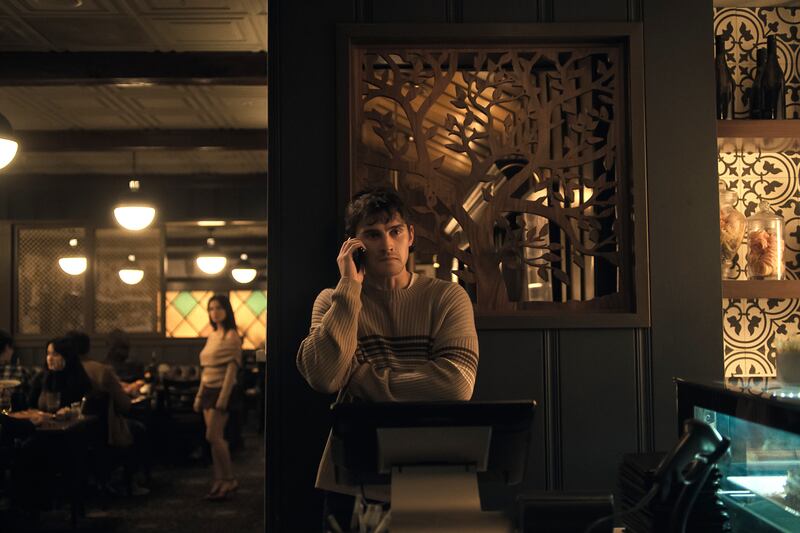
She also creates a gnarly cat memorial for Bear’s fallen pet in the morning. At the music store where they both work with Ian and friend Sarah (Megan Lawless), who’s not-so-secretly into Bear and whose dad (Andy Richter) is their boss, Nikki continues to act like a creepy admirer, although before long, sunshiny bliss blossoms between them.
Except, of course, that no conventional happily ever is in the cards for these intertwined individuals, as Nikki’s amour quickly takes on bizarre and unsettling qualities. On a restaurant date, her reaction to Bear’s question about her dad is more than a tad berserk, her demeanor a cross between sweet, robotic, and demonically possessed. She’s even more disturbing during sex, her far-off gaze indicating that she’s not 100% there—perhaps because her true self is no longer in the driver’s seat?
Obsession keeps concrete answers close to the vest, the film ratcheting up tension through a series of incidents which underscore that Bear’s wish has ironically turned on him. Navarrette’s performance as Nikki develops in delightfully monstrous fashion, vacillating so brusquely between loveably devoted and maniacally deranged that she keeps the material perched on the knife’s edge of madness.
With a smile that, at a moment’s notice, transforms from inviting to blood-curdling, and a honeyed voice that frequently erupts into hellish moans, wails, and screams, it’s an exceptional turn that perfectly harmonizes with the material’s bleakness.
As he did with his viral hit, Barker laces Obsession’s lunacy with unexpected comedy that enhances, rather than alleviates, suspense. Visually, the director knows how to frame and stage his action for maximum anticipatory dread, and he devises multiple scenes that exploit his premise in unexpected ways.
Of those, the most memorable is an Ian party that Bear has a very tough time attending (at least, in the manner he wants to), and which goes south thanks to Nikki’s scary refusal to let anyone get between her and her man—resulting in a silent showdown that’s at once hilarious and harrowing.
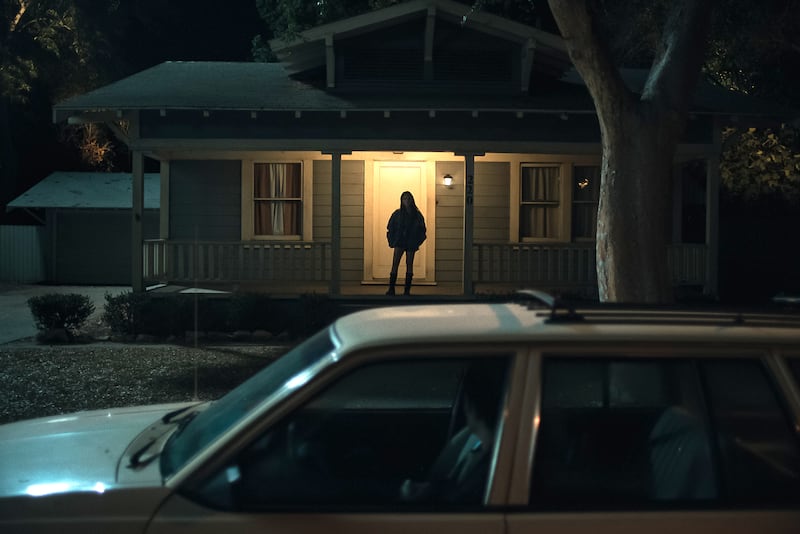
While Barker’s characters respond logically to their troubles, they find little relief in Obsession, with the script routinely and cleverly throwing up new obstacles in their path. Better yet, as it devolves into a catastrophe of clinginess, the film subtly upends one’s sympathies, in large part because its revelations underline that Bear’s conduct, however understandable, is rooted in pitiful—and, in this case, destructive—selfishness.
Far from merely a heartsick good-guy innocent who was taken advantage of by cosmic forces out of his control, he eventually comes across as a more understated sort of cretin, at least until a finale that forces him to confront his responsibility for this mess.
Desire, dependency, individuality, control, and infatuation all comingle in Obsession, the result being a curdled stew of nastiness from which no one is safe. Barker puts the pedal to the metal in the third act, dishing out gore with the glee of a genre purist.
What really makes his film evocative, though, is the dark allure of his wish-fulfillment scenario—no matter that the fantasy it peddles is predicated on manipulative evil.
Everyone can relate to Bear’s yearning and appreciate (if not agree with) the reasons he tries to make his Stepford-girlfriend circumstances work, and it’s there—in the blackest corners of his tale—that Barker has the most fun.
Poking and prodding viewers in order to challenge their feelings about the “moral obligation” partners have to each other, his theatrical debut is the best kind of nightmare: relatable, knotty, amusing, and absolutely unhinged.