This piece first ran on the Obsessed by Kevin Fallon Substack. Subscribe here to read more like it!
As Alex Edelman knows, it’s incredibly freeing to be an idiot.
The Emmy- and Tony-winning writer-actor-comedian is certainly not one. Even Barack Obama sought him out to praise his work. But when you’re intellectual and funny and empathetic and all the things it is objectively accurate to describe Edelman as, man, it is a respite to escape for a while and be just plain dumb.
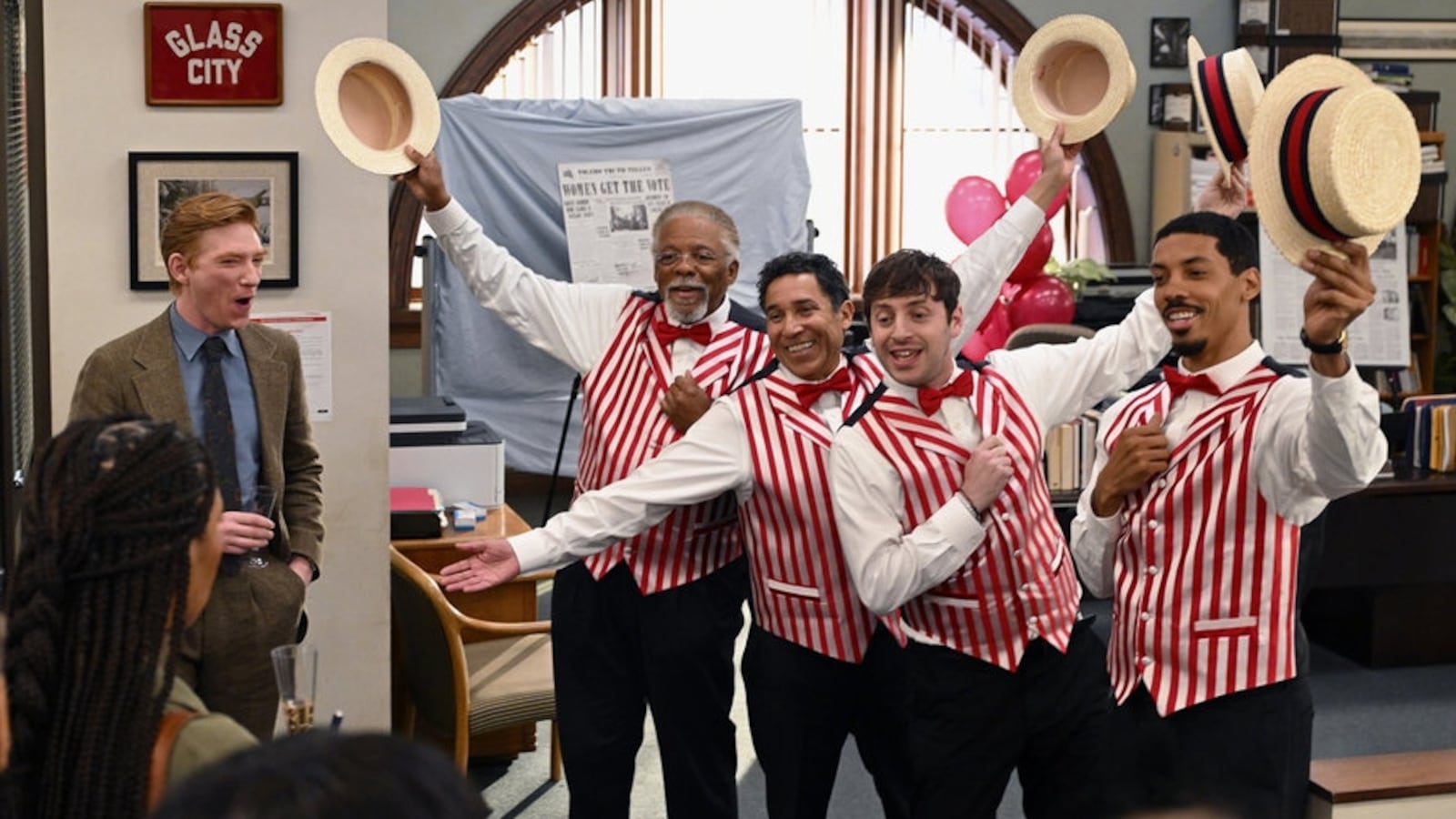
That’s what Edelman gets to be in The Paper, the spinoff of The Office now streaming on Peacock. Edelman both writes and stars in the series as Adam Cooper, an accountant for a local Ohio newspaper whose social and conversational bumbling is countered by his endearing enthusiasm and dad-like doofiness. (Adam has four young kids because his wife doesn’t believe in contraception.)
“I wanted my character to be stupid,” Edelman told me in a new episode of Obsessed: The Podcast. “Well, not stupid. Let’s say there’s an emotional intelligence that carries a more oblique currency. He’s not book-smart or street-smart. He’s emotionally intelligent.” Then, he laughs: “Maybe not even that.”
On The Paper, the dwindling staff of The Toledo Truth Teller is called in for an all-hands-on-deck effort to save the struggling paper. That means accountants like Adam and his deskmate, the sardonic Adelola (Gbemisola Ikumelo), are recruited as reporters outside of their regular jobs.
“I thought, what’s the most annoying thing for a wry, too-cool-for-school person to share a desk with? That’s going to be an idiot who’s, like, a chipper golden retriever who’s always in your space,” he said. “His unique brand of idiocy is that he’s proud of really simple stuff. That hubris to me is really, really funny and really, really dumb.”
During our conversation, we get into the comparisons between The Paper and The Office—and whether that haunts him in the writers’ room—and why Edelman chose this series as his next career move after his blockbuster one-man show and HBO special Just for Us, about the time he infiltrated a meeting of neo-Nazis. (Yes, that really happened).
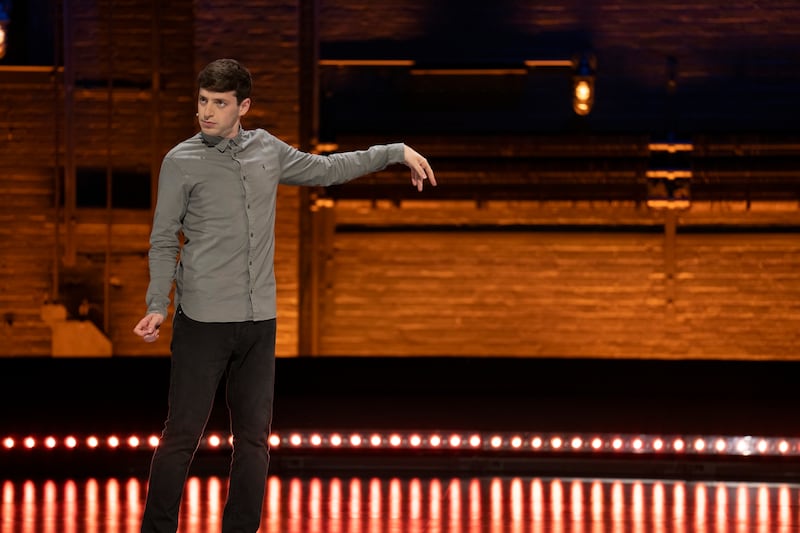
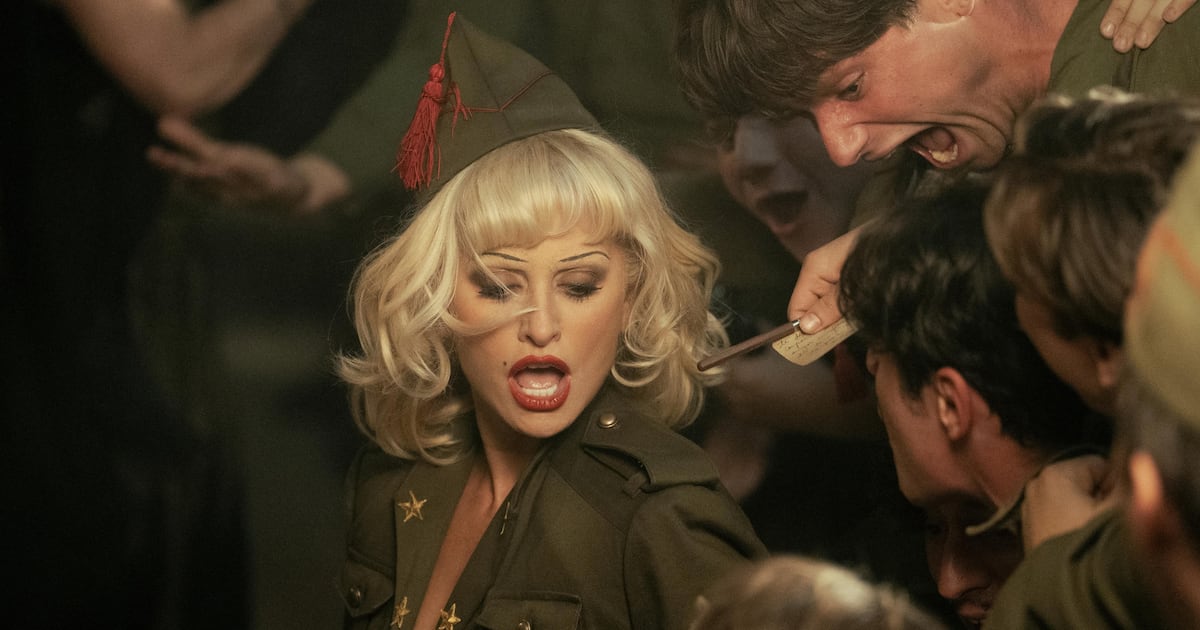
Before joining The Paper, Edelman spent the better part of six years performing and perfecting Just for Us, an autobiographical show that he premiered at the Edinburgh Fringe Festival before eventually performing on Broadway, winning a special Tony Award, and releasing it as an HBO special, winning an Emmy.
The show begins with Edelman talking about the antisemitic messages he’d receive on what was then Twitter, because of the fact that he is, well, obviously Jewish.
The extent of his Jewishness is explained to hearty laughter during the show. “My comedy barely works if you’re not from the Upper West Side,” he jokes. Jared Kushner sat behind him at the synagogue he attended, he drops as another example. (The president’s son-in-law is apparently extremely loud.) He exists in a humorous space: To friends, “I’m a beard away from being a rabbi,” he says; to his traditional family, “I’m Lady Gaga.”
It was through those antisemitic messages that his algorithm eventually served up a post that was an invitation to what was clearly a gathering of neo-Nazis in Queens. Obviously, the host expected like-minded people to show up and decry the oppression of white, Christian people together. That Edelman would arrive, participate in much of the meeting, and only eventually be outed as a Jewish interloper was certainly a surprise, as were the emotional takeaways that Edelman took from the experience that became his hit show.
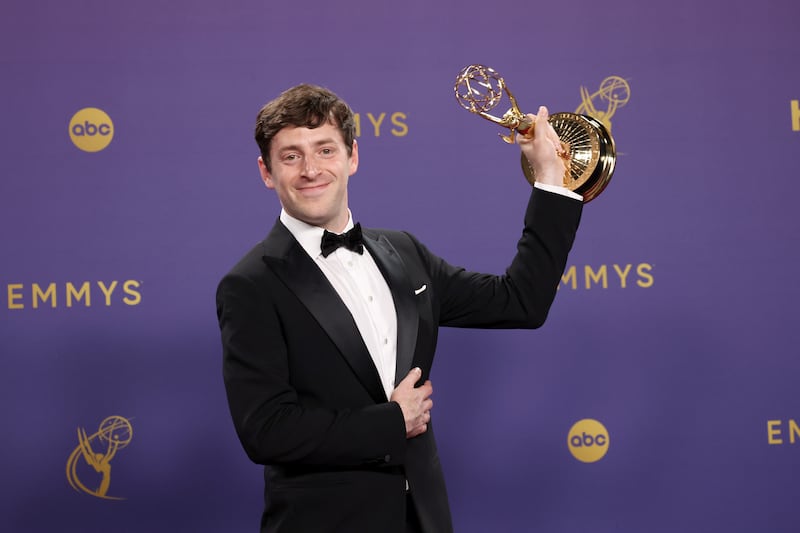
Accolades poured in. During a chance meeting with Barack Obama, the former president opened the conversation with, “Young man, if I were your mother, I’d be concerned with how you make a living.” Edelman replied, “Comedy?” “No,” Obama said. “Neo-Nazis.”
It tracks that, given the response that the special earned, including a presidential endorsement, Edelman received several offers for his next TV or comedy project. He was attracted to The Paper not necessarily because it was an Office spinoff, though he, of course, was a fan of the show. He knew the track record of the show’s creators, Greg Daniels and Michael Koman, for nurturing and educating their writers and stars so they could go on to create their own greatness.
Think of Mindy Kaling and B.J. Novak, or Michael Schur, who went on to create Parks and Recreation, Brooklyn Nine-Nine, and The Good Place. “The Office is this sort of grad school where they also got to be on television,” Edelman said.
As for the comparisons between The Paper and The Office, he said that was always inevitable.
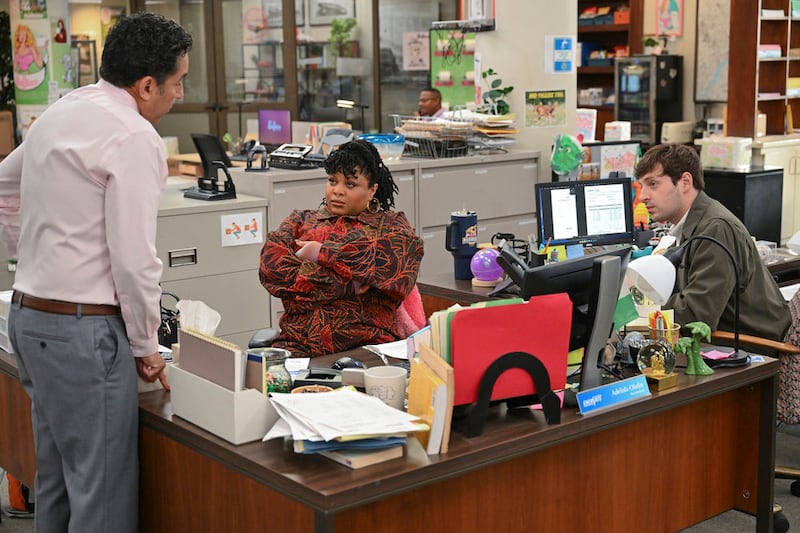
“Not only is the show its own thing, if you had to put it on a spectrum in the Greg Daniels multiverse, I’d say it’s closer spiritually to Parks and Rec, because it’s about a family of people trying to make something, as opposed to what The Office was,” he said. “I don’t think The Office haunts the writers’ room in any way.”
There is a narrative tie between The Paper and The Office: Oscar Martinez (Oscar Nuñez), the former Dunder Mifflin accountant, now works for The Toledo Truth Teller. But the connective tissue is more about the characters’ humanity, which, Edelman said, is the secret sauce behind The Office’s decades-long, cross-generational hold on pop culture.
“In the same way that people love to play the Sex and the City game, like, ‘Oh, I’m such a Samantha, or I’m such a Miranda,’ I think people look around their office, and they’re like, ‘Oh my God, my boss is Michael Scott, or there’s a Dwight or a Jim or a Creed or a Stanley,’” he said. “There’s a human element to really brilliantly rendered television shows, whether it’s a drama with comedy like Slow Horses or The Office or even reality, like Couples Therapy. Every hit show has that human X Factor. The Office really, really sticks that landing.”
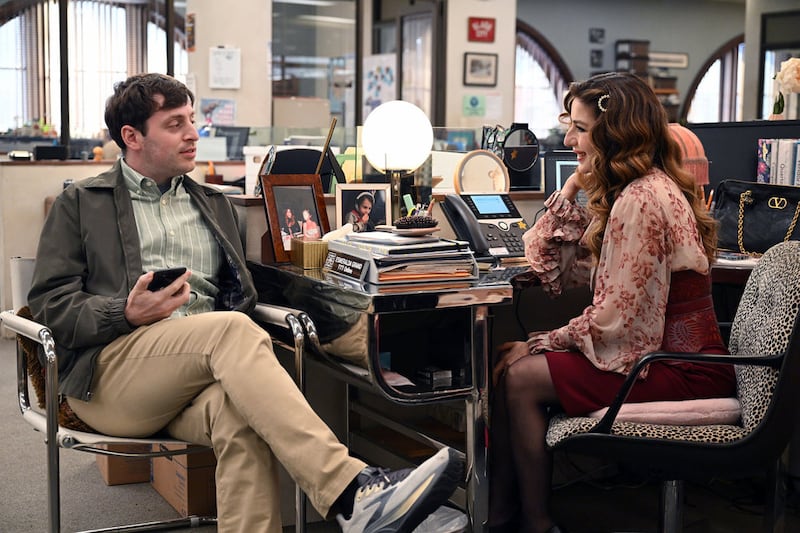
“Whether you’re a college kid at San Luis Obispo or someone in their seventies living in the middle of Minnesota, I think that there’s a great human connection to The Office that people used to feel in the ’70s and in the ’80s when they watched All in the Family or Sanford and Son or Mary Hartman, Mary Hartman, or any of the other Norman Lear shows,” he continued. “I think every great show comes back to the humanity of its characters.”
When we chatted, Edelman had just returned from another trip to Edinburgh Fringe, where he debuted a new solo storytelling show, What Are You Going to Do, a follow-up to Just for Us that continues to interrogate the question of empathy through stories of his life, among them his time working in Jerusalem as a clown and opening the city’s first stand-up comedy club.
Man, Edelman has some great stories.