Imagine Taylor Swift writing a song for you. Or catching a football thrown by Tom Brady. Waking up in the emergency room, and Noah Wyle is standing over you, checking your pulse.
What’s another example of not just watching the best in the world do what they’re singularly good at, but experiencing it yourself? Getting a hug from Oprah?
That’s what it was like to be actually dining—like, eating the food!!!—during the legendary “Restaurant Wars” challenge of Top Chef, which just aired its latest iteration on Bravo and can now be streamed on Peacock.
Over 22 seasons, Restaurant Wars, with its powder keg of stress, drama, and sometimes sheer excellence, has exploded into fan-favorite status among Top Chef fans, who salivate each season waiting for the big episode to arrive.
It’s also earned a reputation as the veritable Super Bowl of reality TV—certainly, at least of culinary competitions—because of the high-stakes, genius ways it encapsulates the genre at its peak: a showcase for wildly entertaining drama and an ultimate test of contestants’ talent.
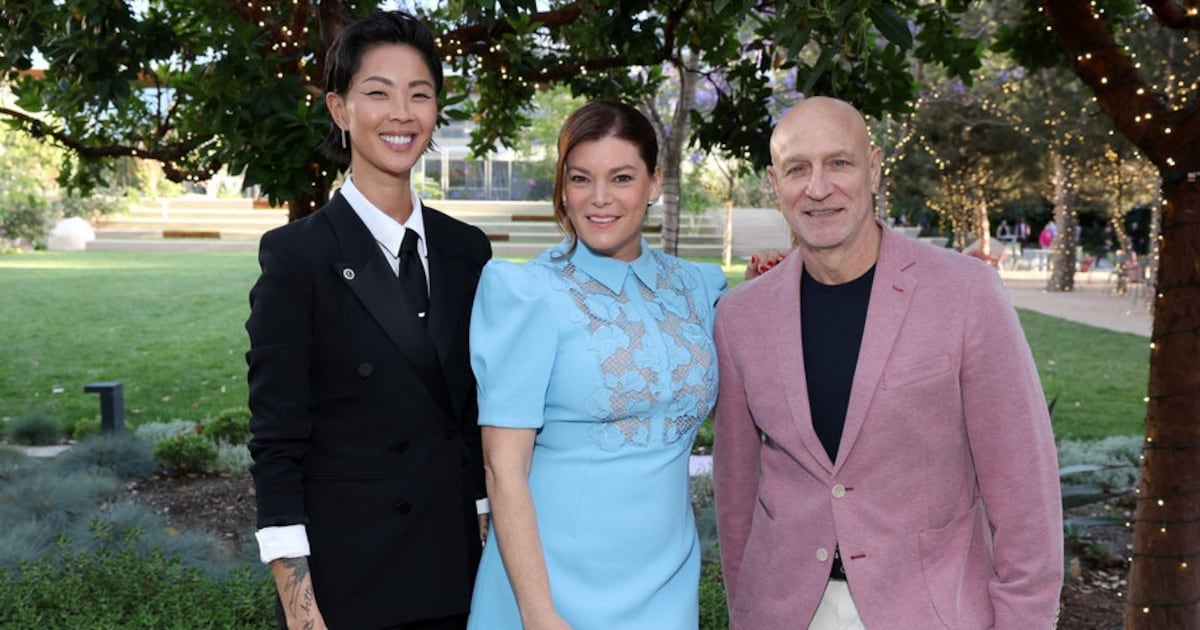
I got the ultimate fan experience of flying to Charlotte, North Carolina, where much of the current season of Top Chef was filmed, to see how production pulls off its most famous episode, dine at one of the restaurants, and pick the brains of judges Tom Colicchio, Gail Simmons, and Kristen Kish.
We chatted about why this challenge is so popular and the stress it puts on the competing chefs, of course, but also pressing questions like: How will I eat so much food? And what if I don’t like it?
They’re the nicest people in the world, and politely humored all my ridiculousness.
Warning: Some spoilers ahead!
So, is there a secret sauce, so to speak, as to why Restaurant Wars has become this sort of annual Met Gala of Top Chef among fans and contestants? An Oscars, with knives instead of trophies? Game Seven of the Cooking World Series? (Sorry, I was having a lot of fun riffing on those.)
“I think it’s because it’s completely ridiculous,” Kish, who has special insight as a former contestant who competed in the challenge herself, said. “Who in their right mind would ever open a restaurant in 36 hours with four people that you just met a few weeks ago? Like, it’s just insane.”
And the wilder thing about it: “Somehow, they pull it together,” she said. “You come to this competition and take on this challenge that is unrealistic, and you actually perform in it. People love to see it.” When the chefs just as spectacularly fail…well, let’s face it, people love to see that, too.
Moreover, the marathon-at-a-sprint culinary gauntlet that is Restaurant Wars is a shrewd, if imperfect, adjudicator of who the season’s top contestants might be.
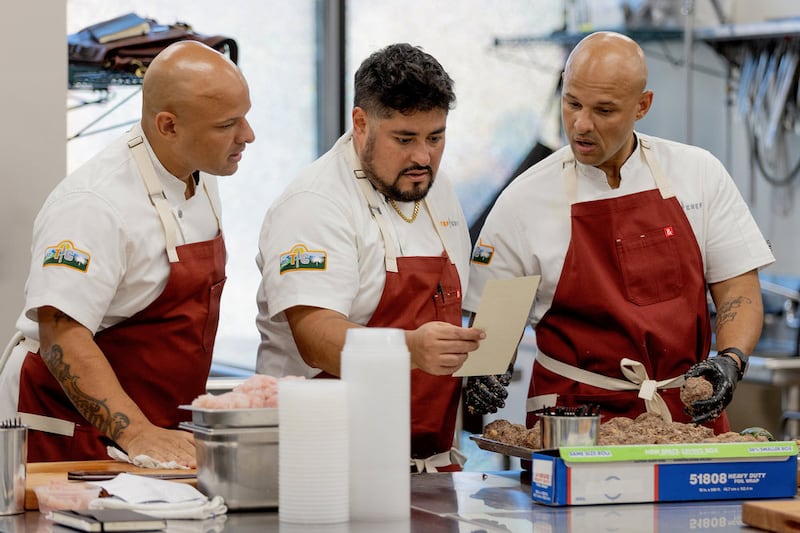
“I think it shows skill as a chef, not just as a cook, right?” Simmons said. “And there’s a huge delineation there. Your leadership skills, your management skills, your ability to work as a team, all of those things are really on display. That’s what being a restaurant chef is in the day-to-day. So it really separates the amateurs from the pros.”
For those who have not watched every single episode of Top Chef over the last 20 years and don’t treat it as a religious example of the best reality TV has to offer to the point that you refer to judges as the Holy Trinity—in the name of the Tom, the Gail, and the Kristen Kish—here is the basic concept of Restaurant Wars.
The challenge typically comes midway through the season. The remaining chefs are split into two teams and tasked to launch a restaurant from scratch in less than two days. And that doesn’t mean just serving food at a restaurant. They must develop a name, a concept, design the space, select everything from the chairs to the napkins to the silverware, train a staff of servers, and, yes, serve good food.
It is madness. It is chaos. It is great TV! And it is, oh-so often, absolutely heartbreaking.
To pull off the Herculean feat, the contestants must choose roles: There is the executive chef, responsible for the menu and ensuring that everything in the kitchen is operating smoothly; the “front of house,” who is in charge of the staff, communicating with the kitchen, making sure the guests are happy, and the dining room is buzzing; and the line cooks, who must keep up with the frenzied pace of orders. Each, of course, is also responsible for executing a delicious dish.
The executive chef and the front-of-house are typically the most vulnerable positions. If the house of cards crumbles in the kitchen, it’s the executive chef who typically takes the fall. When the dining room is rattled by a tornado of long waits to be seated, long waits for food, and patrons not feeling properly attended to, it’s the face of the restaurant that’s whisked away.
Many fan favorites and early frontrunners have had their fates sealed by taking those leadership positions in Restaurant Wars. “It’s high risk, high reward,” Kish said. “You gotta take the gamble.”
On the day of shooting, I arrived at an event space in Charlotte called The Casey, which typically hosts weddings and corporate events, but on that very hot September afternoon was transformed into dueling pop-up restaurants.
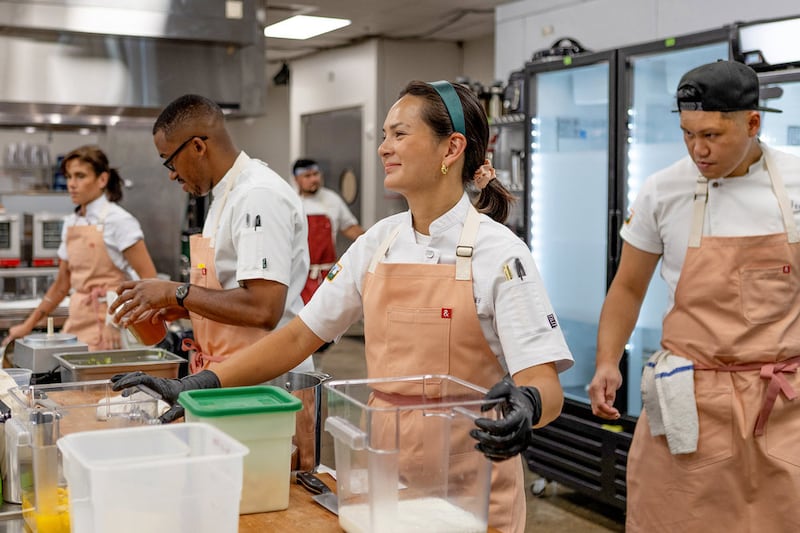
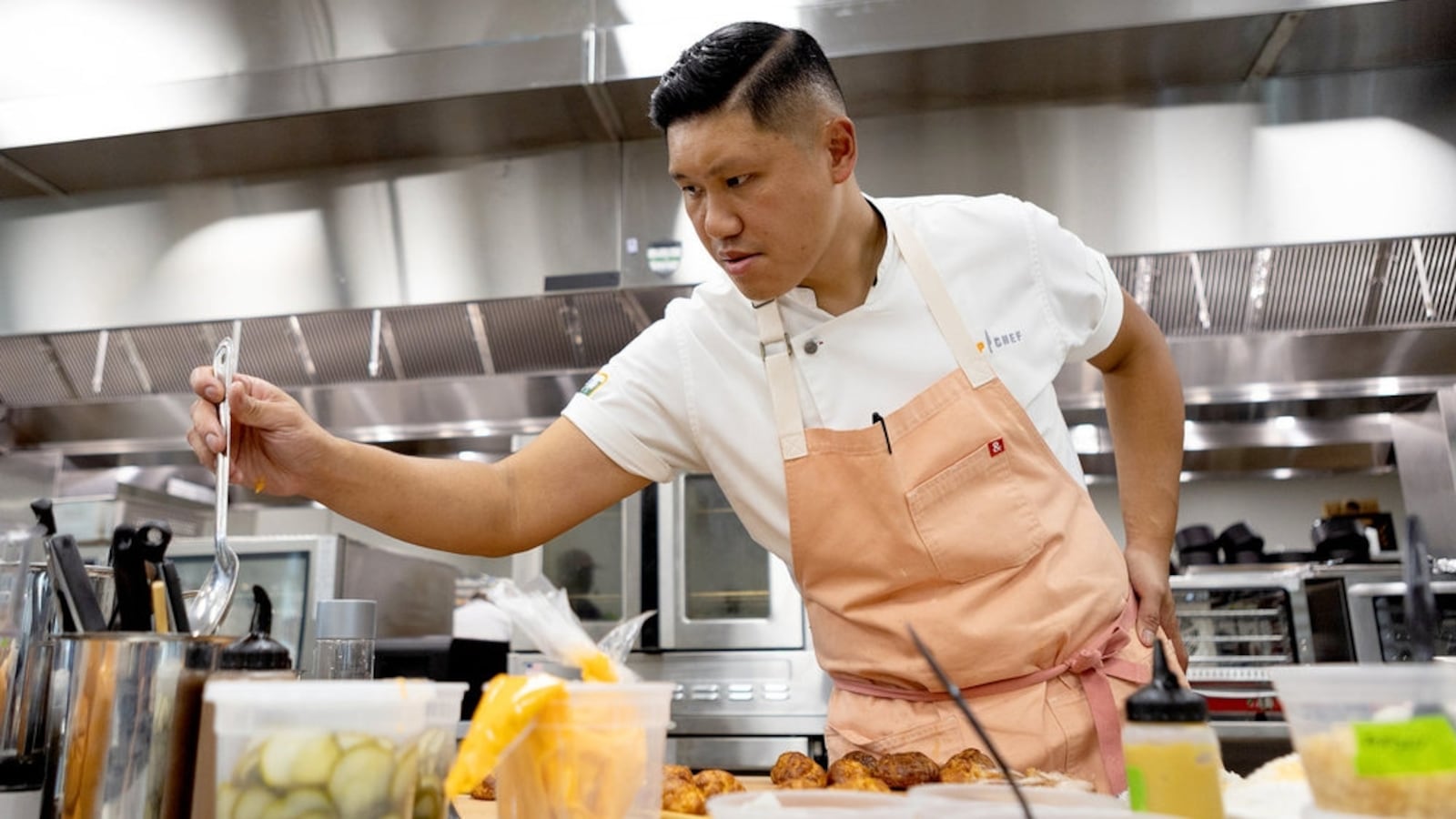
Before I dined, I walked through the kitchen. It was, naturally, a thrill to watch the contestants chopping and dicing and julienning and sautéing (that pretty much exhausts all the cooking words that I know).
The control room, where feeds from the cameras filming in the kitchen and both dining rooms were beamed onto a wall of screens, looked like NASA Mission Control. I learned about the careful staging of the kitchen and intricate camera choreography required to film the cooking without obstructed views. Cameras on cranes hovered over patrons eating, so as not to crowd the dining room or ruin the restaurant’s aesthetic.
Before heading into my meal, I solicited tips from the experts. I was genuinely, perhaps embarrassingly, concerned about it being an overwhelming amount of food.
“You won’t be eating as much as we are,” Colicchio said, humbling me immediately. I’d be dining at one restaurant; the judges will be going to two. “Don’t eat the whole dish. And also, don’t drink too much. Although right now, I’m kind of hungry. I had a protein shake for breakfast, that’s it.”
Oh no! That’s my whole fear, I told him.
Since arriving in Charlotte, I’d been gorging myself at all the restaurants recommended to me. Massive plates of pasta at Angeline’s. Pork belly tacos at Merchant and Trade. A Cuban- and Peruvian-inspired feast at Calle Sol. Just hours before arriving for Restaurant Wars, I was taken to breakfast at Uptown Yolk, where I was encouraged to order a sausage, egg, and cheese sandwich the size of a toddler’s head. (OK, let’s not pretend that any of this was against my will…)
“You’ll be OK,” he promised. “Some people, like Gail, like to eat a big breakfast before taping. But it’s not like one of those challenges early in the season where we’ll all have to eat 14 dishes.”
“Just don’t eat everything in front of you,” Kish advised. “Taste. Don’t eat the whole dish. It’s not a lot of food. It’s just a lot of flavors.”
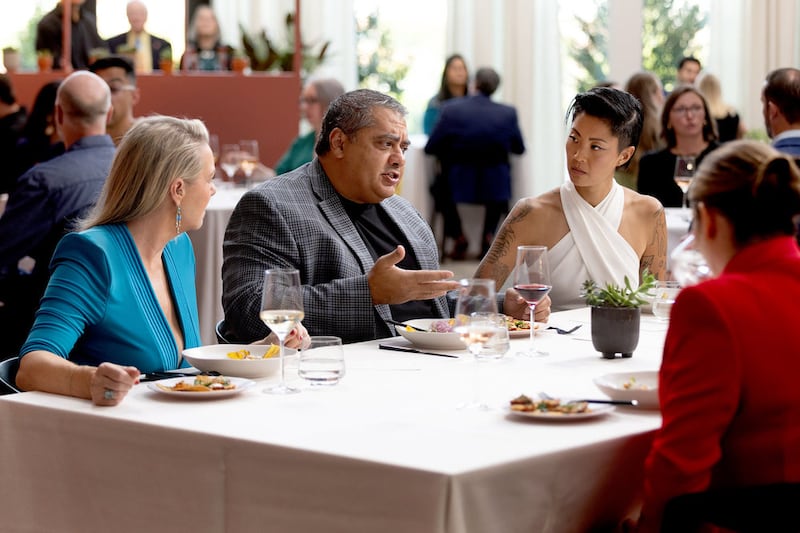
Simmons talked me through my biggest anxiety. I’m an adventurous eater. But still…what if I don’t like the food? Do I keep a poker face and eat it anyway? Do I bellow “yuck!” and send it back, ensuring a starmaking Top Chef cameo in the episode?
“What do you do at a normal restaurant when you get a dish you don’t like?” she asked. I push the food around the plate to make it look like I ate it and don’t tell a single soul, obviously. “Well, we’re going to work on that in therapy,” she said.
That therapy session started immediately with some great advice: It depends on what I don’t like about the food.
“If you happen to not like oranges, that’s your problem, not their problem,” she said. “If something is egregiously wrong, even in this setting, I think it’s worth calling your server over and saying, ‘Hi, this is, like, raw.’”
And so, armed with this expert counsel, I embarked on my reservation at Carolina Queen, the restaurant I would be dining at.
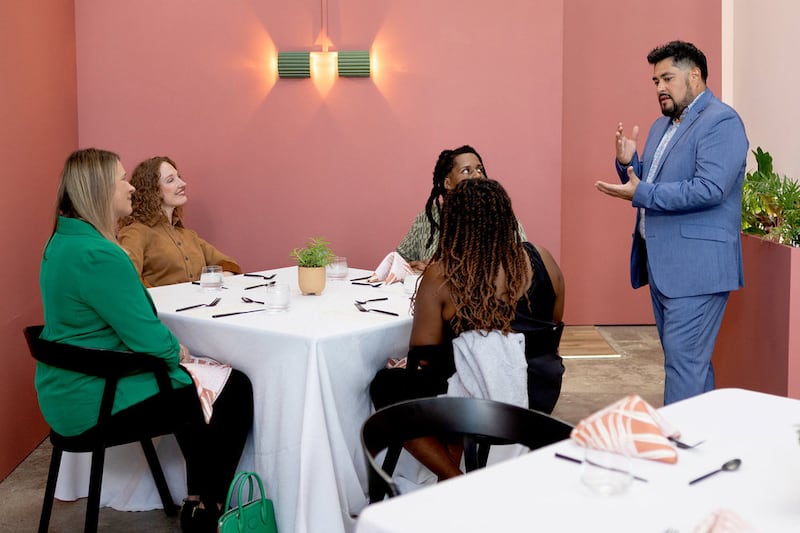
Watching the episode now is fascinating. Because I didn’t eat—or even see—Terra Reina, the competing space, I had no idea if I had just consumed the winning meal, or if I missed out on culinary brilliance I’ll have FOMO about for the rest of my life.
I only had my first impressions. Now that I’ve watched, I also have the judges’. It’s interesting how they compare.
When I walked in, I thought the space looked like a suburban hotel’s restaurant had been decorated for Mother’s Day brunch. The judges, I’d later learn, thought it looked pretty and feminine.
The judges were also impressed when the contestant working the front of house, Duyen, told them that Queen Charlotte is a reference to Charlotte’s nickname, Queen City, and the cuisine is all inspired by local Carolina food.
I’m happy for them because the people at my table had no idea what in the world the concept was, what kind of food we were eating, or how it related to the pastel-pink paintings on the walls.
It turns out a lot of your Restaurant Wars experience is tied to your server. Ours took our orders and dropped our food with no explanation. The one waiting on the table to our left delivered what appeared to be gorgeously loquacious arias about the concept and the thought behind the dishes she was serving. Each time a new dish arrived, we leaned over to those diners to ask them what the hell it was, since they got all the tea.
I ordered Sherry’s crabcake, which I thought was…fine. I grew up in Maryland, so there’s a high bar. There was a nice spice to it. (The judges loved it.) I also ate Anthony’s red rice with seafood béarnaise, which was…fine. The biggest talking point at the table was, wait, is there, like, cheese in this? (The judges echoed my confusion.)
For dessert, I got Sherry’s peanut butter and jelly-inspired panacotta. I’m surprised the mics on set didn’t pick up me screaming, “Holy peanut butter hell!” when I tasted it. It was so peanuty. (The more eloquent judges compared it to peanut butter frosting.)
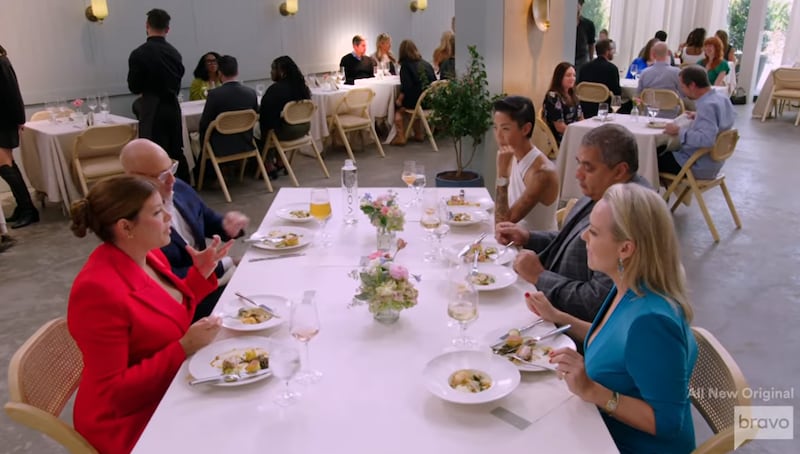
In the episode, as I stuff my face in the background—if you squint behind Gail, you can see me!—the judges rave about how seamless the front of house went.
That’s, again, a testament to everyone’s individual experience. We waited what seemed like an eternity between courses, and when our entrees finally arrived, there was no silverware on our table. Flagging someone down to bring them to us was not a swift task. One of our desserts arrived with parchment paper stuck to the bottom, so it had to be sent back.
But!!! It was so much fun!!! The energy in the room was fizzy and joyous. Even when things went wrong—having a fork so I could eat my food hot would have been nice—it was all such a gas, especially because, as Top Chef fans, we know how hard that challenge is. We ate food that was, like, good. Good enough, at least. It looked fancy. The restaurant was operating like a proper restaurant. The judges seemed in a good mood when they walked out, and we felt the same.
“For our audience and for us, there’s this air of grandeur around Restaurant Wars,” Simmons told me. Breathing that air in person, I have to say, was pretty intoxicating.