Trump’s wild insecurities are bolstering late-night television, Jon Stewart, 63, said on the podcast IMO with Michelle Obama & Craig Robinson.
The Daily Show host has long opposed the Trump administration and slammed Trump’s war against late-night television on-air. He discussed the president’s toxic relationship with culture on IMO, explaining that Trump’s own instability makes him and other hosts more vital and popular than ever.
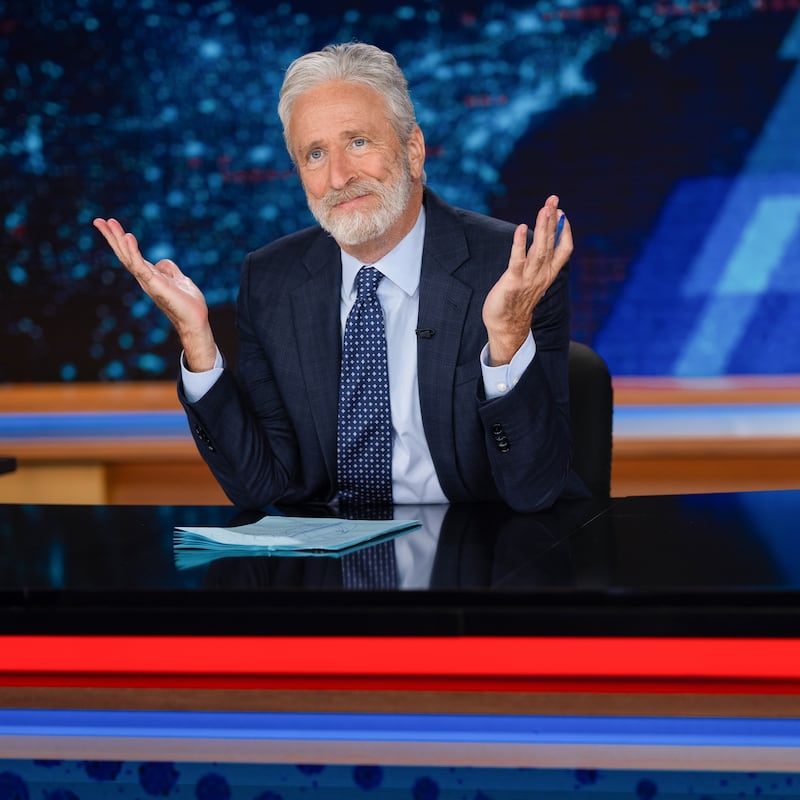
“There is nothing more, I think, fragile than someone who wields real power, who feels that that power will be diminished by satire or commentary,” Stewart said. “It’s kind of a shocking fragility, for someone who wants to project alpha male dominance and yet be so incredibly wrecked by something that happens at 12:30 at night. I mean, he’s made all of our shows relevant again, in a weird way.”
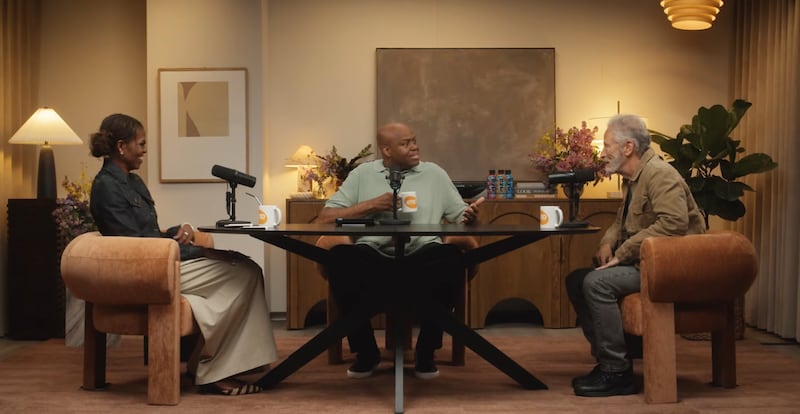
Stewart said the root of the issue is that Trump confuses “cultural power with power,” placing satire’s cultural influence on the same plane as his administration’s violent political power. Obama added that late-night lets politicians reach constituents in a more human setting, and by threatening satire, Trump reveals a fundamental misunderstanding of its unique position.
“When I was first lady, I think our administration understood that,” Obama said. “There was the Washington power, but if you wanted to talk to anybody, if you wanted anybody to hear you, really, you needed to go at it from the culture, where people are, and not try to buck it.”
“I mean, I didn’t do one interview with Face the Nation or Meet the Press,” she continued. “I never sat down with the New York Times editorial board, but I came on The Daily Show.”
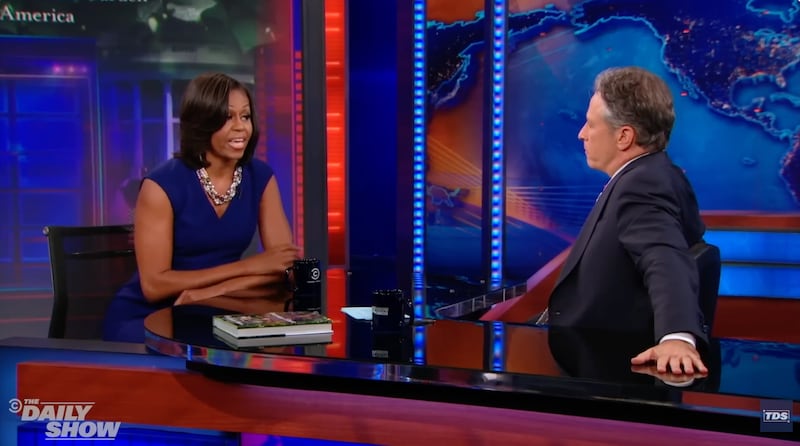
Even so, Stewart sometimes questions the morality of his work. Without a way to measure how his comedy impacts people and politics, he remains unsure of the ramifications of his cultural sway.
“I almost wish there was a double blind study where you could find out like, ‘Am I hurting? Like, does this help? Does it corrode? Does it pervert? Is it something to be, is it ultra-processed food that’s given the country a kind of political diabetes?’ I don’t know,” he admitted.
Regardless, he hopes to continue operating with good intention, as he has for the past 25 years.
“It may not be an honorable thing we do, but we do it as honorably as we can in that,” Stewart said. “It is not in bad faith. So the way that I try and judge it is that any good faith art, material, speech, talk that goes into the universe, I feel is a win.”