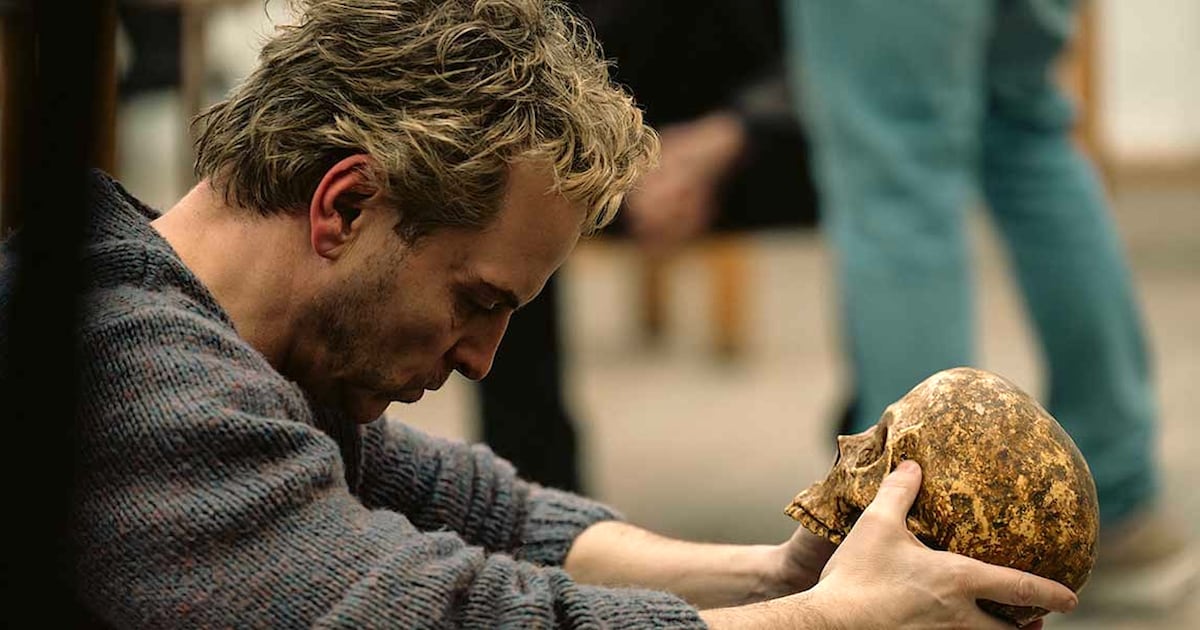
John Malkovich is a national treasure whose wily and idiosyncratic personality is tailor-made for both menace and goofiness, and he gets to show off every side of himself in Wild Horse Nine, Martin McDonagh’s follow-up to The Banshees of Inisherin, in which he plays a CIA operative whose wry humor goes hand-in-hand with his casual ruthlessness.
Paired opposite a stellar Sam Rockwell, he delivers one of the great performances of his career, no matter that the film itself isn’t nearly as confident in melding its own disparate registers.
In a basic sense, Wild Horse Nine—premiering Sept. 14 at the Toronto International Film Festival before debuting in theaters on Nov. 6—is a hybrid of Banshees and the writer/director’s 2008 comedic crime thriller In Bruges, concentrating as it does on two professional-killer friends on a remote, picturesque island of rolling hills and scenic ocean views.
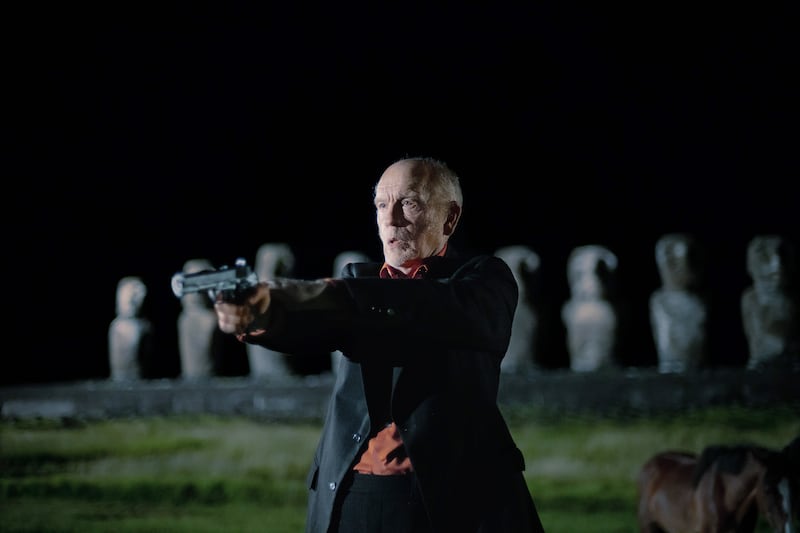
The duo in question is Chris (Malkovich) and Lee (Rockwell), central intelligence agency officers stationed in 1973 Chile and working under bureau chief MJ (Steve Buscemi). Chris and Lee are close pals, and when the proceedings open, the latter is filming the former discussing his storied covert career, during which he deems each of his clandestine missions a “success”—including one in Dallas.
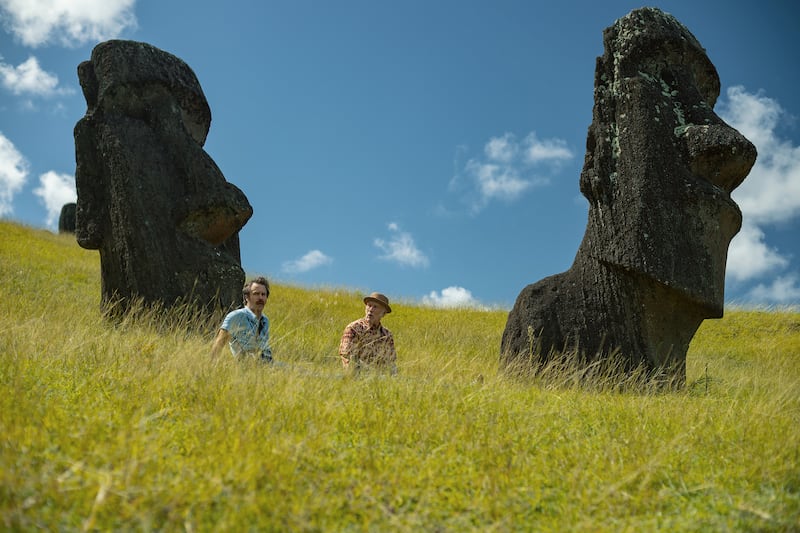
Chris’ involvement in JFK’s 1963 assassination is teased throughout Wild Horse Nine, whose story follows the pair as they embark on a week-long vacation to Easter Island to see, as Chris puts it, the “heads.” At the airport, Chris is chastised for not using the “indigenous” term for his destination by college students Monica (Mariana di Girolamo) and Alicia (Ailín Salas).

With a candor that hardly fits his profession, Chris promptly tells the women that he and Lee are in the country to “destabilize your democracy,” which has just gotten a boost from the election of socialist Salvador Allende. This is a no-no, but it’s not long before McDonagh reveals the reason for Chris’ inapt big mouth: he’s dying of cancer.
Chris is also a habitual liar who likes to screw with people (believing, at least some of the time, that they won’t buy what he’s selling), and Malkovich establishes him as a stew of contradictions: loyal and deceptive; silly and grim; self-assured and remorseful. It’s the last of those qualities that comes to the fore in Wild Horse Nine, as Chris and Lee’s sightseeing tour of the island’s “moai” (another indigenous term scoffed at by Malkovich’s protagonist) is colored by omnipresent ruefulness.
Beset by a faltering memory that requires him to write notes to himself, Chris is a man simultaneously looking backward and inwards, and his regrets over past deeds are as pressing as the missive he’s written, which warns, “Don’t trust Lee!”
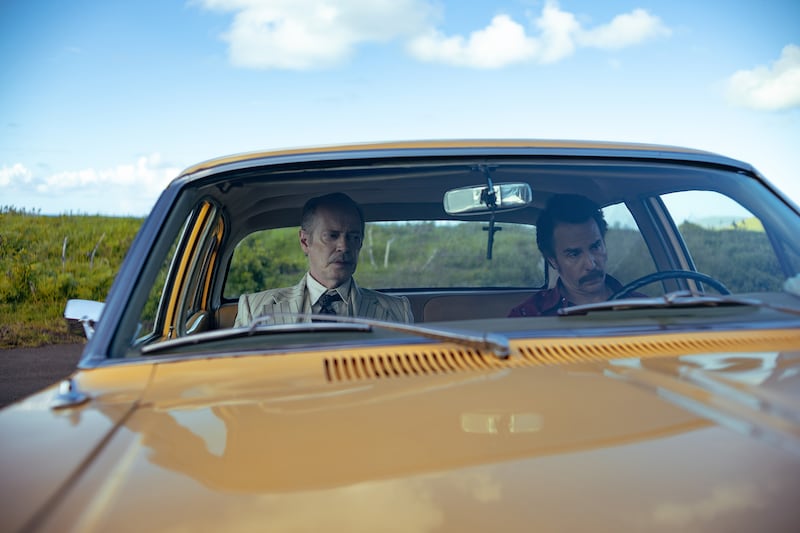
In a pork pie hat and suspenders, his big gray sideburns creeping onto his cheeks, Malkovich’s Chris is an old-timer with a closet full of skeletons that he’s not afraid to bring into the light, and his back-and-forths with Rockwell’s Lee provide Wild Horse Nine with its get-up and go. McDonagh has a gift for absurd manly banter, and a car conversation in which Chris claims to have taught the Irish how to build bombs—and then describes how placing an inapt image on an explosive package (say, a dwarf holding a basketball) is an ideal lure—is gold.
So too is Chris’ wavy-handed argument that MJ is a junkie because he always wears long-sleeve shirts and once fell asleep in a meeting, with Malkovich exuding a cockiness that’s enhanced by his weirdness.
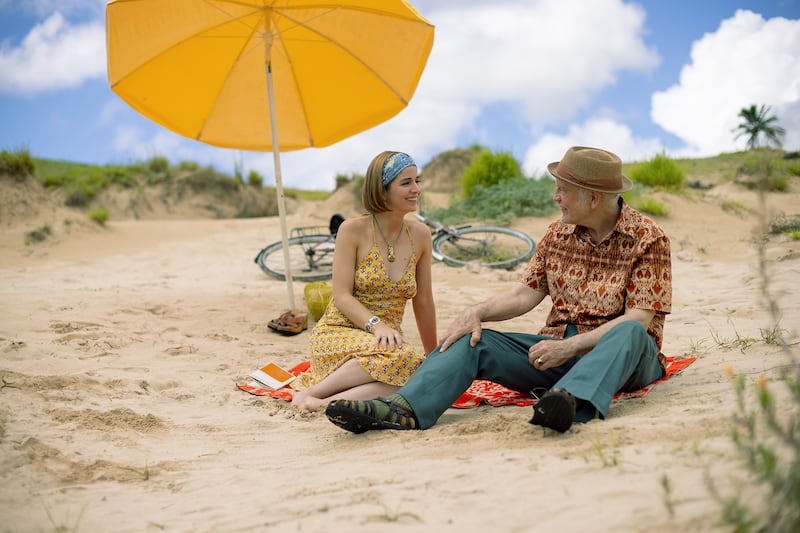
The purpose of these agents’ getaway is far less frivolous than it initially appears: facing his demise, Chris has asked Lee to end his life. The problem is that Chris no longer remembers making this request. Furthermore, his dedication to leaving behind a memoir of his exploits—which he narrates into a tape recorder, and which begins with a digression about dinosaurs, souls, and heaven—is viewed as a big problem by MJ, who’s ordered Lee to off his BFF before he spills secrets about his role on the grassy knoll.
A Catholic who frequently shares the frame with crucifixes, Chris is a spook who regrets his actions and hopes to pass through the pearly gates; though that makes him something of a familiar type, the actor exudes poignant soulfulness and gravity.

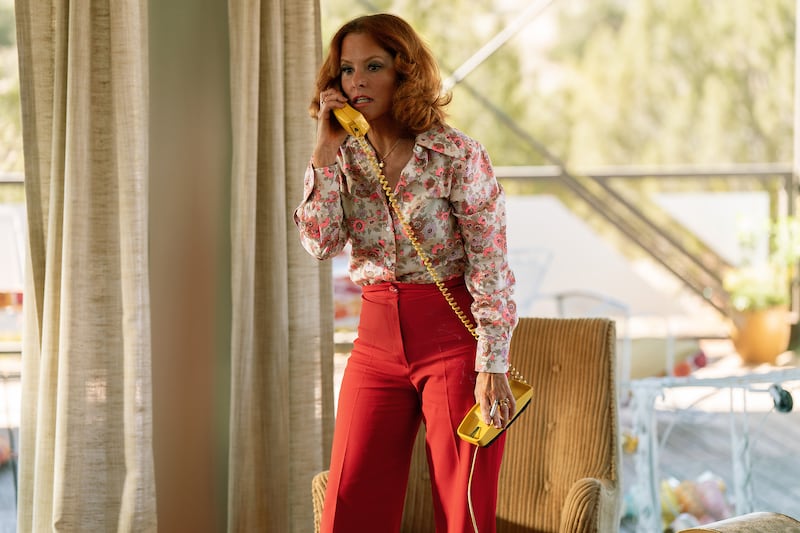
Rockwell’s Lee isn’t granted the same depth by McDonagh’s script, yet he earns his fair share of laughs, whether he’s flashing hilarious slack-jawed reactions to Chris’ announcement that he really wanted to die in Venice or verbally sparring over the phone with his wife Marge (Parker Posey), who has a thing for cheating on him with former clowns.
Having earned his Best Supporting Actor Oscar for McDonagh’s Three Billboards Outside Ebbing, Missouri, Rockwell is highly attuned to the rhythms of the filmmaker’s prose, and his chemistry with Malkovich is fantastic—epitomized, early on, by Lee wishing Chris goodnight with a high-five, then a choke, and finally a loving pat on the head.
For its first half, Wild Horse Nine is a hangout movie about two quirkily entertaining guys worth spending time with, but the good times don’t totally last. A quasi-spiritual equine metaphor is a clunker, and the film’s political angle—critiquing U.S. interventionism as a force for anti-democratic villainy—is undercut by the material’s increasingly cartoonish tone.
Whereas Malkovich harmonizes Chris’ peculiarities, McDonagh’s silliness turns everything glib, and his story eventually resorts to indulging in pat twists and clichés.

Wild Horse Nine’s concluding passages want to have it both ways, embracing Chris’ cynical view of the world (and geopolitical power dynamics, and everyday citizens’ ability to affect change) while contending that atonement and redemption are possible. Pessimism and optimism vie for supremacy during the film’s trot toward its climax, and Malkovich and Rockwell’s rapport, right up to their closing scene together, is genuine and heartfelt.
Nonetheless, it can’t obscure the action’s wishy-washiness, which hampers its believability. Simply put, by the end of this saga, nothing about it seems as real and serious as it purports to be.
Still, if Wild Horse Nine doesn’t strike the same pitch-perfect chords as Banshees, the fault doesn’t lie with Malkovich, who crafts a charming and moving portrait of guilt, despair, and longing for friendship, trust, the truth, and salvation. Even when the film falters, he’s in peak form.