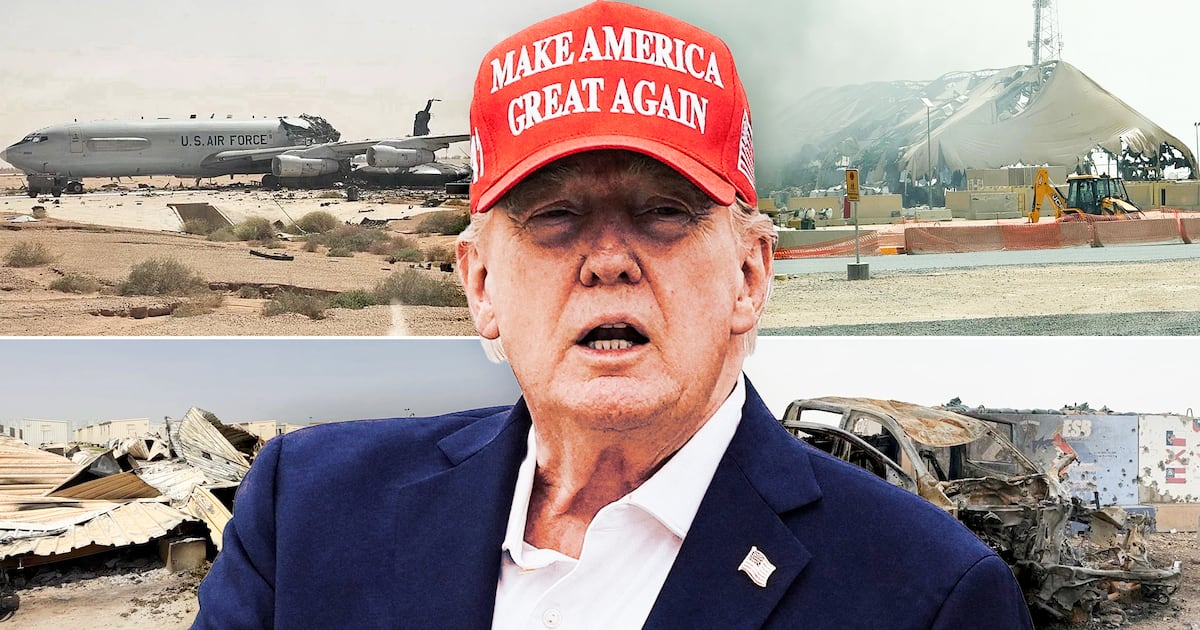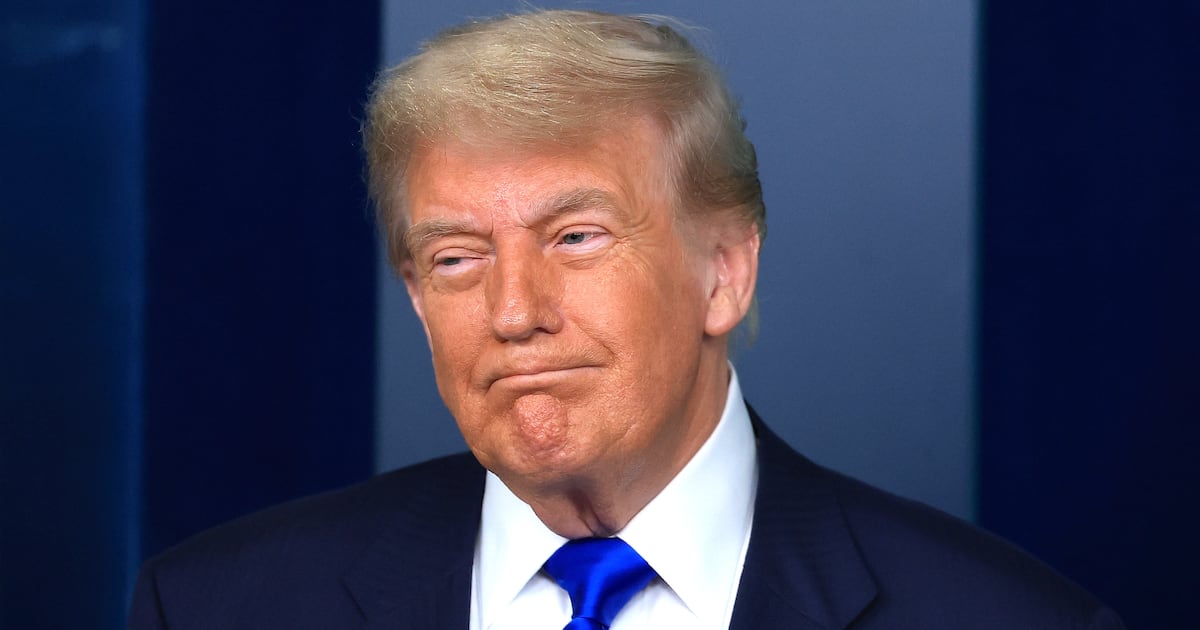
After countless victory laps, Donald Trump has finally conceded that he needed to strike some kind of deal with Iran to avoid a global “economic catastrophe.”
Speaking at the G7 summit in France, Trump also outlined his fear of becoming “the next Herbert Hoover” —the U.S president widely blamed for the Great Depression in the aftermath of the 1929 crash.
“I didn’t want to see economic catastrophe. If you kept this going, that could have happened,” he told reporters, later adding: “It could have caused an international depression.”
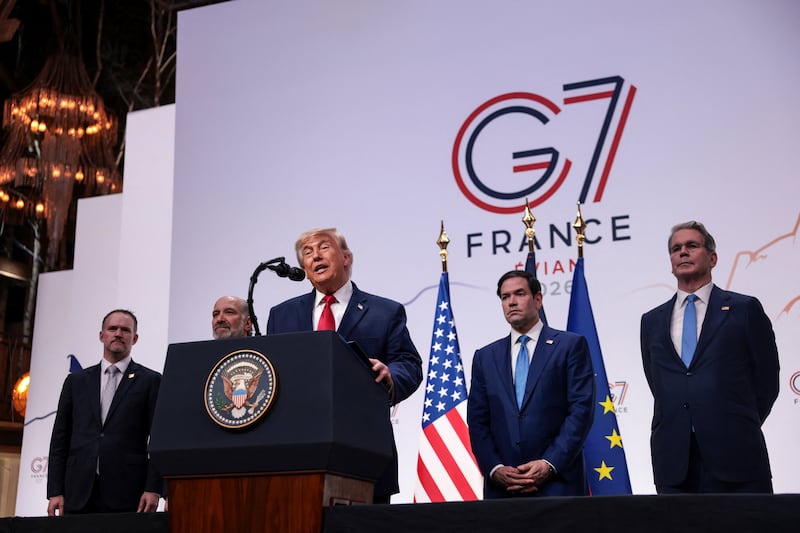
The frank comments were made during a meandering press conference on Wednesday, with Trump going on so many long-winded tangents that it sparked fresh concerns about his health.
After ranting about killing Iranian General Qasem Soleimani in 2020, he then veered into a string of topics, such as the marble being used for the White House ballroom, rigged elections, and the cognitive capacity of his predecessor, Joe Biden.

At one point, the 80-year-old president even bizarrely tried to kill an insect by hitting his chest, telling the audience: “I wanted to get that little sucker, but I missed.”
“Rubio should grab the microphone,” noted one sympathetic observer on X, referencing the U.S Secretary of State standing awkwardly next to Trump on the world stage.
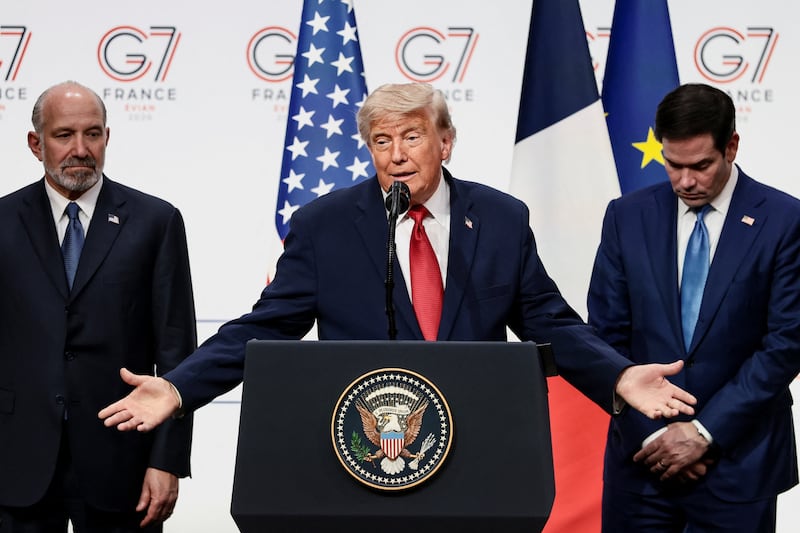
The president arrived at the summit earlier this week under pressure to defend his tentative agreement with Iran, which he insists will prevent Tehran from obtaining a nuclear weapon.
The core elements of the reported agreement include extending the ceasefire, reopening the Strait of Hormuz to global shipping, lifting the U.S. naval blockade around Iran, and beginning talks over Iran’s nuclear program and longer-term regional security arrangements.
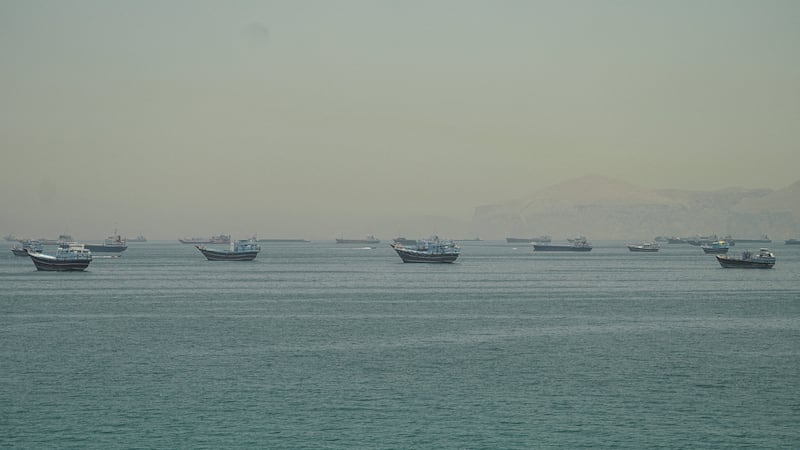
The Strait has been shut down for months, resulting in more pain at the pump for consumers and sparking fears of an ongoing global energy crisis.
But even as he talked up his looming deal, Trump undercut his own sales pitch by threatening to restart hostilities if Iran doesn’t behave.
“It’s a memorandum of understanding,” he said, confirming that the finer details of an agreement have not yet been reached.
“If it doesn’t get done in 60 days, that’s alright, we go back to bombing.”

He also acknowledged there was nothing enforceable in the memorandum of understanding, telling reporters on Wednesday: “there doesn’t have to be” because Iran needed to make a deal to avoid ongoing attacks.
Under the framework, due to be signed on Friday, Iran would be allowed to resume oil exports during the negotiating period, providing an immediate source of revenue after months of conflict.
The agreement also opens the door to broader sanctions relief and access to frozen Iranian assets if Tehran meets certain conditions.
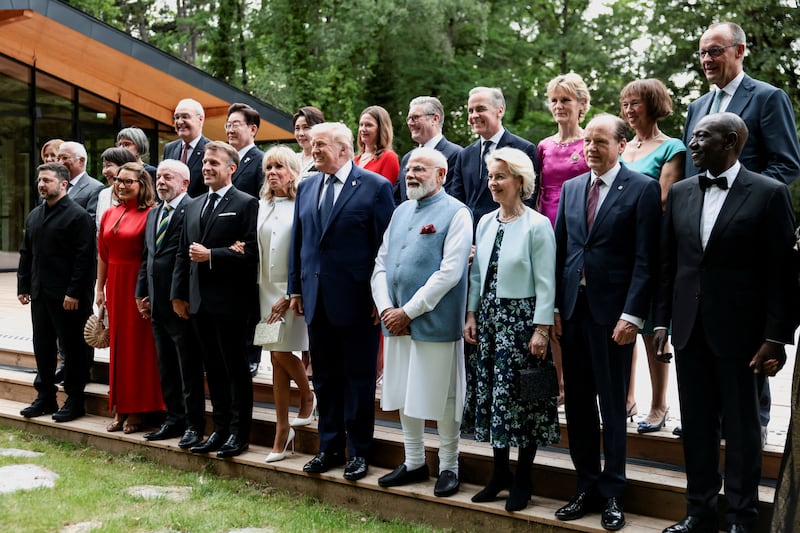
There is also a $300 billion Reconstruction and Development Fund intended to help rebuild Iran’s economy and infrastructure.
The White House insists the fund would be financed by private investors rather than U.S. taxpayers, and says the money would only flow if Iran fulfills its obligations.
Even so, critics argue that the sheer scale of the proposed investment dwarfs the economic benefits available under Barack Obama’s 2015 nuclear deal—the same agreement Trump spent years attacking.
The White House has been scrambling to sell the agreement to skeptical Republicans.
Talking points circulated to GOP allies emphasize that sanctions relief is conditional, that Iran must submit to international inspections, and that the deal can be revoked if Tehran backslides.
Administration officials have also highlighted falling oil prices and the reopening of key shipping routes as evidence that Trump’s strategy worked.
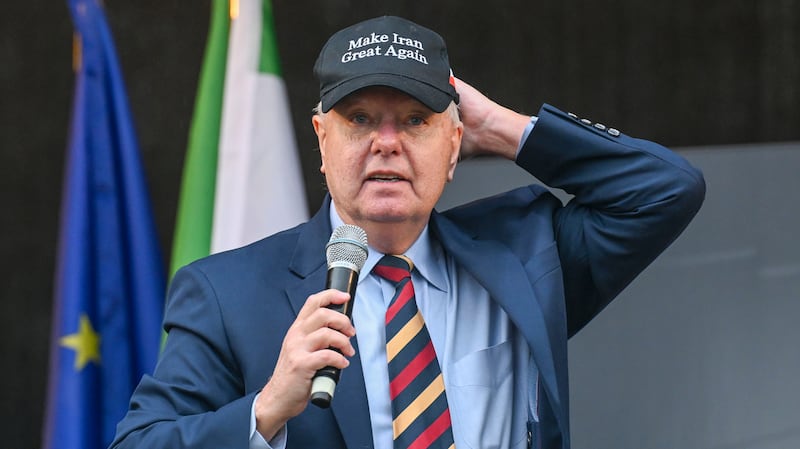
But many Republicans aren’t buying it. Sen. Lindsey Graham, a Trump ally who encouraged the president to strike Iran, said the memorandum - or at the details Iran state media had reported - “sounds awful” particularly with regards to enriched uranium.
“If they can enrich it anywhere at all, then it’s the same as JCPOA,” he said, referencing the 2015 Obama agreement that Trump canceled.
Trump insisted the path he had taken was the right one but acknowledged: “we really had no choice.”
He added: “I asked people, I said, ‘Would you rather do this or go along nice and smoothly, but eventually have a catastrophe?’ And just everybody says, except for lunatics, that ‘you had to get it done.’”