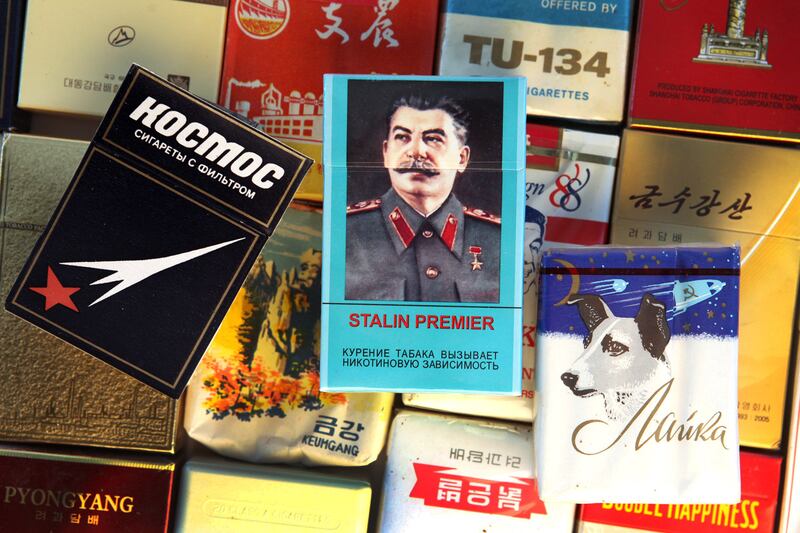
Big tobacco is hardly unique to the United States. Every country in the world is awash in cigarettes and the pack of smokes has long been used to send a message—usually not one promoting smoke-free lungs. The world's police states, past and present, aren't shy about using the packs' few square inches to promote Dear Leader.
Sarah Rogers/The Daily Beast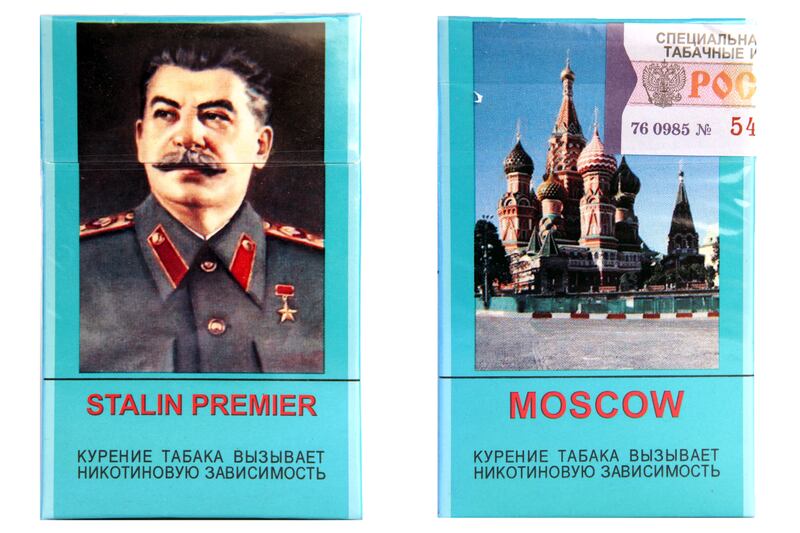
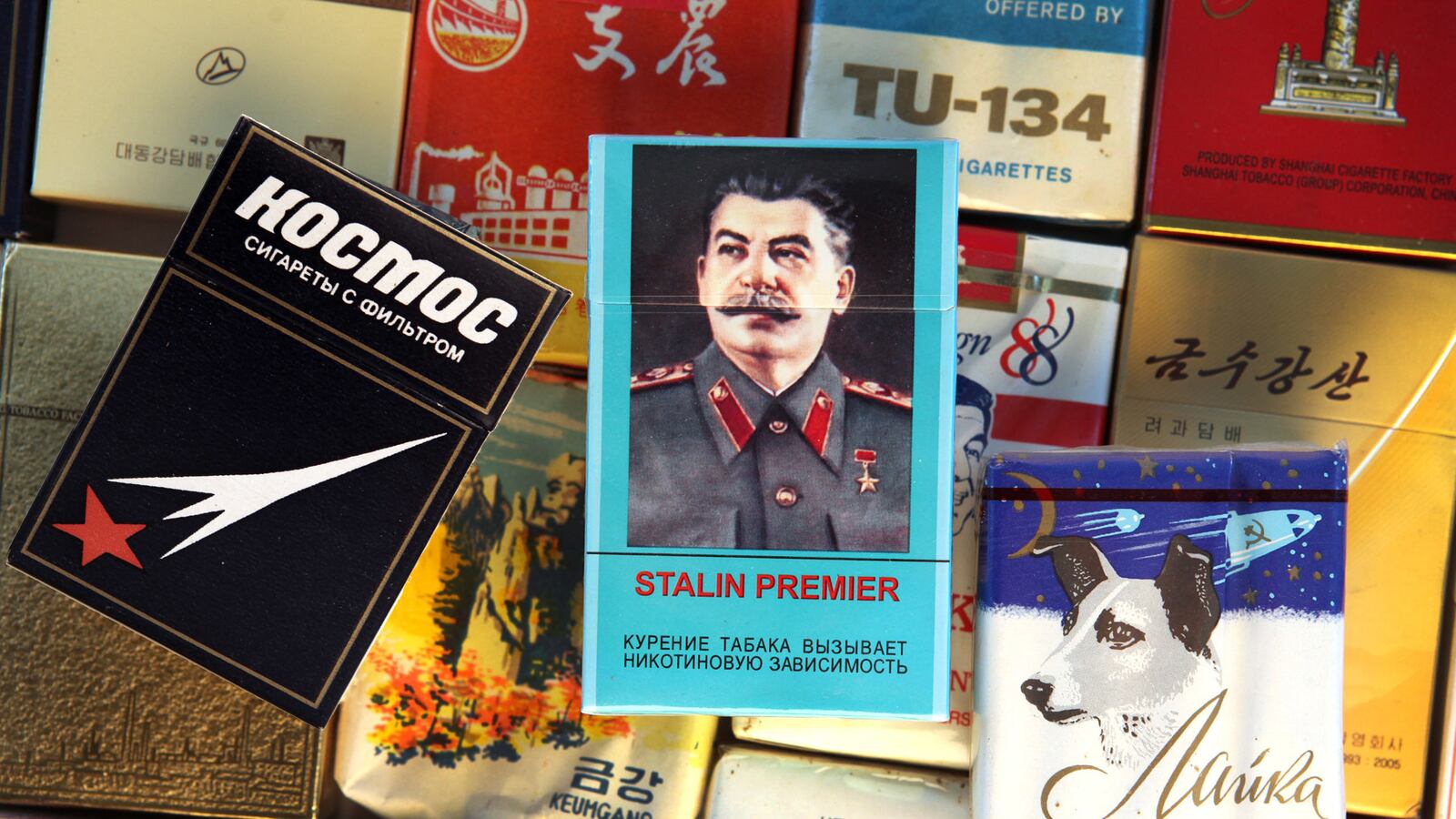
These Joseph Stalin cigarettes were bought last year in Russia, where I also saw a pack celebrating the life of Vladimir Lenin (who did not smoke, and would not allow those around him to smoke). Stalin smoked a pipe in public, but according to more than one biographer, it was filled not with pipe tobacco, but with tobacco from a brand of Russian cigarettes called Herzegovina Flor. As Professor Jan Plamper of Goldsmiths, University of London, wrote in the 2003 book, The Landscape of Stalinism: The Art and Ideology of Soviet Space, this “came to signify proletarian class background, whereas the cigar acquired the status of the pipe’s bourgeois other.”
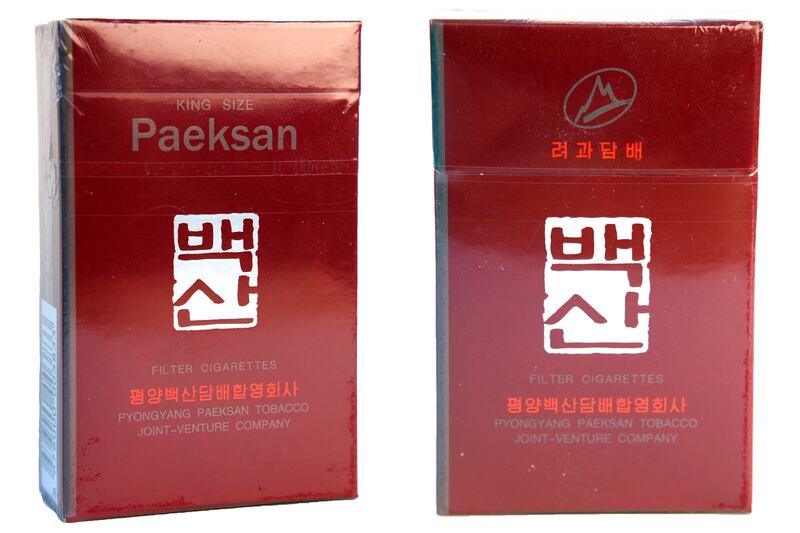
The Paeksan brand (8 mg tar, 0.6 mg nicotine) pays homage to North Korea’s sacred mountain, Paektusan. It’s where the Korean dynasty was created 4,300 years ago by a god named Hwanung, according to Korean mythology. More recently, the mountain served as Kim Il Sung’s base of operations while battling Japanese occupiers between 1936 and 1943, though the North Korean claim that it was also the birthplace of Kim Jong Il is as much a fantasy as the story of Hwanung. Russian records show that he was actually born Yuri Irsenovich Kim, in Vyatskoye, USSR, while his father, Kim Il Sung, was hiding out from the Japanese.
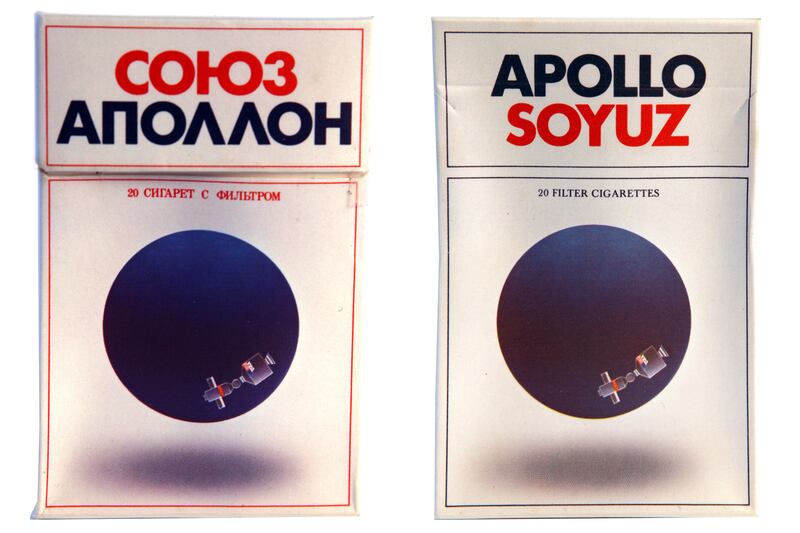
Like the 1975 Apollo Soyuz mission itself, Apollo Soyuz cigarettes were a joint effort between the United States and the Soviet Union. Produced in a limited run between 1975 and 1977, Philip Morris teamed up with Moscow’s Yava Cigarette Factory to mark the first-ever US-USSR space rendezvous. According to ads running at the time, Apollo Soyuz were “an American blend cigarette made in Russia.” Amidst such friendliness, it’s fairly easy to miss the fact that the English side of the box reads: “Apollo Soyuz,” and the Russian side reads: “Soyuz Apollo.”
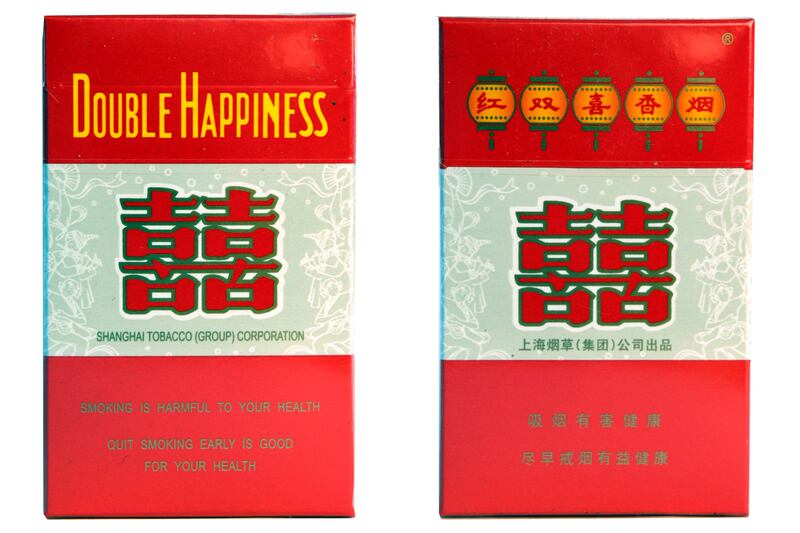
Manufactured by Nanyang Brothers Tobacco, a subsidiary of state-owned Shanghai Industrial Holdings, Double Happiness cigarettes (10 mg tar, 1.0 mg nicotine) have long been a staple of China’s institutional culture of graft and under-the-table dealmaking. “A person who wanted to buy a bicycle in the early 1980s often had to obtain a ration coupon from his unit, and in such a situation it often made sense to hand the individual responsible for issuing coupons a carton of Double Happiness cigarettes and a couple bottles of erguotou baijiu (white liquor),” wrote Andrew Wedeman, in his book Double Paradox: Rapid Growth and Rising Corruption in China. About five years ago, Chinese legislators decided that “tobacco consumption had led to an increase in rampant corruption,” and drafted a bill that would make it illegal for government officials to accept cigarettes as gifts. It didn't pass.
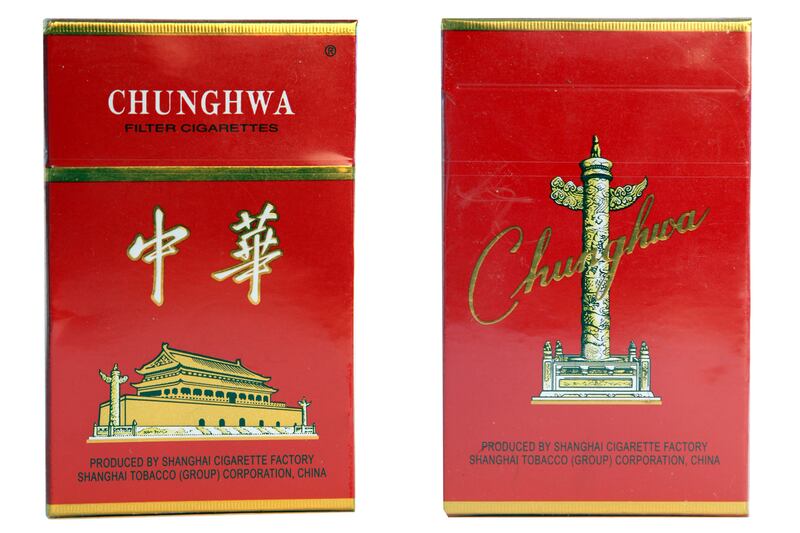
The iconic Chunghwa brand (11 mg tar, 1.0 mg nicotine) features Tiananmen Gate on the front, and was said to be Mao Zedong’s favored smoke. The word “Chunghwa” means, literally, “China,” and this detail has allowed the state-run Shanghai Tobacco Company to cleverly skirt the ban on tobacco advertising the Chinese government formally instituted in 1995. That’s when billboards reading “Love Chunghwa” began appearing. Of course, they weren’t shilling cigarettes. No, the ads were simple expressions of patriotism and national pride—they just happened to have “Smoking can damage your health” printed across the bottom.
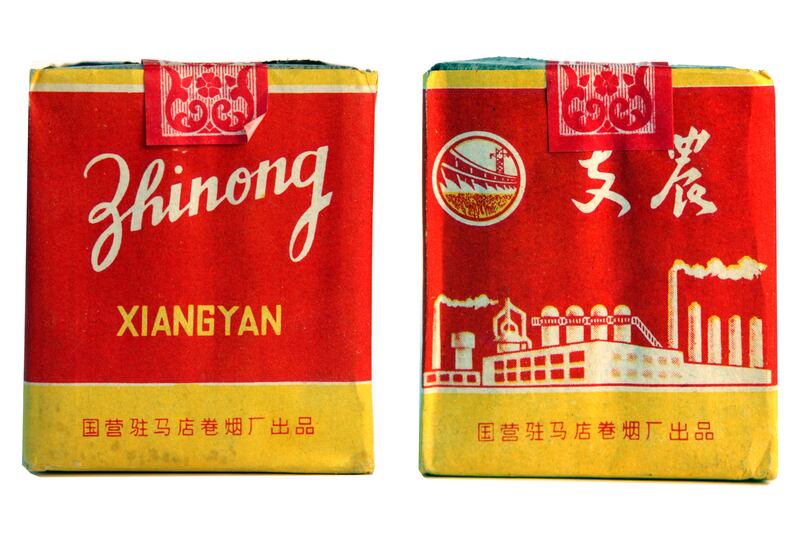
Evidently the infrastructure aficionado’s smoke, Zhinongs are manufactured under the aegis of state-owned China Tobacco Henan Industrial Co., Ltd., a subsidiary of state-owned China National Tobacco Corporation, itself part of the China State Tobacco Monopoly Administration. Made in the prefecture-level city of Zhumadian, at the fittingly-named Zhumadian Cigarette Factory, Zhinongs (tar and nicotine content unknown) are a nod to Zhumadian’s more than 60 dams. China is also home to more than 300 million smokers, and 1 in 3 cigarettes smoked in the world is smoked in China—more than Russia, the United States, Indonesia, and Japan combined. As such, it seems somehow appropriate that the Zhumadian Cigarette Factory Worker’s Hospital sits just a few hundred yards down Nanhai Road from the factory itself.
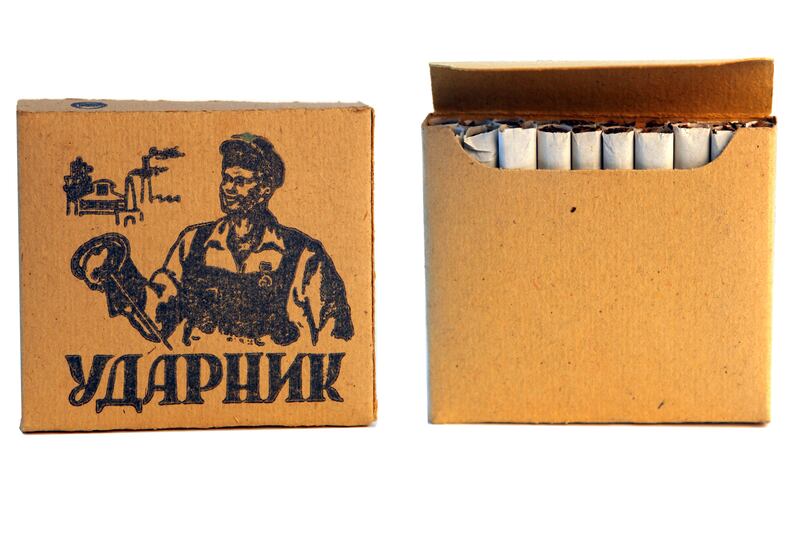
The word “udarnik” is a Soviet-era term for an ultra-productive shock worker, and Udarnik unfiltereds (tar and nicotine levels unknown) gently reminded Bulgarian laborer/smokers of the expectations their overlords in Moscow had for them. Naturally, this ochre-and-brown pack of Udarniks bears a beaming udarnik, heading to work, sickle in hand. Such importance was placed on workers exceeding quotas that especially prolific udarniks could become national celebrities. On August 30, 1935, mineworker Aleksey Stakhanov supposedly mined 102 tons of coal — 14 times his quota — in a single six-hour shift. The feat was celebrated the next day by party newspaper Pravda, turning Stakhanov into a communist icon. However, the record was a contrivance set up by party functionaries to inspire others to follow Stakhanov’s lead. It was also one that almost never happened, as Stakhanov’s wife was firmly against the idea of her husband being turned into a hero. Years later, the head of the political wing at the coal mine where Stakhanov “broke” the record, recalled that Stakhanov’s wife finally approved of the ruse after authorities presented her with a cow.
Sarah Rogers/The Daily Beast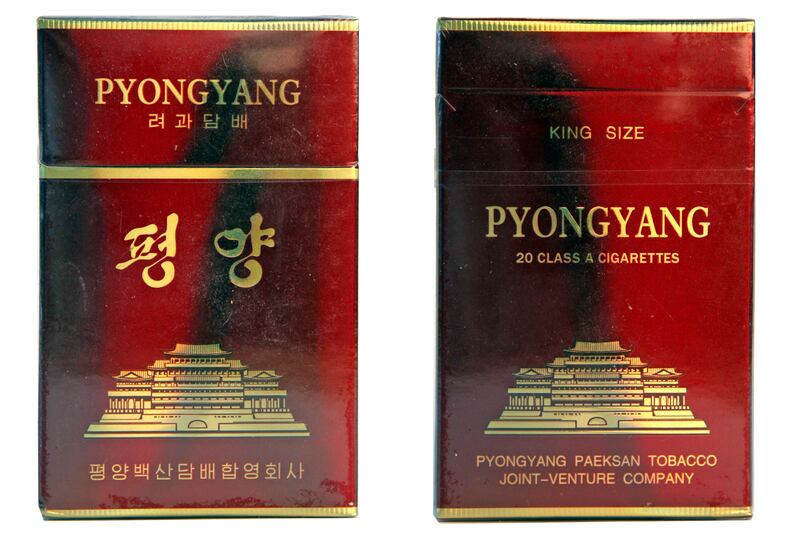
The Pyongyang-Paeksan Tobacco Joint Venture Company, a Chinese-North Korean entity set up in Pyongyang, is responsible for turning out Pyongyang filters, (14 mg tar, 1.2 mg nicotine). Each pack bears a gold-embossed image of the capital’s Grand People’s Study House, a million-square-foot library with 600 rooms and enough shelf space to accommodate 30 million books. Located in Kim Il Sung Square, where it was constructed in 1982 in honor of the Great Leader’s 70th birthday, it’s what western TV watchers usually see in the background when they see goosestepping North Korean troops on the news. These days, Kim Jong Un watches from a viewing platform set up directly in front of the building, as did his father and grandfather before him. Apparently, the library’s collection isn’t limited to domestic publications, as foreign titles are indeed said to be available — but only with permission.
Sarah Rogers/The Daily Beast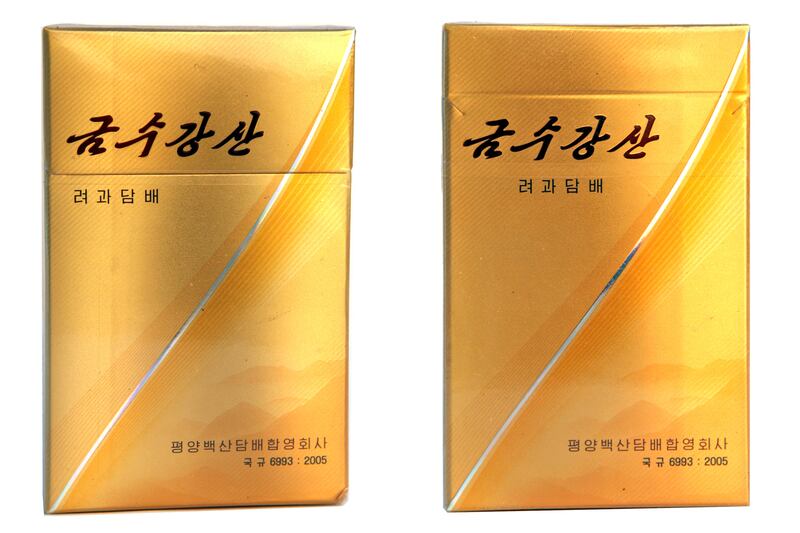
Kumsugangsans (8 mg tar, 0.8 mg nicotine) are named for Mount Kumgang, a 5,374 ft-high granite peak just north of the DMZ. “Song of Mount Kumgang” is one of five so-called revolutionary operas that North Korea has deemed “immortal classics,” and the lyrics to the revolutionary hymn “Song of General Kim Jong Il” are carved into a rock atop Kumgang, as well. In 1998, Mount Kumgang opened to South Korean tourists, who began traveling there for brief family reunions with relatives they hadn’t seen since the Korean War. A pall was cast over the spirit of reconciliation in 2008, when North Korean soldiers shot and killed a 53-year-old South Korean visitor who accidentally wandered into a restricted area.
Sarah Rogers/The Daily Beast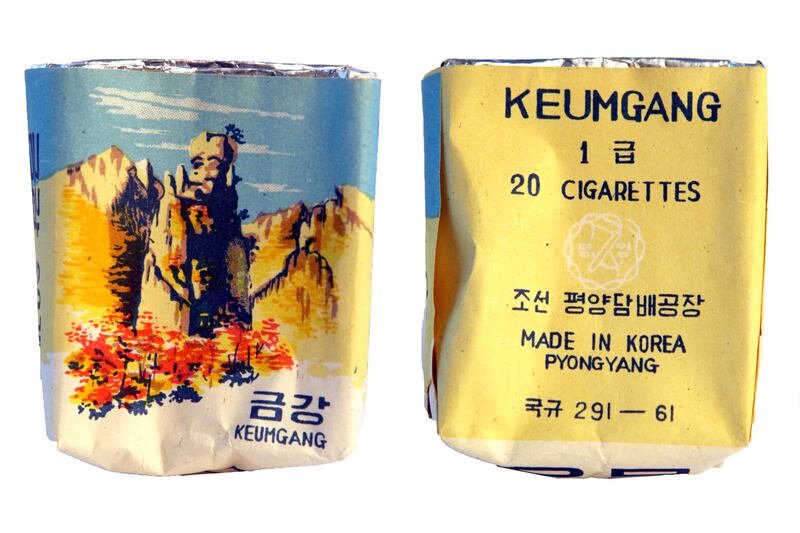
Kumsugangsans (8 mg tar, 0.8 mg nicotine) are named for Mount Kumgang, a 5,374 ft-high granite peak just north of the DMZ. This is an earlier version of the packaging.
Sarah Rogers/The Daily Beast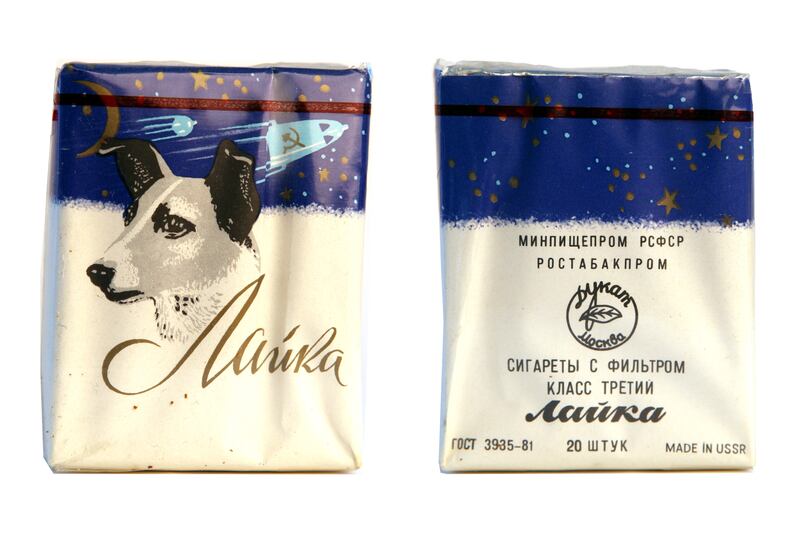
Laika (“Barker”), was a 3-year-old stray from the streets of Moscow who went on to become the world’s first dog in space. She was launched into orbit aboard Sputnik II on November 3, 1957, after which Laika cigarettes (tar and nicotine content unknown) were produced, under supervision of the Ministry of Food Industry, in honor of the flight. When American U2 pilot Francis Gary Powers was shot down over Sverdlovsk, USSR on May 1st, 1960, he was offered a Laika by one of the villagers who picked him up on the ground. “A filter cigarette, it tasted very much like its American counterparts,” Powers wrote in his 1970 memoir, Operation Overflight. “There was a package of Kents in my flight-suit pocket. I left them there.”
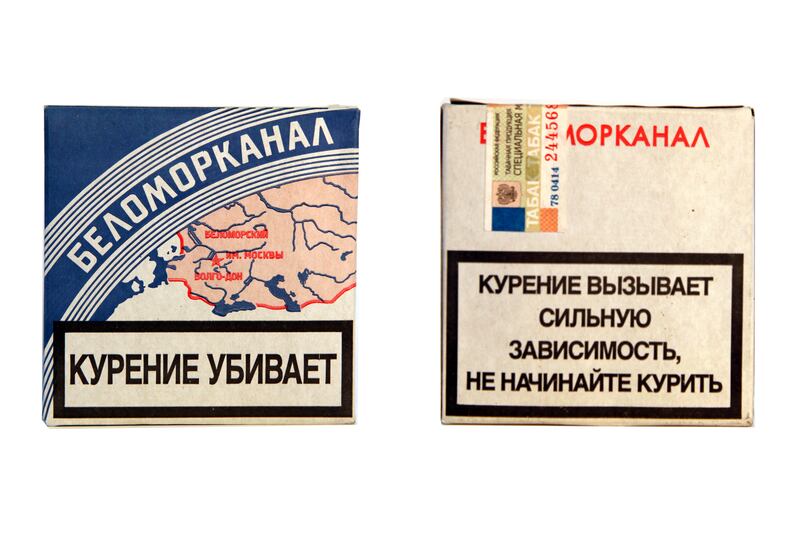
Created in 1933 to commemorate the opening of Russia’s Belomorkanal (“White Sea Canal”), Belomorkanal unfiltereds (tar and nicotine content unknown) were, and continue to be, manufactured from fifth-grade tobacco, the cheapest, lowest quality available. The Belomorkanal itself was the first major Soviet industrial project that used forced labor, with more than 100,000 gulag prisoners working on the 20-month undertaking. It’s also no accident that Belomorkanals measure 7.62 millimeters around, exactly the circumference of the bullets used for the 901 vintovka rifle. During World War II, if Soviet troops needed more ammunition, the standard sizing meant the production line could be converted over immediately, without any need to retool. Of course, they’ll both kill you — one just takes a little longer.
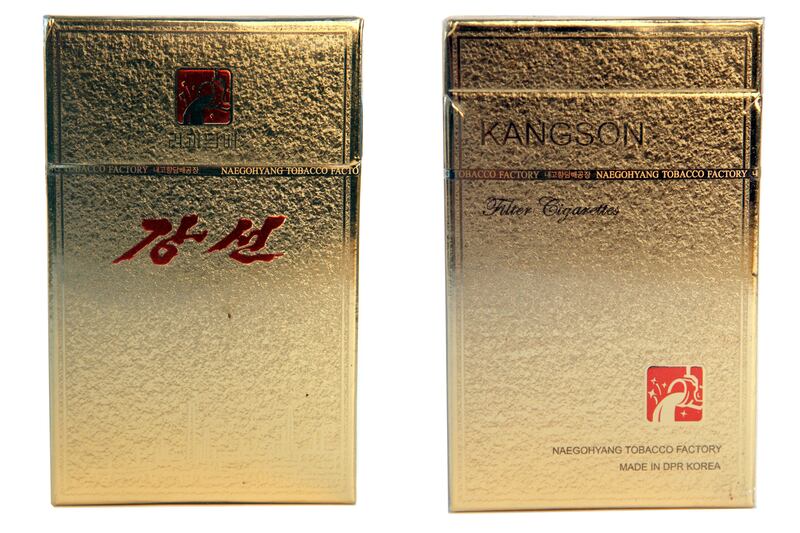
The Kangson Steel Works brand (6 mg tar, 0.4 mg nicotine) pays tribute to the Kangson Steel Works in North Korea’s South Pyongan Province. (Note the low-key silhouette of the plant along the bottom third of the pack, as well as the bucket of molten steel embossed at the top.) Kangson, known today as the Chollima Steel Complex, occupies a singularly important position in North Korean history as the physical manifestation of the Chollima Movement — Kim Il Sung’s version of Mao’s Great Leap Forward, and named for the Chollima, a mythical winged horse. So ardent was the regime about exceeding production quotas, a “drink no soup” campaign encouraged workers to cut down on bathroom breaks by avoiding liquids.
Sarah Rogers/The Daily Beast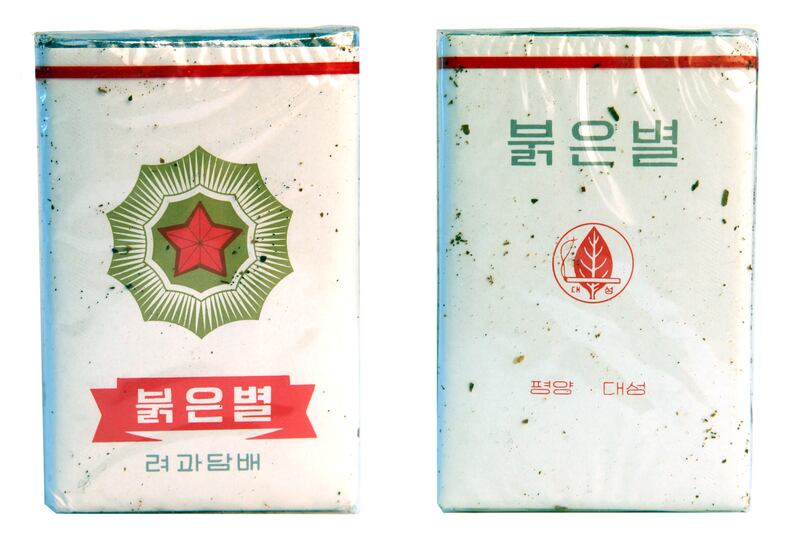
Bulgunbyol (Red Star) cigarettes are obviously intended for domestic consumption only. In addition to the typically North Korean construction (shoddy) and design (haphazard), the package copy is entirely in Korean, there’s no barcode to be seen, and tar and nicotine levels aren’t disclosed. “Kind of like smoking tobacco-flavored sawdust,” a friend said after trying one. Red Star, a moniker that’s about as direct as they get, also happens to be the name of North Korea’s homegrown Linux-based operating system. Developed by the Korea Computer Center in 2002, the Red Star OS comes with the Naenara (“My Country”) web browser and a version of Linux Open Office called “Uri 2.0.”
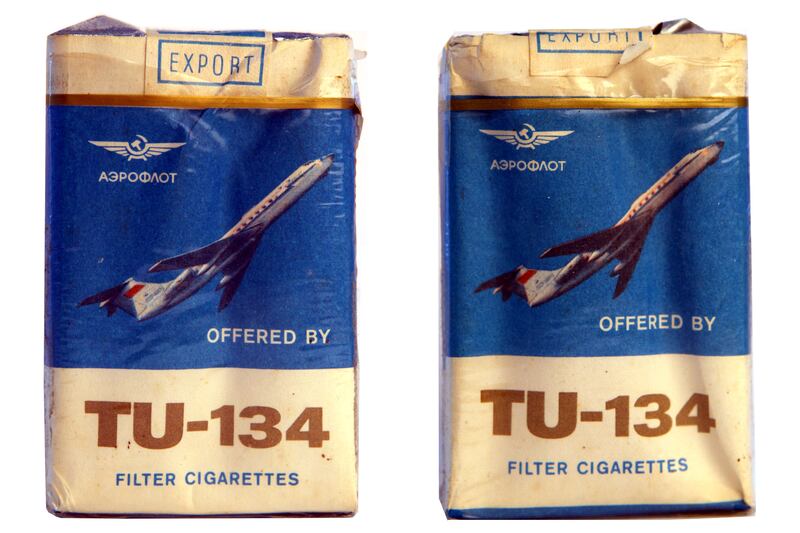
Produced by state-run Bulgartabac, these TU-134 filter-tips (14 mg tar, 0.1 mg nicotine) are named for the short-haul jet ordered into production by Soviet Premier Nikita Khrushchev. In 1960, Khrushchev visited France, where he was shown the brand-new, twin-engine Caravelle SE-210. He ordered Tupolev to design a homegrown version, and full production of the TU-134 began in 1966. The plane’s first scheduled flight took place in 1967, and Aeroflot kept the TU-134 in service until the end of 2007. Air Koryo, the North Korean flag carrier, still flies the TU-134 on certain domestic routes, and last year, aviation journalist Bernie Leighton got to fly on one. Immediately noticeable to Leighton was the plane’s exterior, which looked like a coat of house paint had been applied by hand. What he didn’t see until after they landed was the old Garmin GPS unit strapped to the cockpit’s center console, which the pilots had apparently used to get there.
Sarah Rogers/The Daily Beast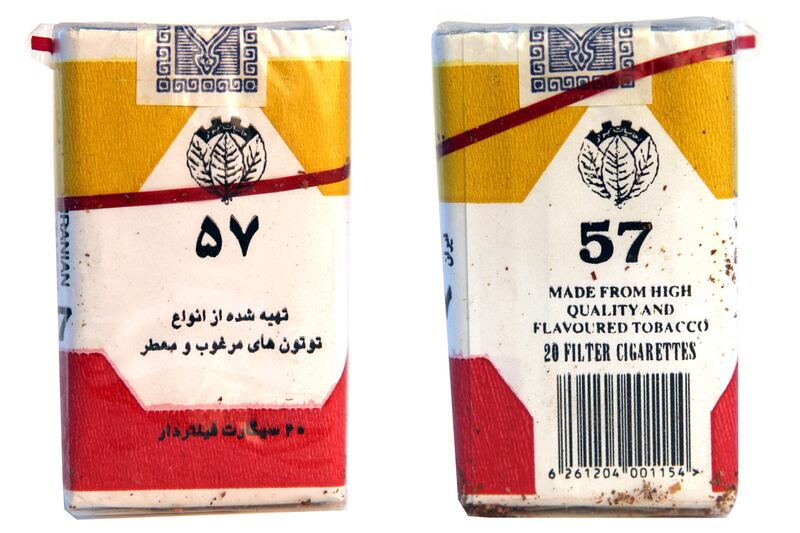
The “57” here is not a Heinz-style boast by Iran’s state-run tobacco monopoly about the breadth of its product line, but rather a “Spirit of ‘76”-style reference to 1357. On the Persian calendar, 1357 is in fact 1979 — the year the Iranian Revolution took place. Sister brand Bahman (11 mg tar, 0.7 mg nicotine) is so-named for the month of February, which is when the late Ayatollah Ruhollah Mostafavi Moosavi Khomeini, the spiritual leader of the Revolution, returned to Iran after 14 years in exile.
Sarah Rogers/The Daily Beast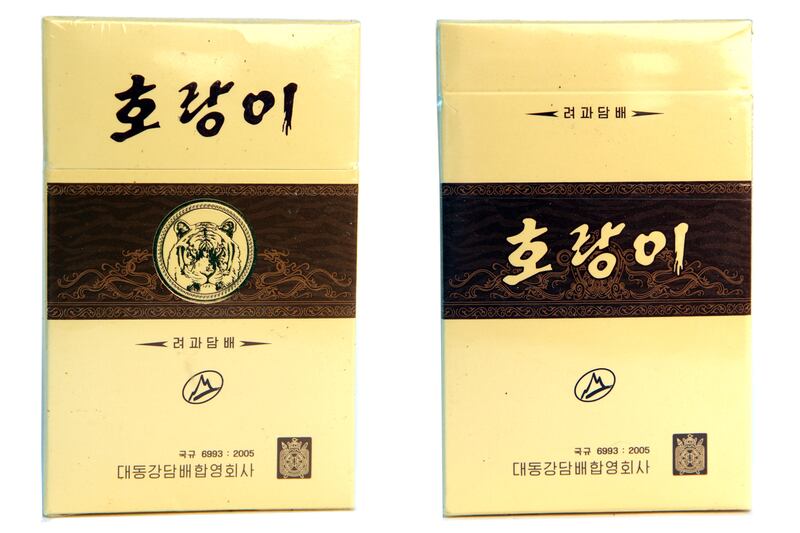
The horangi, or, tiger, is an extremely important symbol in Korean history, both North and South. In fact, fairy tales typically start with the phrase, “When tigers used to smoke…” rather than, “Once upon a time…” But, only North Korea uses the tiger to further solidify the cult of personality around the Kim family. In one textbook example of North Korean hyperbole, a painting on display in Pyongyang features Kim Jong Il in full armor, riding a tiger on Mt. Paekdu. can be seen variously riding, fighting, and slaying tigers. Tiger symbolism can also be found throughout the North Korean People’s Army, the most obvious being the “Pokpung-ho” tank, or the “Storm Tiger.”
Sarah Rogers/The Daily Beast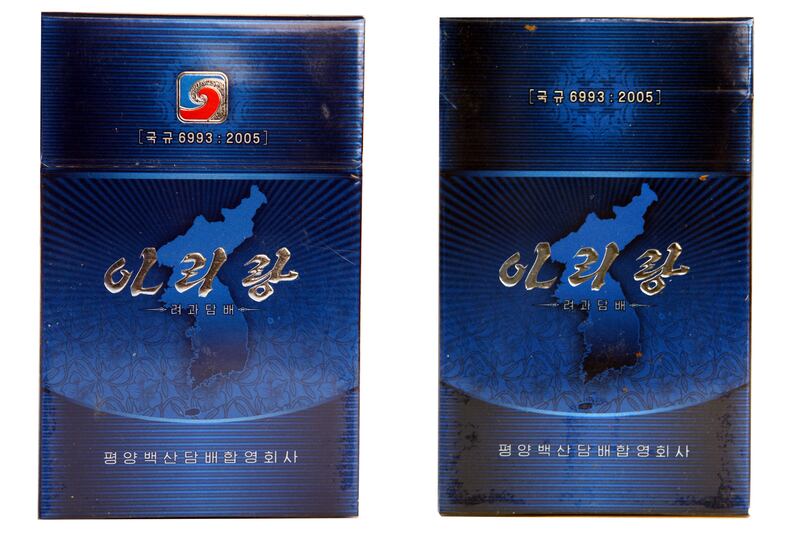
The engagement-minded smoker might gravitate to Arirang cigarettes (13 mg tar, 1.2 mg nicotine), named for Arirang, the Peninsula’s famous folk song about reunification between the two Koreas. The Arirang Mass Games, a yearly spectacle in which thousands of gymnasts perform at the May Day Stadium in Pyongyang at the end of the summer. Arirang is about the unification of North and South Korea. For the past ten years, North Korea’s annual Mass Games, performed at the end of the summer in Pyongyang’s 150,000-capacity Rungnado May Day Stadium, have been Arirang-themed. And when the New York Philharmonic visited Pyongyang in 2008, they performed Arirang as an encore. The graphic in the center of each pack of Arirangs displays a single, united Korea — a bit of a stretch for the North Koreans to be pushing peace while threatening to attack South Korea with nuclear missiles with disconcerting regularity.
Sarah Rogers/The Daily Beast