Accused war criminal Vladimir Putin has hidden himself away at the Kremlin and beefed up security over reports of an unexpected threat to his safety.
The Federal Protective Service of Russia, essentially the secret police corps of Putin’s personal bodyguards, is said to have dramatically upped their presence around his official residence in Moscow, with pro-Kremlin military bloggers reporting a flood of armed operatives both around the perimeter and inside the Kremlin walls, along with a surge of armored vehicles throughout Red Square. Putin’s residence in Sochi has also gotten a security upgrade, according to The Moscow Times.
The frantic security boost comes in the midst of an ongoing comms blackout across the Russian capital, with residents now going without mobile signal for the better part of two weeks amid mounting fears the regime may be laying the groundwork for a comprehensive internet firewall comparable to China’s.
While Russian authorities have chalked the drastic measures up to threats from Ukrainian drones, an unnamed source in the security services was quoted by the INSIDER-T Telegram channel saying Putin faced an “internal threat” that had sparked a frantic response. That report claimed someone within the Russian leader’s inner circle was suspected of plotting to plant “biochemical material” in his bedsheets or install an explosive device in an area he’d be sure to visit.
Those claims, while unsubstantiated, have set off a wave of panic as the Kremlin faces a reckoning of sorts over Putin’s dwindling popularity and anger over his perceived weakness in defending longtime Russian allies against the U.S.
Ilya Remeslo, a longtime Kremlin henchman known for targeting Putin’s critics, made waves late Tuesday with a furious manifesto accusing the Russian president of betraying his people and destroying the country.

“Vladimir Putin should resign and be put on trial as a war criminal,” Remeslo wrote.
While some were skeptical of Remeslo’s motives—questioning if he was perhaps creating a pretext for the Kremlin to turn the screws even more on internet access—his complaints echoed those frequently made in recent weeks by other traditionally pro-Kremlin bloggers.
Russia has already blocked access to major social media sites like Twitter, Facebook, Instagram, and WhatsApp, and is pushing ahead with enforcing a limited “white list” of sites internet users are allowed to access by law. Telegram has also largely been blocked, infuriating military bloggers who said the app was an important tool for troops on the battlefield in Ukraine.
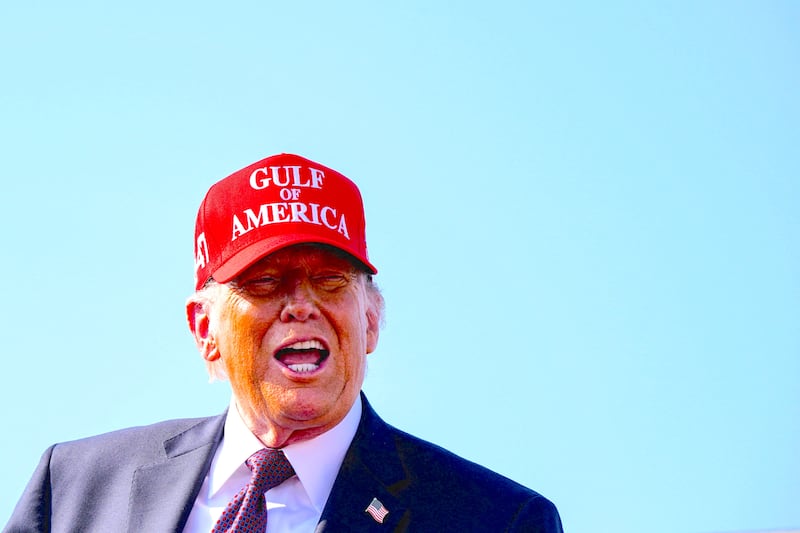
Russian philosopher-propagandist Alexander Dugin, often described as “Putin’s Brain,” has suggested the tyrant may also be facing a threat from Israeli intelligence amid Donald Trump and Benjamin Netanyahu’s ongoing war against Iran, a Russian ally.
Israeli Defense Forces spokeswoman Anna Ukolova told a Russian radio show earlier this week that Netanyahu’s government will look to punish any country that shows hostility toward Israel.
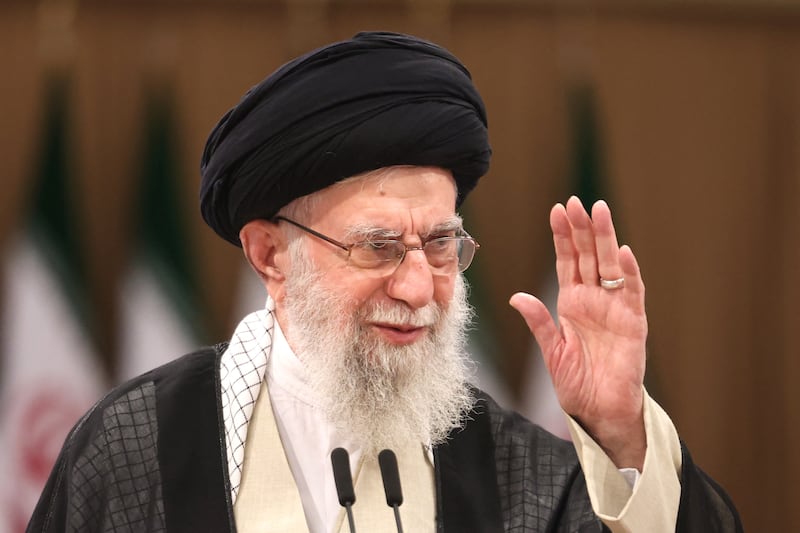
“I think that the mere elimination of these very important figures, the top brass of all these proxies, including Iran’s Supreme Leader Ali Khamenei, already demonstrates that our capabilities are quite substantial,” she said.
“None of those who seek to harm us will be left unscathed,” she went on, adding: “I hope Moscow does not wish Israel ill at the moment.” Dugin took her comment to mean that Israel “could easily hit whoever it wants—including Putin,” and that sentiment was shared by some Russian military bloggers as well.
Perhaps more telling than theories behind Putin’s apparent rush to protect himself are the speed at which speculation on the nature of the threat has spread.
The Daily Beast reported Tuesday how a seemingly innocuous video of the Russian leader feeling a little under the weather has, in fact, exposed what appears to be a dwindling control of his own government amid fierce infighting and a steady bleed of approval among younger Russians.

The state of Putin’s health has long been a closely guarded secret. A brief clip of him coughing, spluttering and stumbling over his own words, sparked an uproar after it was posted on the Kremlin’s official Telegram channel, something that under ordinary circumstances would never be permitted to happen.
“There are at least two Kremlin towers working on Putin’s public appearances; one information tower is under a long-time propaganda supervisor and the other is responsible for Putin’s image,” Ilya Shumanov, a board member of Transparency International Russia, said.
“It’s possible that the towers are at war, we’ve seen constant interagency tensions, arrests of senior bureaucrats, generals, military commanders,” he went on. “One tower might be demonstrating the other tower’s inability to control Putin.”
The blunder, which Kremlin officials have since shrugged off as a “mistake,” comes at a time when White House aggression against longtime Russian allies Venezuela and Iran has made the 79-year-old look increasingly weak and powerless—a far cry from his shirtless-strongman calendar days of riding horseback and tackling Judo opponents.

Approval among the younger generation is also continuing to sink following years of steady decline. It’s estimated that only 18 percent of Russians under 24 years old now approve of his government.
Putin has cancelled a number of upcoming trips and high-profile meetings and has not otherwise appeared in public since March 8. He held virtual meetings with members of the government on Wednesday, while his spokesman, Dmitry Peskov, told reporters the Russian president had not yet been contacted by any European leaders eager to resume cooperation on energy supplies—but he was still ready and waiting by the phone.