The Trump administration has imposed a new veil of secrecy over deaths in national parks, barring employees from confirming fatalities to the public or the media.
A December memo issued to staff at the Interior Department, which oversees the National Park Service, has just been revealed and states that employees are no longer permitted to confirm deaths or details about severe injuries that have occurred in parks.

The change, as reported by The Washington Post on Wednesday, is a major departure from the department’s previous disclosure policy, which helped inform the public about possible hazards.
The publication noted that four deaths in national parks over the last week had not been publicly addressed by the Interior Department on its website or social media as of Wednesday afternoon, although some incidents have been covered in the media with comments from the National Park Service.
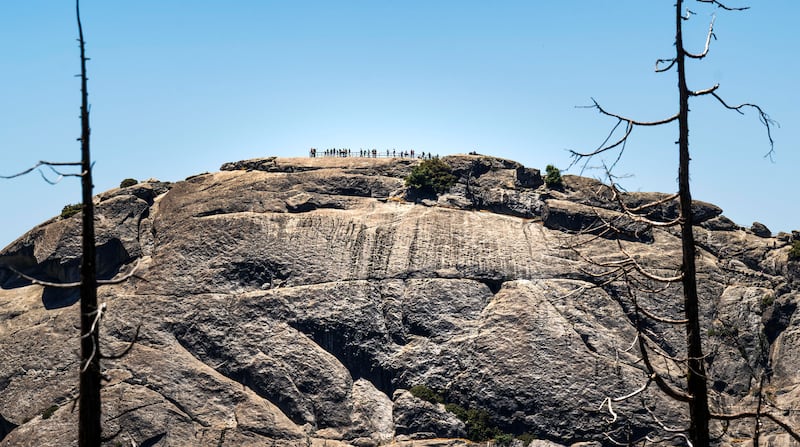
That includes a 17-year-old girl who drowned in Sequoia National Park on Friday, a 23-year-old man who died after falling over a waterfall in Yosemite, a body found in the desert at Organ Pipe Cactus National Monument, and a motorcyclist who died in Great Smoky Mountains National Park.
Approximately 350 people die in national parks annually, which works out to about seven per week, according to Park Service data.

“The guidance was developed to create a more consistent approach to incident communications across the Department and is not intended to conceal fatalities or delay information,” Interior press secretary Aubrie Spady said in a statement to the Post.
In a statement to the Daily Beast, a spokesperson for the Interior Department hit back at the reports.
“The narrative being presented is false and reflects a significant mischaracterization of the Department’s guidance,” the statement said. “Interior remains committed to providing timely and accurate information while ensuring families are notified first. The guidance was developed to create a more consistent approach to incident communications across the Department and is not intended to conceal fatalities or delay information.”
The statement said the department will continue to “provide public safety information, statements, news releases, and incident updates as appropriate, while respecting investigative processes, privacy considerations, next-of-kin notifications, and, in some cases, requests from family members not to release identifying information.”
But critics inside the Park Service say the policy could have unintended consequences. Seven current and former employees who spoke anonymously to the Post warned that public disclosure of deaths and injuries helps inform other visitors about potentially lethal hazards in those areas.
“The basic process was always to get people as much information as you could give them as soon as possible around an incident,” Dan Wenk, a former superintendent of Yellowstone National Park, told the publication.
“When I had a grizzly bear kill somebody, I literally had 10 uplink trucks outside my office the next morning, and people want facts and they expect answers. And the intention is to give them as much information as you can while still maintaining the correct protocols,” he said.
The Daily Beast has contacted the Interior Department and the White House for comment.
The Post said the new document states that only “appropriate authorities” can now confirm a death, but does not indicate who those authorities are.
Where previously press releases would be posted on the Park Service’s website within days of a death, staff are now ordered to use vague language such as “an incident occurred,” and “additional information will be shared when appropriate.”

The National Park Service’s new filtering system was flagged by National Parks Traveler in January.
An email sent out to National Park Service public communications staff across the park system at the end of January noted that all content for websites and social media “must be completed by a DOI-Office of Communications staff person unless it is urgently life/health/safety related.”
A park employee warned National Parks Traveler that the new process “will impact the timeliness and accuracy of information shared with the public, as well as impact interpretation through websites and social media.”
In a Substack post on Wednesday titled “National Park Visitors Are Dying, And DOI Is Covering It Up,” Outdoor Magazine journalist Wes Siler pointed to three deaths on the South Kaibab Trail in Grand Canyon National Park that took place on June 12 and 16,

However, the National Park Service did not alert the public or post a warning at the trail until June 19, and only did so after journalists asked for the information.
“Could that week-long delay have led to the deaths of the second group of hikers?,” Siler said. “Could it have risked the lives of other visitors who may have chosen to avoid the trail altogether, had they known people were dying on it?”
He added, “I think it’s reasonable to conclude that visitor safety is being compromised by DOI’s effort to conceal information from the public.”