Pentagon and White House advisers have poured cold water on President Donald Trump’s threats to invade countries deemed enemies to the U.S.
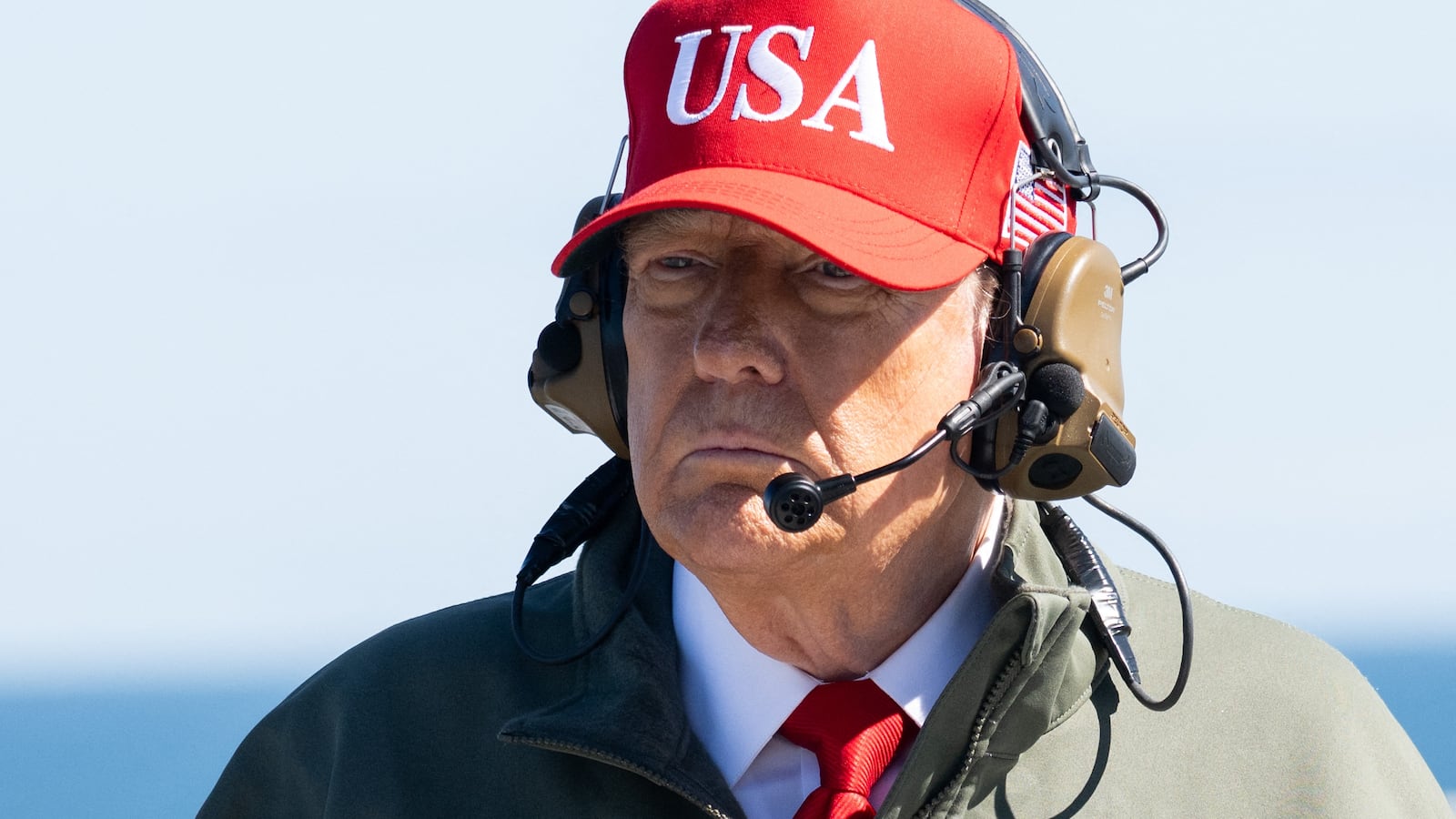
In an interview with Politico that aired Tuesday, Trump said Venezuelan President Nicolás Maduro’s “days are numbered” and refused to rule out American troops entering the South American country on foot.
Mexico and Colombia, too, were singled out, with Trump name-checking them for possible ground invasions.

However, the same publication has now interviewed six Republican lawmakers, Pentagon officials, and White House advisers who have all but admitted that Trump’s words are empty threats.
His statements are “a designed strategy to pressure Maduro to leave,” said one White House insider, while others dismissed Trump’s threat of involvement in Mexico or Colombia.
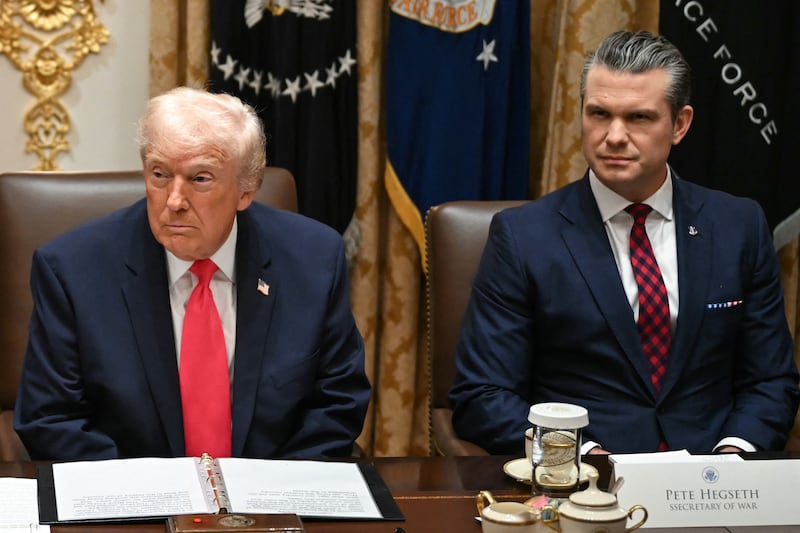
“This has a 99.9 percent chance of not happening,” a second anonymous White House insider conceded, before attempting to paint the bluster as a brilliant piece of 3D chess. “But leaving that .01 percent chance on the table will bring people to the table.”
“This isn’t something you can just dial up and go,” an unnamed defense official added, in reference to the planning it would take to launch such an operation.
Public sentiment is also running against that approach. A recent CBS News poll found that 70 percent of Americans oppose Trump authorizing military action in Venezuela.
“The Trump administration was hoping to pressure Maduro into leaving, but if that fails, the remaining military choices are unattractive,” a former defense official said.
“And if Maduro does step aside, whether voluntarily or by force, it raises the question of whether U.S. troops would be needed to stabilize the country—and for how long.”
Steve Bannon, the former White House chief strategist, felt similarly, suggesting that the threats are a ploy to basically protect domestic interests.
“This is not the Monroe Doctrine 2.0, this is like the Monroe Doctrine 5.0,” he said, referring to the foreign policy position aimed at upholding U.S. dominance in the Western Hemisphere.
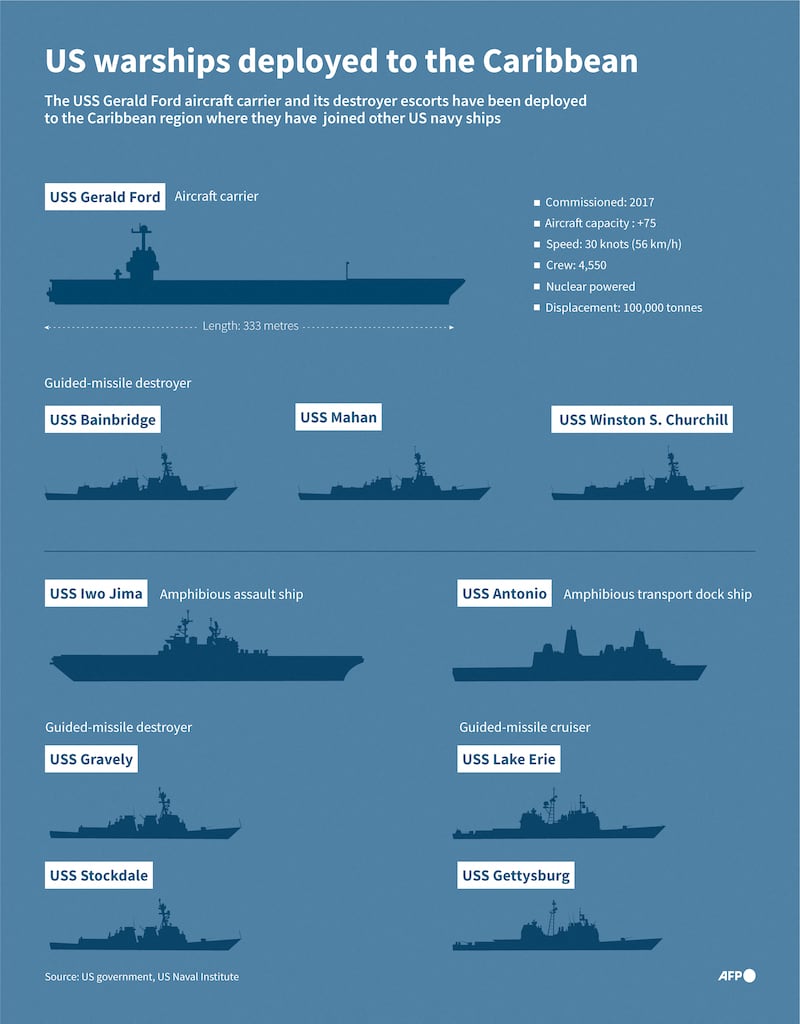
About a dozen U.S. warships in the Caribbean—now reinforced by the aircraft carrier USS Gerald R. Ford—can together fire close to 200 Tomahawk missiles at land targets in the region. They are there, ostensibly at least, to fight what the Trump administration calls “narco terrorism.”
This buildup puts “additional pressure on Maduro to surrender and do what Trump wants him to do, which is to go to Turkey, leave the country,” Bannon added. “Because I think the negotiations are kind of down to that—where this guy ends up [and] most of the stuff there now is for pressure.”
Mark Cancian, a retired Marine colonel, flat-out admitted that the U.S. doesn’t have what it takes to initiate a successful ground invasion. “The United States does not have the ground forces needed for an invasion,” he said, adding that there has been no movement to bolster the ranks in the region.
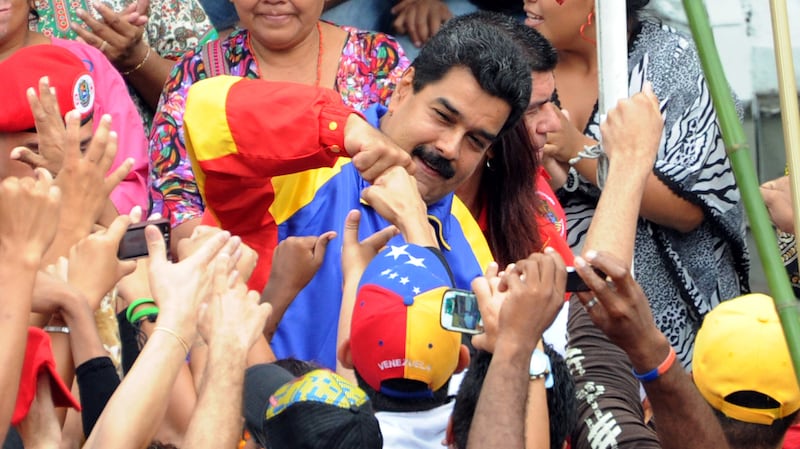
Republican lawmakers, too, aren’t universally hot on the idea. Sen. Lindsey Graham of South Carolina, a major Trump ally who refers to Maduro as a “narco-terrorist dictator,” said as much.
“I don’t think we need them right now,” he said of boots on the ground in Venezuela. Missouri Republican Sen. Josh Hawley also pushed back.
“I’m not a supporter of ground troops,” he told Politico. “I’m not a supporter of regime change forced by the United States. I mean, if Maduro decides to go of his own accord, fine. But I’ve never been a supporter of regime change.”
The White House and the Department of Defense have been contacted for comment.