
A U.S. soldier killed in President Donald Trump’s war with Iran could have been saved if Pete Hegseth’s Department of Defense had responded to her command’s requests for more medical supplies, according to a new interview.

Master Sgt. Nicole Amor was one of six U.S. service members killed in a retaliatory strike in Port Shuaiba, Kuwait, on March 1, just days after Trump authorized joint U.S.-Israeli attacks on Iran.
Survivors of the devastating attack, which also left 20 people wounded, previously said they were “dangerously exposed” and “unprepared” to defend themselves, despite being on a list of potential Iranian targets.
Now, Amor’s colleagues have revealed that the unit also requested more medical support in the weeks preceding the strike, but they were ignored, according to CBS News.
“This was a failure,” Maj. Stephen Ramsbottom told the network. “She could have been saved. She fought the whole way and was trying to stay alive.”
Ramsbottom told CBS that after the Port Shuaiba forward operating base was hit, he expected ambulances to rush to the scene to treat the dozens of service members pulled from the rubble.
“There wasn’t that,” he said. “It was like, oh man, we’re on our own.”
Early on March 1, anti-missile alarms had warned the soldiers to take cover in a cement bunker, but later the all-clear sounded. A drone then smashed through the tin ceiling of the soldiers’ work area, spraying shrapnel in all directions.
The scene was chaotic as the survivors rushed to find a local Kuwaiti hospital to treat the wounded, and scrambled to find civilian vans to transport them.
If there had been a doctor, aid station, or more than one ambulance at the post, Amor could have survived her injuries, Ramsbottom said.
Two other soldiers who spoke on the condition of anonymity said the command had asked Army leadership for more medical personnel and supplies ahead of the strike but never received them.
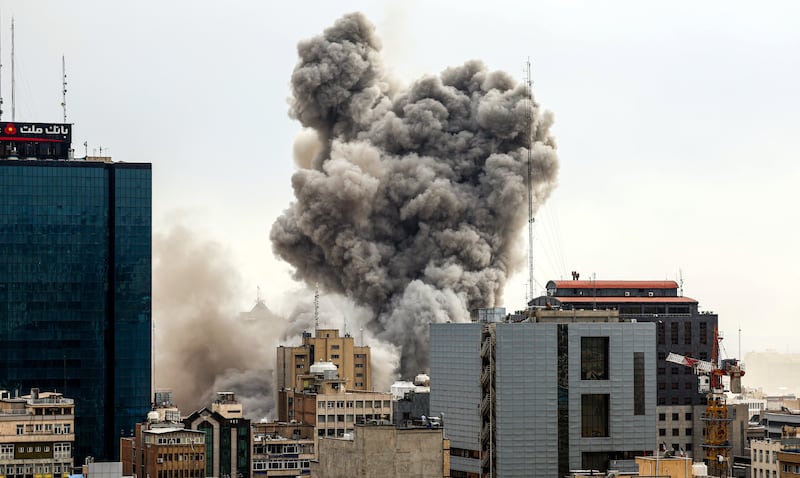
Another survivor, Master Sgt. Ann Marie Carrier, told CBS the Army hadn’t planned for a mass casualty event or run through any possible scenarios before Trump greenlit the military campaign, which the Pentagon has called Operation Epic Fury.
She said Amor was still breathing as she was hoisted into a passenger van. A medic joined them in the van but didn’t have the supplies he needed to treat Amor’s airway and stabilize her.
By the time they arrived at Adan Hospital, Amor had stopped breathing, said Carrier, who described Amor as her best friend. Amor died at the hospital.
A Pentagon spokesperson told CBS in a statement that the department had taken “extraordinary steps” to protect U.S. troops before and during Operation Epic Fury.
Thirteen U.S. service members have died since the war began on Feb. 28.
“No plan is ever perfect, but accusations suggesting blatant disregard for the safety of our forces are unfounded and inaccurate,” Capt. Tim Hawkins of U.S. Central Command said.
The Daily Beast has also reached out to the Defense Department for comment.
Hegseth previously called the Iranian drone that hit the unit a “squirter” that was able to sneak through the defenses of a fortified unit.

CBS, however, reported that the Port Shuaiba command post was similar to structures used in Iraq and Afghanistan that were designed to protect against mortar and rocket blasts but not drone warfare or other aerial attacks.
Ramsbottom said the soldiers had asked for more drone defenses about two weeks before the strike and were told not to worry about protection.