Pentagon commanders declined to order a routine intelligence review to help explain how their missile flattened an Iranian girls’ school, killing scores of children, a new report claims.
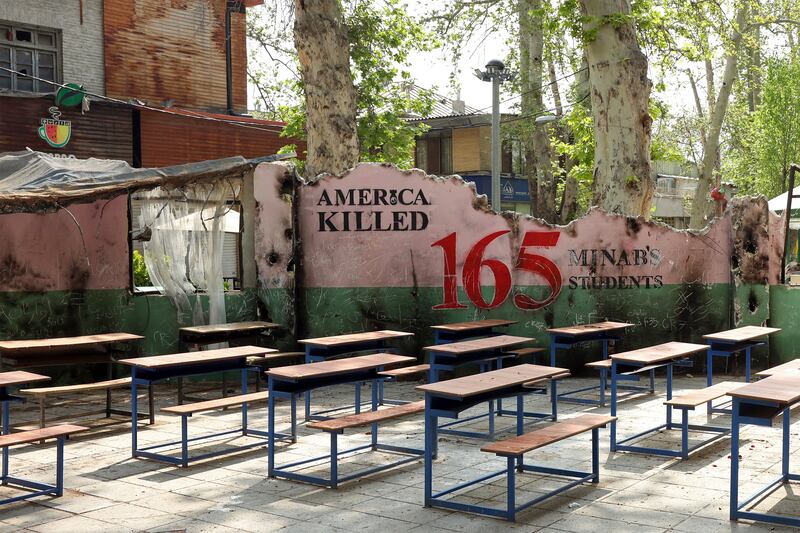
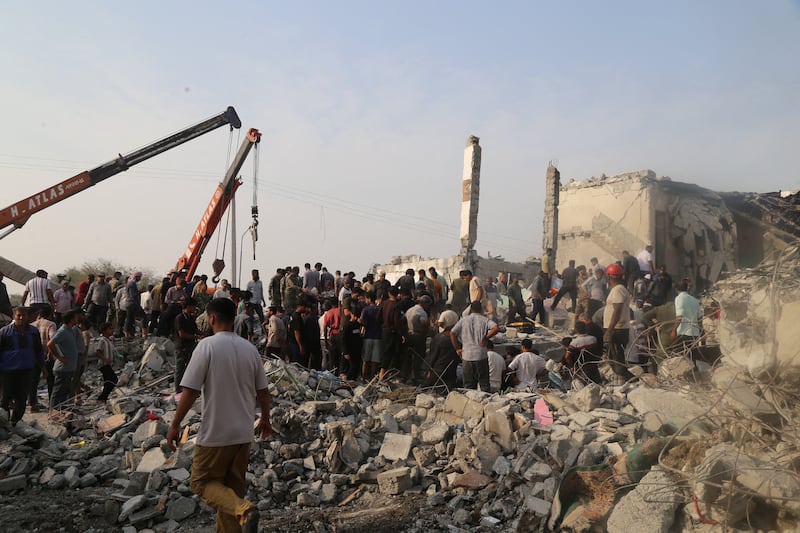
The strike hit the Shajareh Tayyebeh elementary school in Minab on Feb. 28, the first day of the war with Iran. The country’s state media said 168 children and 14 adults died. Within days, the first two stages of a “battle damage assessment” had confirmed the U.S. was behind the attack—but the crucial third stage never got the green light, CNN reports.

That final phase, normally handled by analysts at the Defense Intelligence Agency, pulls together satellite imagery and other intelligence to build a fuller picture of what a strike actually did, the outlet said. It is almost always launched straight after any significant strike. As of early July, according to CNN’s sources, nobody had started it.
“There was no detailed analysis conducted and CENTCOM locked down the investigation/blocked anyone from looking into it,” one source told the outlet.
A separate independent investigation was announced in March, and servicemembers involved in the strike were interviewed. But the sources said U.S. Central Command has “locked down” that material—including findings that could help other commanders still firing on Iran to avoid a similar catastrophe—with only a handful of officers allowed to see it.
A Defense Department official told the Daily Beast that “the investigation is ongoing,” adding: “We have nothing further to announce at this moment.”
Accounts differ on why the third review vanished. One source told CNN that the independent probe should never have blocked the DIA from doing its usual job, arguing “both could have happened at the same time if they chose to.” A U.S. official countered that the internal Pentagon investigation was supposed to replace the traditional third phase, and the two could not run together because the incident plainly needed a thorough, independent probe outside CENTCOM.
Evidence had emerged within a week that the military accidentally struck the elementary school partly because of outdated intelligence, the sources said. The site was believed to be an Islamic Revolutionary Guard Corps naval base.
CNN has previously reported that senior commanders bypassed warnings in critical databases flagging that intelligence on Iranian targets was badly out of date, and approved the strikes anyway. That rushed decision, made to churn out targets fast as the war kicked off, fed directly into the school disaster, two sources told the outlet. They put it down to “expediency.”
No strike this serious has gone unreviewed like this before, the sources said. The reason, according to the first source, sits in the shadow of an earlier embarrassment.
“The Pentagon was in damage control,” that source said. Senior figures at the Pentagon and CENTCOM did not want a repeat of the previous year, when CNN reported that a DIA assessment found U.S. strikes on Iranian nuclear facilities had not “obliterated” the regime’s capabilities—puncturing President Donald Trump’s public boasts.
That earlier assessment, also a phase-three analysis, enraged the White House and Defense Secretary Pete Hegseth, 46—and cost Gen. Jeffrey Kruse, then the DIA director, his job. The agency was reported to have gone ahead with the review on its own, taking on what it saw as its standard duty, with no prompting from CENTCOM required. Only when the findings made the news and mocked Trump’s boasts did the White House and Hegseth turn on its leadership.
The independent report on the school strike was handed to an unnamed U.S. general officer outside CENTCOM. Lawmakers say an initial version landed in April—but CENTCOM has sat on it ever since.
That delay has infuriated lawmakers on Capitol Hill. Around two dozen Democratic senators wrote to Hegseth and CENTCOM commander Adm. Brad Cooper demanding answers, telling them there is “no justification for withholding an unclassified accounting of what happened, what went wrong, and what the Department is doing to prevent recurrence.”

A separate U.S. official told CNN that both men, under heavy White House pressure to show that the war in Iran went well, have resisted sharing details with the rest of the military and intelligence community. The Pentagon and CENTCOM have leaned on classification powers usually reserved for highly sensitive material to wall off even basic planning details, the sources said.
“I’ve never seen it used on stuff like this,” one source told the outlet, warning that siloing the service branches erodes the teamwork that makes the U.S. military effective. “You only do that if you’re bizarrely paranoid that we won’t follow your orders, or you don’t trust us.”
Trump, when pressed by Fox News this week on whether he would release the findings, demurred. “I’ll have to speak to the generals… I don’t think anybody is ever going to be able to say what happened there,” he said, adding: “I don’t think there can be a conclusive report.”
The 80-year-old president conceded “it is possible” that old intelligence or a mistake by U.S. forces caused the tragedy, but cast doubt on publicly available evidence, suggesting satellite imagery showing fragments of an American missile at the site could be “AI-generated,” without offering anything to back that up.
The Daily Beast has contacted the Department of Defense for comment.