The Defense Department announced on Monday that it would be adopting a new approach to restrict journalists’ access to the Pentagon, despite a judge ruling that parts of its current policy were unconstitutional.
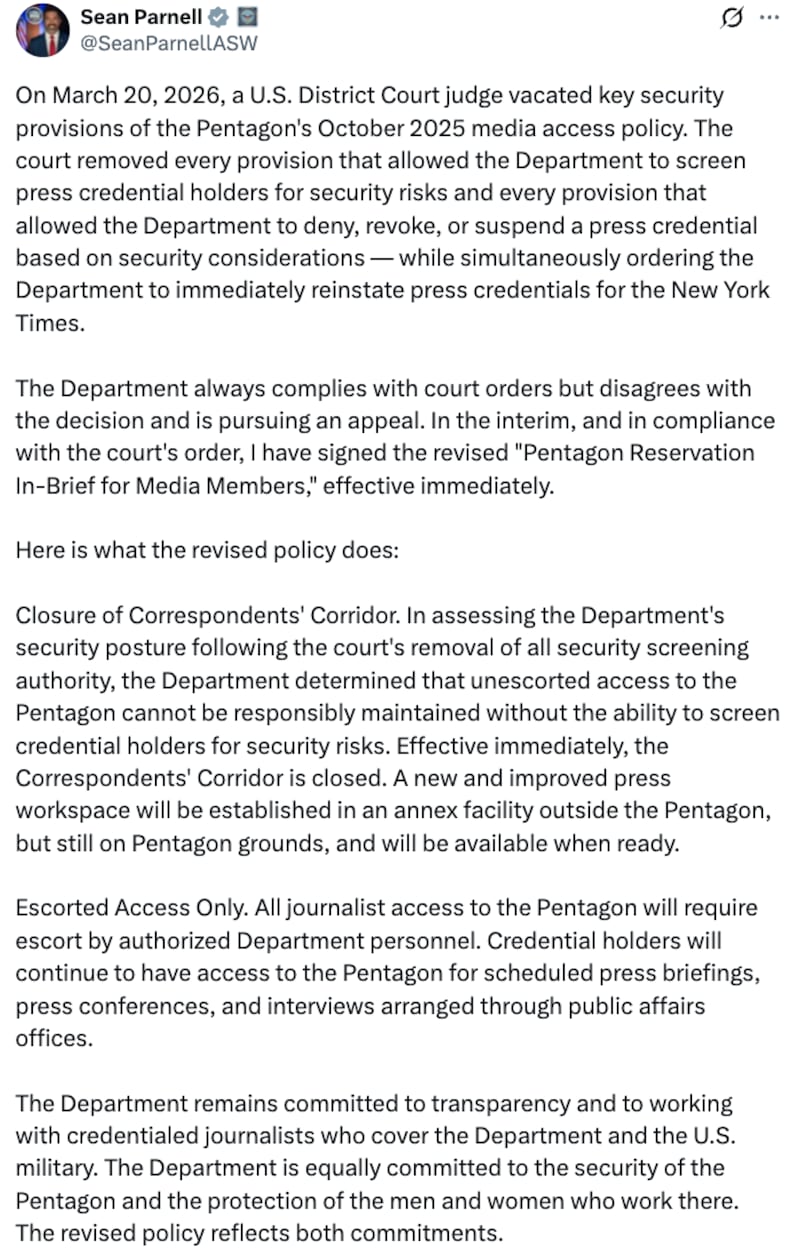
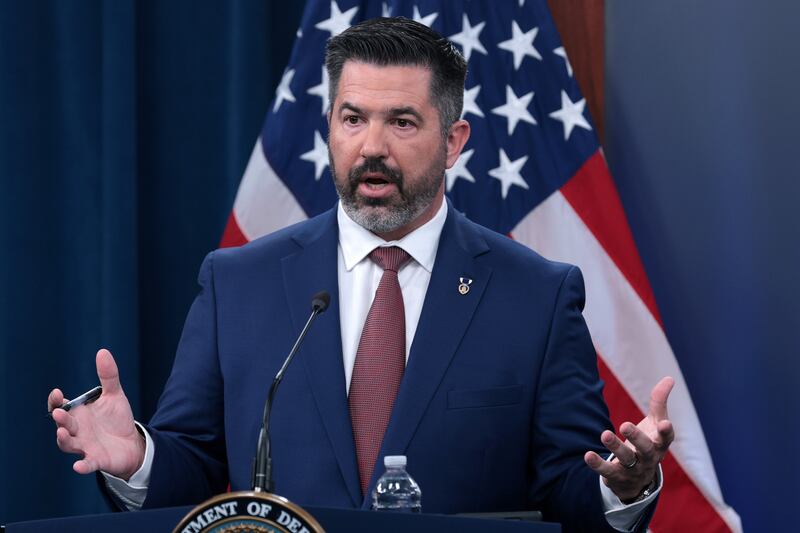
In a Monday X post, Sean Parnell, the department’s assistant secretary for public affairs, wrote that the Pentagon disagreed with the ruling and is seeking to appeal it.

“In the interim and in compliance with the court’s order,” he wrote, “I have signed the revised ‘Pentagon Reservation In-Brief for Media Members,’ effective immediately.”
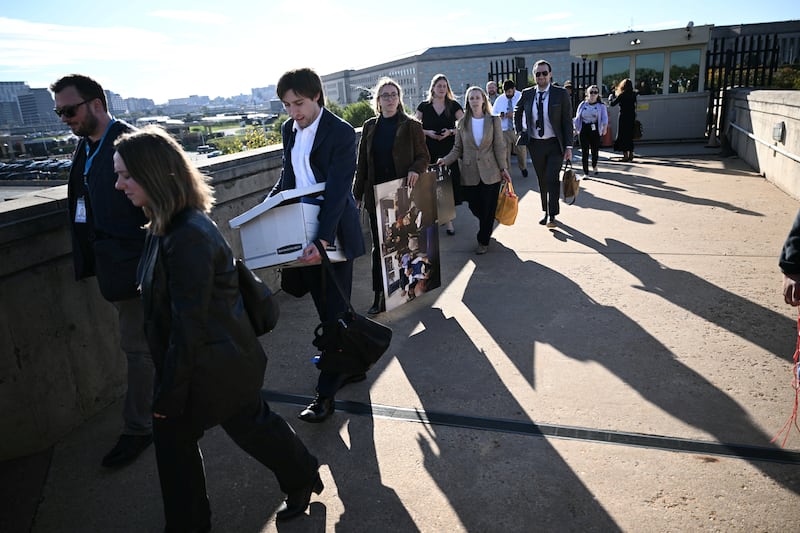
The Pentagon spokesperson goes on to detail the revised policy, which includes the closure of the Correspondents’ Corridor inside the main building and the relocation of the press workspace to an external annex outside the Pentagon. Under the new policy, all journalists who enter the famouse five-sided building will need to be escorted by authorized personnel.
In a ruling last Friday, Judge Paul Friedman of the U.S. District Court for the District of Columbia ruled that the Pentagon’s previous rules, announced by Defense Secretary Pete Hegseth in October, violated the First Amendment.
Those rules allowed the Pentagon to label journalists as security risks and revoke their press passes if they were deemed threats to national security.
Reporters from multiple outlets surrendered their press passes in response to the new rules rather than comply, and were instead replaced by administration-friendly figures like Laura Loomer and Mike Lindell.
In his ruling, Friedman wrote, “The Court recognizes that national security must be protected, the security of our troops must be protected, and war plans must be protected.”
“But especially in light of the country’s recent incursion into Venezuela and its ongoing war with Iran, it is more important than ever that the public have access to information from a variety of perspectives about what its government is doing,” he continued.

“The record evidence supports the conclusion that the policy discriminates not based on political viewpoint but rather based on editorial viewpoint—that is, whether the individual or organization is willing to publish only stories that are favorable to or spoon-fed by department leadership.”
Friedman also wrote that the policy’s “true purpose and practical effect” was “to weed out disfavored journalists—those who were not, in the department’s view, ‘on board and willing to serve’—and replace them with news entities that are.”
A spokesperson for the New York Times, who filed the lawsuit against the Pentagon, disputed Parnell’s claim that the new policies complied with the order.
“The new policy does not comply with the judge’s order,” spokesperson Charlie Stadtlander said on Monday. “It continues to impose unconstitutional restrictions on the press. We will be going back to court.”
In his ruling, Friedman ordered the Pentagon to immediately restore the press passes of seven Times journalists. As of Monday afternoon, the Times noted, the department had not done so.

The policy change is the most recent example of the Trump administration’s combative relationship with the press, which has included President Donald Trump and his staffers hurling insults at reporters with alarming regularity.
Hegseth, who prior to joining Trump’s Cabinet was a fixture on Fox News, has also adopted an antagonistic relationship with the media, comparing their questions to enemy fire in a war.
“President Trump and I have your back—always," Hegseth said while addressing troops earlier this month. “Through fire, through criticism, through fake news, through everything. We unleash you because you are the best, most powerful, most lethal fighting force the world has ever seen.”