Pete Hegseth’s flawed artificial intelligence push nearly led the U.S. military into war with an Asian superpower, a bombshell new report has revealed.
The military geared up for action in the spring after an intelligence report created with AI indicated that a Chinese vessel in the Middle East was carrying components of a nuclear weapons program, four sources told CNN. But officials soon found that the report, which “almost started a war,” was “entirely false.”
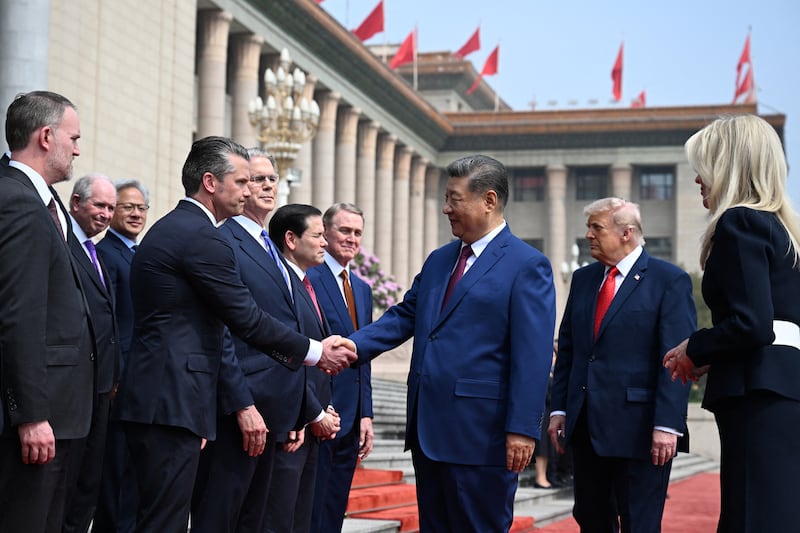
Insiders told the outlet that an analyst asked an AI chatbot about intelligence reporting on the Chinese ship’s manifest. It was unclear whether the bot was commercially available or created by the U.S. government.
The chatbot combined open-source information with secret signals intelligence and reached a conclusion about the ship’s contents. The analyst then used AI again to package the findings into an intelligence report that was widely disseminated within the military, according to CNN.
Sources told the outlet that the military planned to intercept the vessel. Armed service members were already preparing to board the ship and military planes were up in the air—until officials took a closer look at the report.

It turned out the AI chatbot misidentified what the Chinese vessel was carrying, though CNN was not able to verify what the wrongly identified cargo actually was.
A former senior U.S. official told the outlet that “the internal tools are mostly just copies of the commercial stuff wearing lipstick.”
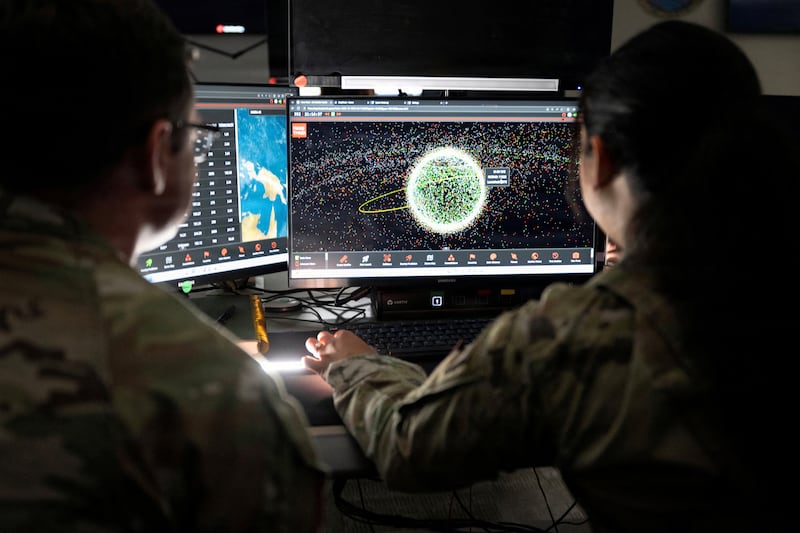
Zachary Cohen, the CNN reporter who broke the story along with Katie Bo Lillis, told CNN News Central on Friday that their sources said Hegseth, 46, has been encouraging the use of AI “in just about every facet of the U.S. military.”
“One source put it to me this way: ‘AI in targeting is definitely something that is ramping up, and there is no real guidance for how having a human in the loop will prevent civilian casualties or fratricides,’” Cohen said.
In January, Hegseth released the Defense Department’s “AI Acceleration Strategy” aimed at securing “American Military AI Dominance.”

“Mandated by President Trump, this acceleration strategy will unleash experimentation, eliminate legacy bureaucratic blockers, and integrate the bleeding edge of frontier AI capabilities across every mission area to usher in an unprecedented era of American military AI dominance,” the agency said at the time.
But sources told CNN that the push is decentralized, meaning different parts of the government use different tools with no single set of standards for verifying information generated by AI tools.
“AI allows you to get to a bad idea faster,” one of the sources said.
When reached for comment, a Department of Defense official told the Daily Beast: “On any given day, the U.S. military monitors, assesses, and analyzes hundreds of potential threats around the world to ensure the defense of our nation and our allies. Out of operational security and as a matter of policy, we do not comment on specific intelligence reports, alleged operational planning, or ongoing military assessments.”
They added: “The Department of War remains committed to the rigorous verification of all intelligence inputs and the responsible integration of emerging technologies to support our service members in making informed, precise, and safe decisions in any operational environment.”

The episode, which could have spiraled into an armed conflict with China while the U.S. was already embroiled in a war of its own making with Iran, further fueled concerns about the use of AI.
“There is some consternation inside the Pentagon, inside the military, about how is AI being incorporated and where is the guidance—the overarching guidance—from the secretary, who we just heard has a strategy in mind, sent a memo out, but yet there is no consistency across the branches,” Cohen said.