The drug camp the Trump administration claims to have bombed has instead been identified as a cattle and dairy farm, according to reports.
“We are bombing Narco Terrorists on land,” Defense Secretary Pete Hegseth boasted earlier this month alongside a video showing a billowing blast in rural Ecuador.
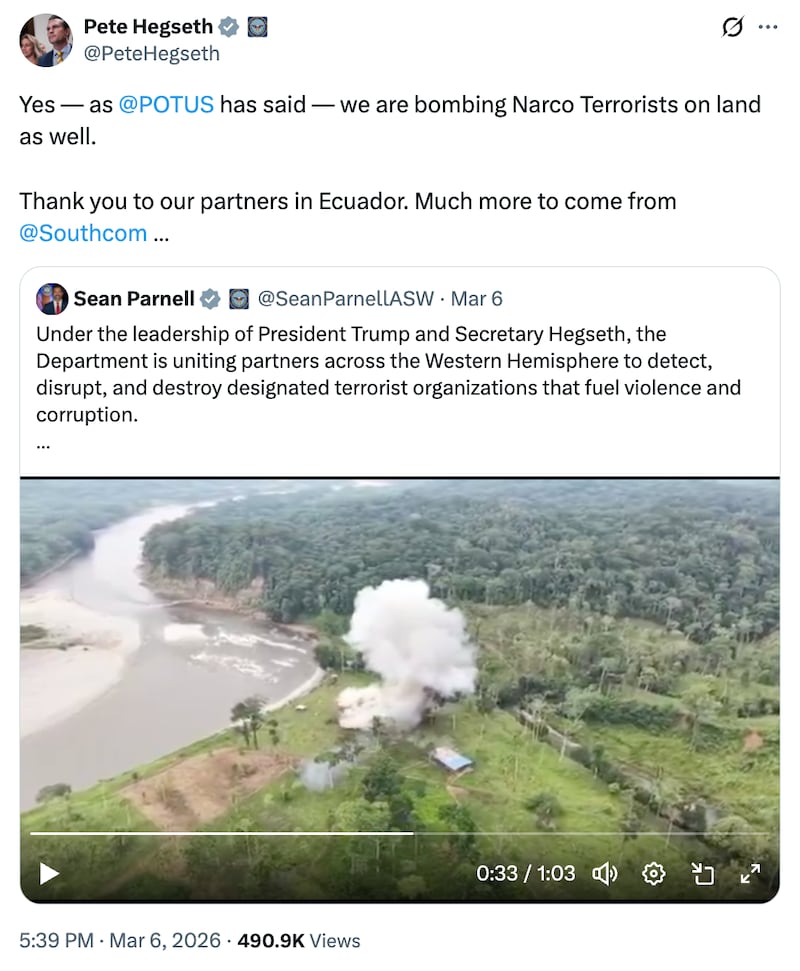
Hegseth’s spokesman, Sean Parnell, declared on X that the U.S. and Ecuador had completed a “successful operation against a narco-terrorist supply complex” that disrupted “operations and logistics.”
“This operation demonstrates the power of coordinated action and sends a clear message: narco-terrorist networks will not find refuge in our hemisphere,” Parnell wrote, invoking President Donald Trump’s so-called “Donroe Doctrine.”
But rather than a “narco-terrorist supply complex,” the March 6 strike appears to have hit a farm, killing chickens and other livestock, according to The New York Times, citing interviews with the farm’s owner, four of its workers, and residents in the remote farming village of San Martín.
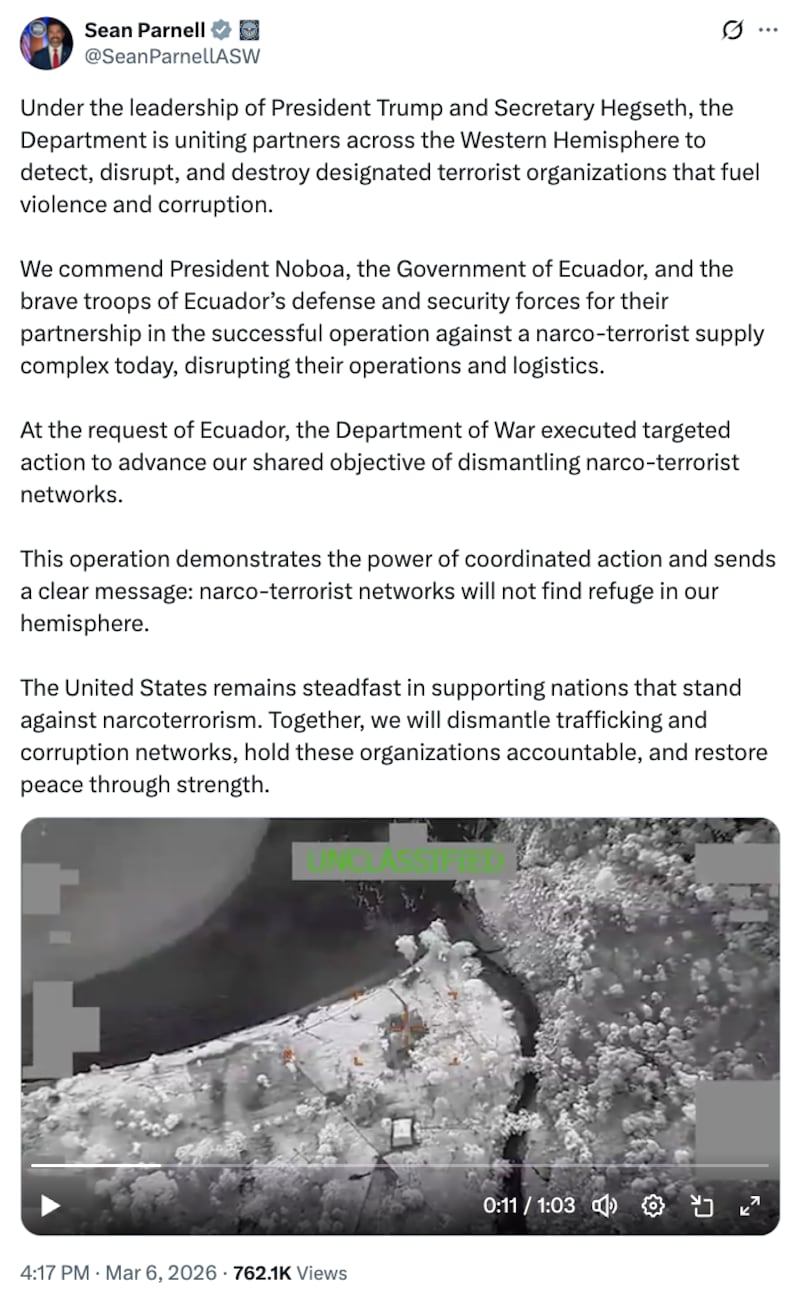
And although Hegseth’s spokesman claimed that the Defense Department had “executed targeted action” in the operation at the request of Ecuador, four people with knowledge of the operation told the Times that U.S. troops had no direct involvement in the strike.
When reached for comment, Pentagon Press Secretary Kingsley Wilson told the Daily Beast in a statement: “The Mar. 6, 2026 operation was conducted jointly with Ecuadorian forces and in coordination with the Government of Ecuador. Due to operations security, we will not discuss specific tactics or targeting details. All U.S. military actions are conducted through rigorous, multilayered targeting processes and each target is validated through established procedures. Cartel networks threaten the stability of our hemisphere, and the Department of War will continue working with committed partners to take decisive action against those who endanger our shared neighborhood.”
Farm workers told the Times that Ecuadorian soldiers doused the farm’s sheds in gasoline and set them on fire on March 3, after allegedly assaulting the workers. Soldiers returned three days later on helicopters and appeared to drop explosives on the farm’s remains, village residents told the Times.
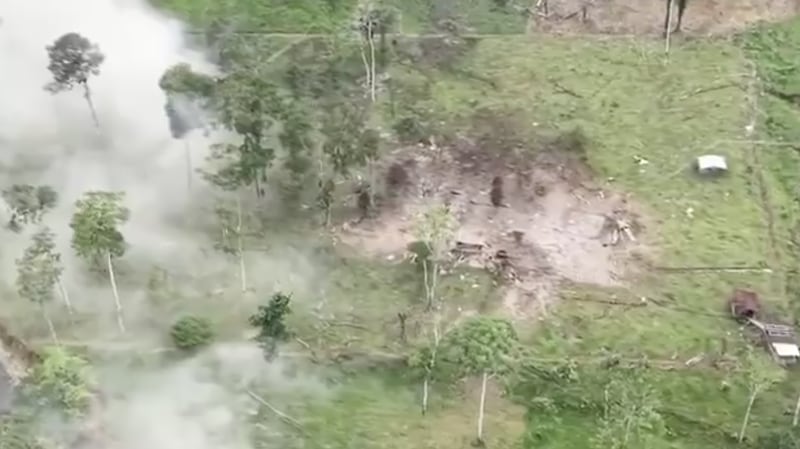
Like Hegseth, the Ecuadorian military claimed the property was used by a drug trafficking group, and that drug traffickers slept and trained at the farm. Ecuadorian drug cartels are a key exporter of cocaine smuggled from Colombia and Peru.
The farm’s owner and local residents vehemently denied that the farm hosted a drug trafficking operation.
AFP visited the bombed site and reportedly found “no sign of drug production or trafficking,” instead reporting dead animals, a charred lemon tree, and an avocado tree.
The farm’s owner, Miguel, told the Times he paid $9,000 for the 350-acre property six years ago, growing it into an operation with more than 50 cows for dairy and beef. He provided the land’s property title listing him as the owner and photos of the farm before its destruction, according to the Times.
“It’s an outrage,” Miguel said. “It’s a lie that 50 people trained here. Where are they going to train? Out here in the open? There’s no logic.”
The New York Times reported that the Ecuadorian military referred questions to President Daniel Noboa, who, the Times reports, did not respond to a detailed list of questions.
The Daily Beast has reached out to the Ecuadorean Embassy in Washington, D.C.
The U.S. operations in Ecuador—a country led by right-wing President Daniel Noboa—also come after the U.S. has conducted numerous strikes on what it claims are boats being used for drug-smuggling around the Caribbean, killing over 150 people.