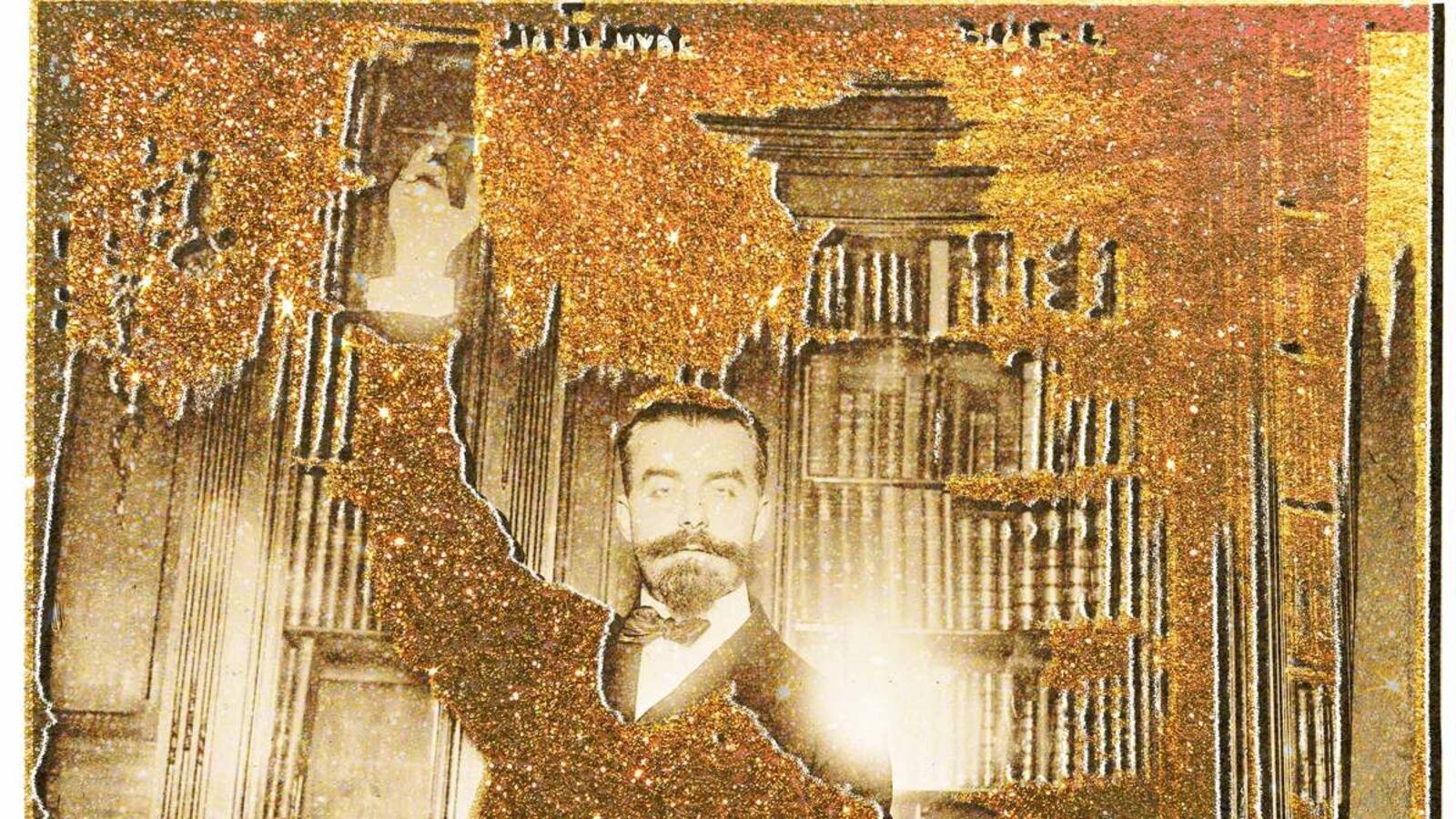
They came in the finest ensembles their pocketbooks and seamstresses could muster. The ladies wore elaborate silk gowns adorned with bustles and ruffles and rosettes. The men donned the breeches, vests, and handsomely cut jackets that characterized posh hunting attire and military uniforms of the day. There were many powdered wigs.
The guests enjoyed an elaborate feast—Consommé Voltaire, Faisand Piqué Louis XV, Salade Madame de Pompadour, and Bonbons, the menu promised—in the garden of Versailles before dancing the night away against the backdrop of rose bushes and hedges of heather.

These elite ladies and gentlemen would have been delighted if you assumed they were guests of Marie Antoinette and Louis XVI at a Versailles ball. But this was not an 18th century soirée. In fact, they were costumed to gain entry to the finest ball that New York society had ever seen. The host on the night of Jan. 31, 1905, at the “it” restaurant in the city was James Hazen Hyde, the 28-year-old bachelor and socialite who had inherited his father’s billion-dollar life insurance company five years earlier.
As the sun rose the next day and the final guests began their carriage rides home, Hyde must have congratulated himself on pulling off the social feat of a lifetime. What he could not have fathomed as he went over the highlights of playing host to the likes of John Jacob Astor, Cornelius Vanderbilt, and William Rockefeller is that the ball would also be his social downfall.
By the end of the year, Hyde was ousted from the company his father founded, had fled to Paris, and was the cause of a national inquiry into the insurance industry. Just like his idols Marie Antoinette and Louis XVI, Hyde had his (proverbial) head cut off. The crime for which this social execution was carried out? Throwing a ball.
Hyde’s father, Henry Baldwin Hyde, was a self-made man. He worked his way up through the ranks of the insurance industry before launching a firm of his own in 1859 with the slightly puzzling name, the Equitable Life Assurance Society. His business was a success and the profits quickly began to accrue. Despite his changed fortunes, however, pater Hyde was a frugal man and ran his family affairs as such.
So when Hyde arrived at Harvard to finish his schooling, he was seen as something of a rube by his fellow classmates who allegedly dubbed him “Caleb,” an insulting nickname that was meant to underscore his bumpkin ways.
Being educated at one of the premier institutions in the U.S. surrounded by sons of America’s most prominent families changed Hyde. He studied French and became a committed Francophile, styling his hair in the fashion in vogue across the ocean, and wearing clothes made just for him by the top tailors in Paris.
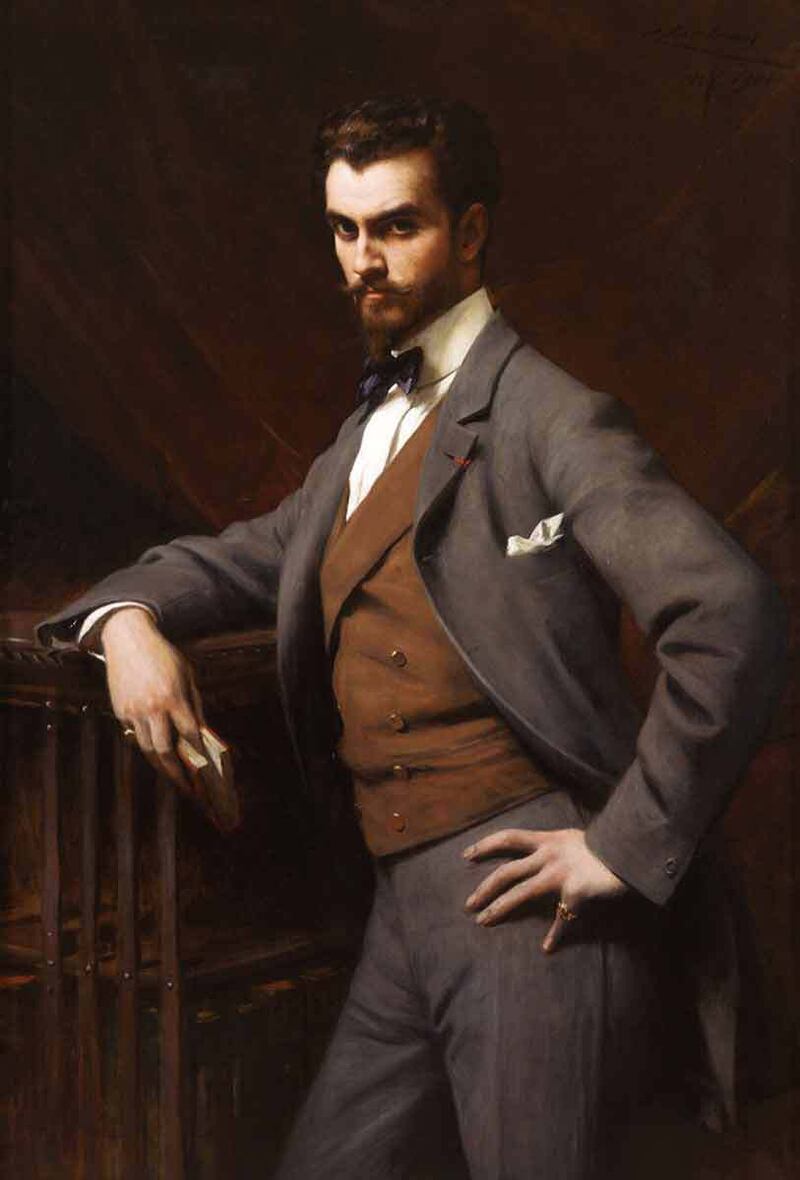
Portrait of James Hazen Hyde, 1901
Théobald Chartran/Public DomainAfter graduating in 1898, he bought a brownstone in Manhattan and was often spotted on the streets in his four-horse carriage. He ran around town with the likes of Alfred G. Vanderbilt and Alice Roosevelt. He participated in carriage races and attended parties, always showing up as the dandy he was. He commissioned a portrait of himself from a renowned French painter, and acquired a 400-acre estate on Long Island.
This dramatic lifestyle change was made possible in part by the death of his father. When Hyde was just 23 and only a year out of Harvard, his father died of exhaustion. Hyde inherited his one billion dollar company and, one can imagine, a commitment to enjoying his life more than his overworked father had.
In 1905, he decided to host a grand ball. His timing couldn’t have been better. While Hyde held the majority stake in his father’s company, he still had another year before he assumed control as president, which was to happen on his 30th birthday.
Given his French proclivities, the theme of the Hyde Ball was easy to choose: 18th century France. Guests were required to arrive in costume (only three distinguished gents were given dispensation to come in their regular garb), and two full floors of the venue, Sherry’s, were transformed to look like the gardens of Versailles.
Sherry’s was used to catering to the whims of the turn-of-the-century rich and famous. Two years earlier, another wealthy New Yorker, C.K.G. Billings, had hosted a horseback dinner at the restaurant, in which his 34 guests were served a lavish dinner while seated atop their four-legged friends. (The horses were given their own feast of oats to chomp on.)
Billings’ dinner was wild and expensive. But Hyde’s ball reached new heights. “While it would be idle to say that this entertainment rivaled in any way a court ball in Russia…or certain of the most notable functions which have been given at times in Paris and London, it is fair to admit that as regards its artistic side, its perfection of detail, its correctness in costume, its novelty and color, nothing has been attempted on this side of the water which could be compared with it,” J.C. Cartwright wrote in Metropolitan Magazine in June 1905.
The evening was packed with entertainment that was rigorously choreographed. The 600 guests, many from New York’s infamous “The 400” list of the most fashionable families in the city, arrived at Sherry’s, where the women were immediately ushered to a dressing room to make sure their outfits were flawless and their priceless jewels gleaming.
Then, each group was escorted to the ballroom where they were presented to Hyde and his sister. After being welcomed, they were treated to a novelty: an early version of the popular party photo booth manned by a famed photographer of the day. (Thanks to this innovative idea, many portraits and group photos from the evening have survived.)
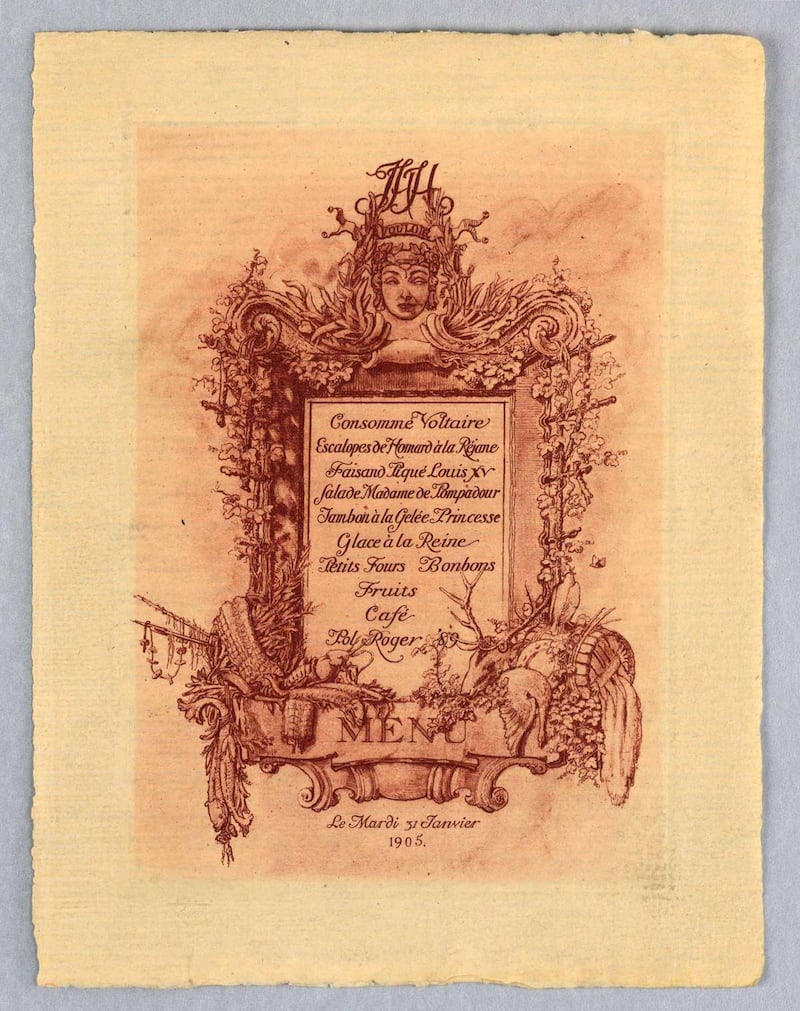
Menu for the ball, January 31, 1905
Public DomainOnce all of the guests were in attendance, the program began. In something of a coming-out celebration, the year’s top debutantes and their escorts performed an 18th century dance that they had practiced for weeks. Next, there was a professional ballet followed by a theater production of a comedy written specifically for the occasion with the Hyde Ball serving as a major plot point.
After working up an appetite what with all the breathless admiration and laughter, the guests proceeded to the next floor, which had been transformed to resemble the gardens of Versailles. They were treated to the first of three meals of the evening, one that was decadent in both menu and setting. “The waiters and servants were in costumes of the period, with great white wigs, red and blue uniforms, white silk stockings and a plentiful supply of gold braid and silver lace,” Cartwright writes.
Afterwards came a tabletop poetry recitation (as per the custom of Marie Antoinette’s day), followed by dancing in the ballroom. The ballroom itself continued the Versailles garden theme with the addition of rose trellises around the gallery to allow non-dancers to gaze at the activity below without being seen. Another dinner was served there to those who had worked up an appetite on the dance floor.
The party lasted through the night and into the next morning. Those who survived to the very end were treated to breakfast before they were sent on their merry way.
By all accounts, it was a huge success. The partygoers had been amazed and entertained in a manner that was lavish and that topped all other balls to-date in the city, but one that was also decorous. But as the society pages began to roll out column after column on who wore what and danced with whom, the rumblings began.
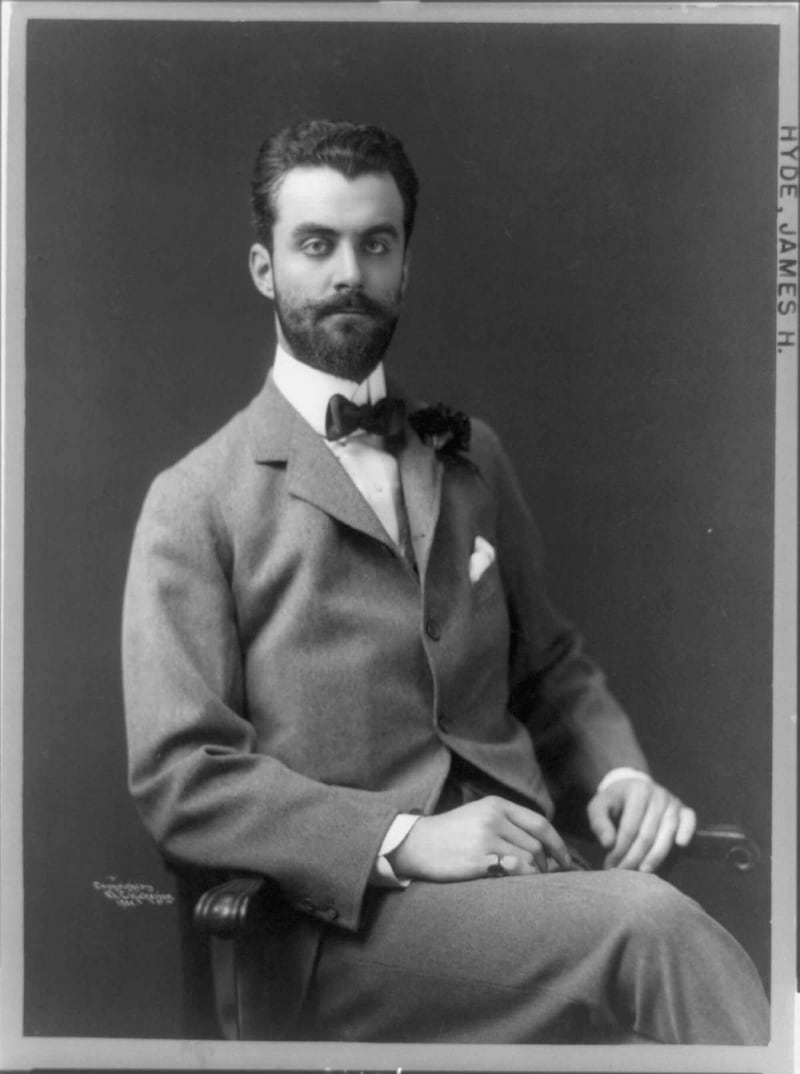
James Hazen Hyde, c. 1904
Library of CongressRumors began to spread that the event had cost $100,000, someone else heard $250,000. Hyde declined to give a figure, but said the cost was far below those being cited. But the whispers persisted by a few who saw an opportunity. The wagging tongues began to claim that the host had paid for the outrageous gala not out of his own pocket, but with company money.
The board at the Equitable Life Assurance Society went into containment mode. At first, they demanded that Hyde give up a portion of his control in the company. But as the rumors and debate about his competence or lack thereof began to spiral out of control with Hyde barely able to get a peep of his own in, he was forced to resign all involvement in the company he had inherited from his father. The outrage—however contrived—was so vehement that it led the government to begin an inquiry into the entire life insurance industry that would eventually lead to reforms.
In December of 1905, Hyde left for France, where he would spend the next three decades in self-imposed exile. While he had been kicked out of the family company, he still had a significant fortune left to build a new life in the country he so admired. The love was mutual. Hyde went on to flourish in France, marrying twice—his second wedding was hosted at the actual Versailles—and eventually being awarded the Grand Cross of the Legion of Honor.
While he was treated much better in Paris than he had been in New York City, he never turned his back on his homeland. He dedicated his life to fostering cultural exchange programs between his two countries, and during World War I, he provided aid to the American Red Cross. Despite his work on America’s behalf, it took the impending Nazi occupation of Paris during World War II to convince Hyde to finally return for good.
Back in New York City, he discovered that, no matter what he did, he could never truly outrun the scandal of the Hyde Ball in the city of his birth. But he got the last word. While the party debacle no doubt left him feeling wronged until the end, Hyde left much of his impressive art collection to the Metropolitan Museum of Art. Today, his name can still be found throughout the museum.