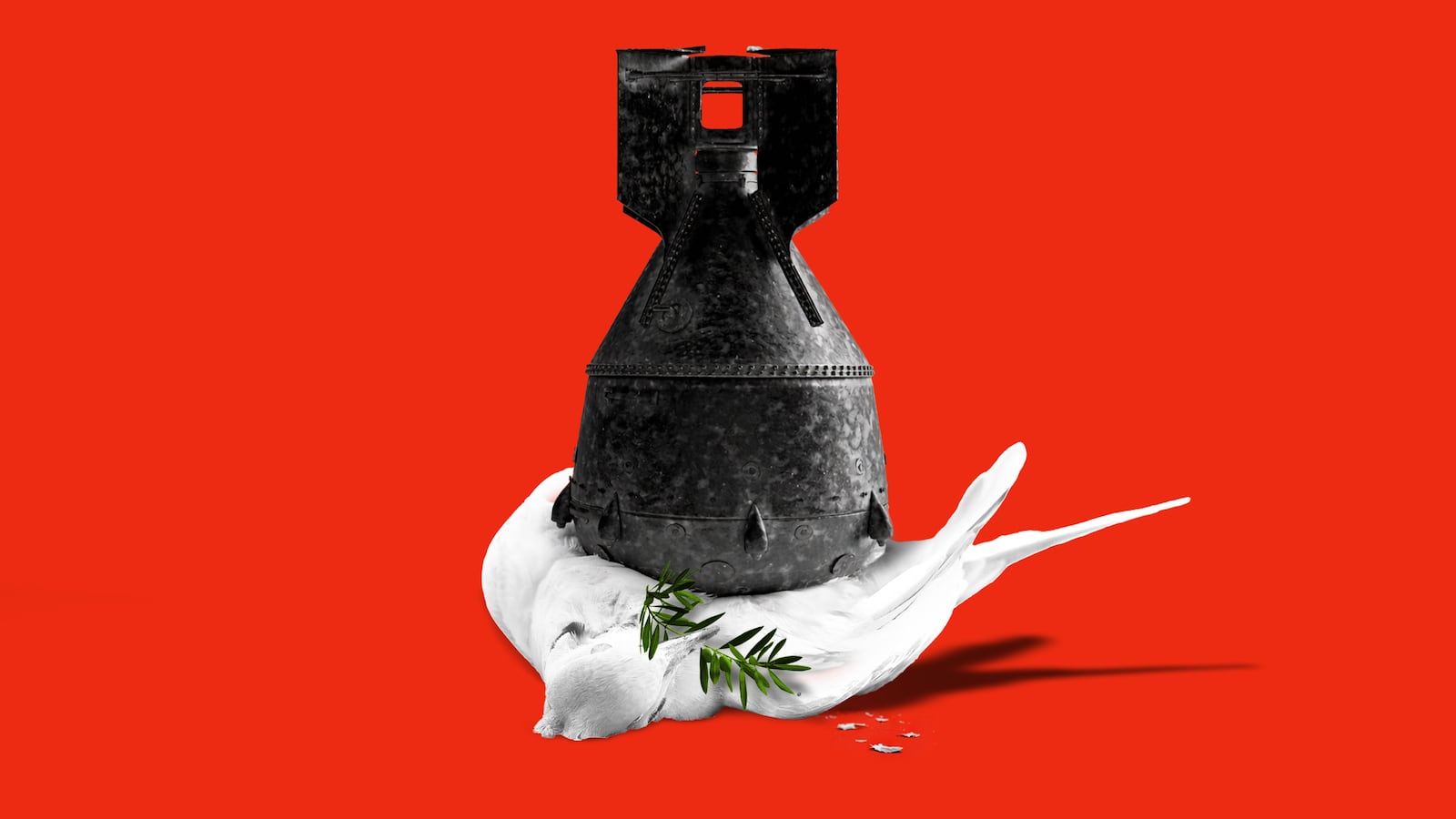
The New START treaty has expired. For 15 years, the treaty served as an agreement between the United States and Russia to limit deployed nuclear weapons; its expiration signals the end of the old nuclear arms control regime and portents the world’s entry into a dangerous new period of unconstrained arsenals.
Although reported talks between the US and Russia in Abu Dhabi over the last 24 hours are a positive sign—the two sides have apparently agreed to spend at least six months holding talks about a follow-on agreement as reported by Axios—last-minute efforts are no way to manage nuclear risk. And it should not have taken this long for the US to begin to address the end of New START.
The original START treaty, a monumental step toward peace, was signed at the end of the Cold War in 1991 by United States President George H. W. Bush and Russia’s Mikhail Gorbachev. New START, signed by United States President Barack Obama and Russian President Dmitri Medvedev in 2010, maintained START’s legacy through continued limits on strategic nuclear arms. But today, these limits no longer exist.

The United States and Russia agreed to extend New START for five years in 2021, but its provisions do not allow this to happen more than once. Replacing it will require negotiations and ultimately a new agreement, neither of which seems to be a priority for the Trump administration.
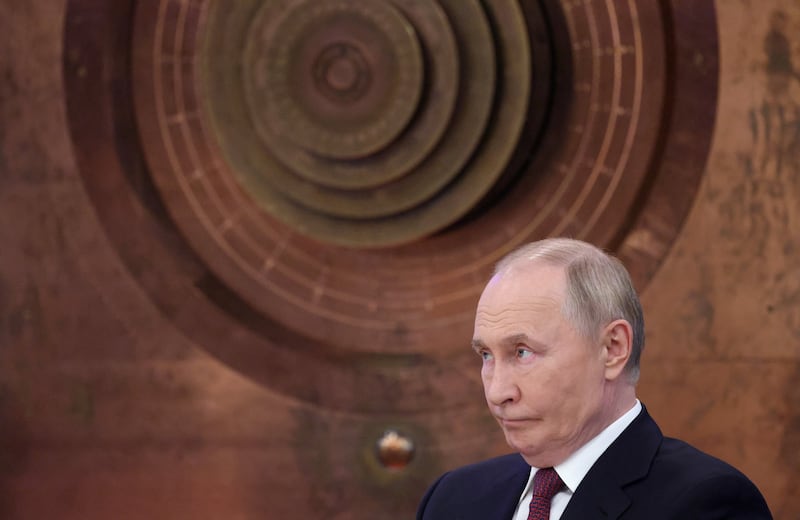
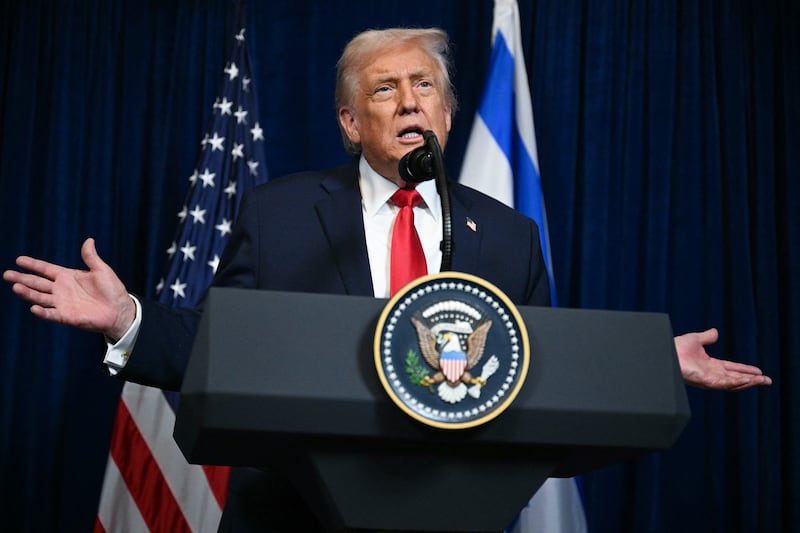
Despite Russia’s Vladimir Putin saying he would be willing to remain under the current limits for another year to allow time for negotiations, President Trump had shown little interest in pursuing serious talks despite the increased risk that would follow New START’s end. Last month, he even signaled that he would let the treaty expire without replacement. According to the White House, “The President will decide the path forward on nuclear arms control, which he will clarify on his own timeline.”
Indeed, despite Trump’s self-branding as the “peace president,” his international actions have been increasingly militaristic, and he has called for massive increases to the Pentagon budget. This is not the behavior of someone committed to arms control. Unless negotiations proceed with a serious commitment from the White House, we risk abandoning a generation of progress and opening up the US and the world to a nuclear risk level we have not seen since the height of the Cold War.
Imagine this: Russia mistakenly detects intercontinental ballistic missiles flying towards Moscow. Engineers on the ground assume this is a real threat from the United States. With tensions mounting, they elevate the alert up the chain of command—and within fifteen minutes, the Kremlin launches a nuclear “counter-strike” against the United States.
This devastating scenario is not hard to imagine—it’s based on a real incident from 1983, which nearly provoked a nuclear war. In that case, catastrophe was averted by a single Soviet officer, Stanislav Petrov, who rightly surmised it was a false alarm. We owe him a great debt, but matters as consequential as nuclear war should not be left up to chance or the altruistic actions of a single individual. Without nuclear arms agreements, misunderstandings and misinterpretations risk disastrous effects—and while these risks cannot be totally eliminated while nuclear weapons exist, they can be managed through dialogue and mutual constraints.

History has shown that arms control works. Since the end of the Cold War, the United States has decreased its nuclear weapons stockpile from a high of 31,000 warheads to 3,700. Russia has followed this course, reducing its stockpile from 40,000 to approximately 4,300. Nations like South Africa, Brazil and Argentina abandoned nuclear weapons development entirely. 115 countries have agreed to join nuclear-weapon-free zones. And, 74 countries have ratified the Treaty on the Prohibition of Nuclear Weapons.
In addition to reducing the number of deployed warheads and delivery systems, New START also established verification measures, including inspections, data exchanges and transparency requirements. These guardrails build confidence between adversaries, bringing tangible measures to the negotiation table to ensure the fear of mutually assured destruction is not the only thing keeping us from a nuclear war.
While challenged by the Russian invasion of Ukraine in 2022, the treaty helped ensure that disagreements between the two largest nuclear-armed states did not metastasize into an arms race. Letting New START expire without negotiations for a replacement opens the door to increased arsenals. An unchecked competition in nuclear weaponry creates greater risk, and in today’s geopolitical climate, humanity cannot afford the consequences.
The path to a more peaceful and prosperous world is straightforward: fewer nuclear weapons, direct dialogue, and strong verifiable agreements. A world without constraints and guardrails immediately increases the risk of nuclear catastrophe. Now that New START is no more, the United States and Russia should resist the urge to immediately upload more warheads to missiles, accelerate the nascent talks as a matter of urgency, and begin serious negotiations toward a new verifiable agreement that will put nuclear guardrails back in place.
I don’t miss the world my parents grew up in, where the specter of a World War defined our every waking moment. When leaders choose diplomacy and restraint over escalation, they ease tensions and bring peace. We’ve done it for thirty years, we mustn’t lose sight of what got us here.