Scouted selects products independently. If you purchase something from our posts, we may earn a small commission.
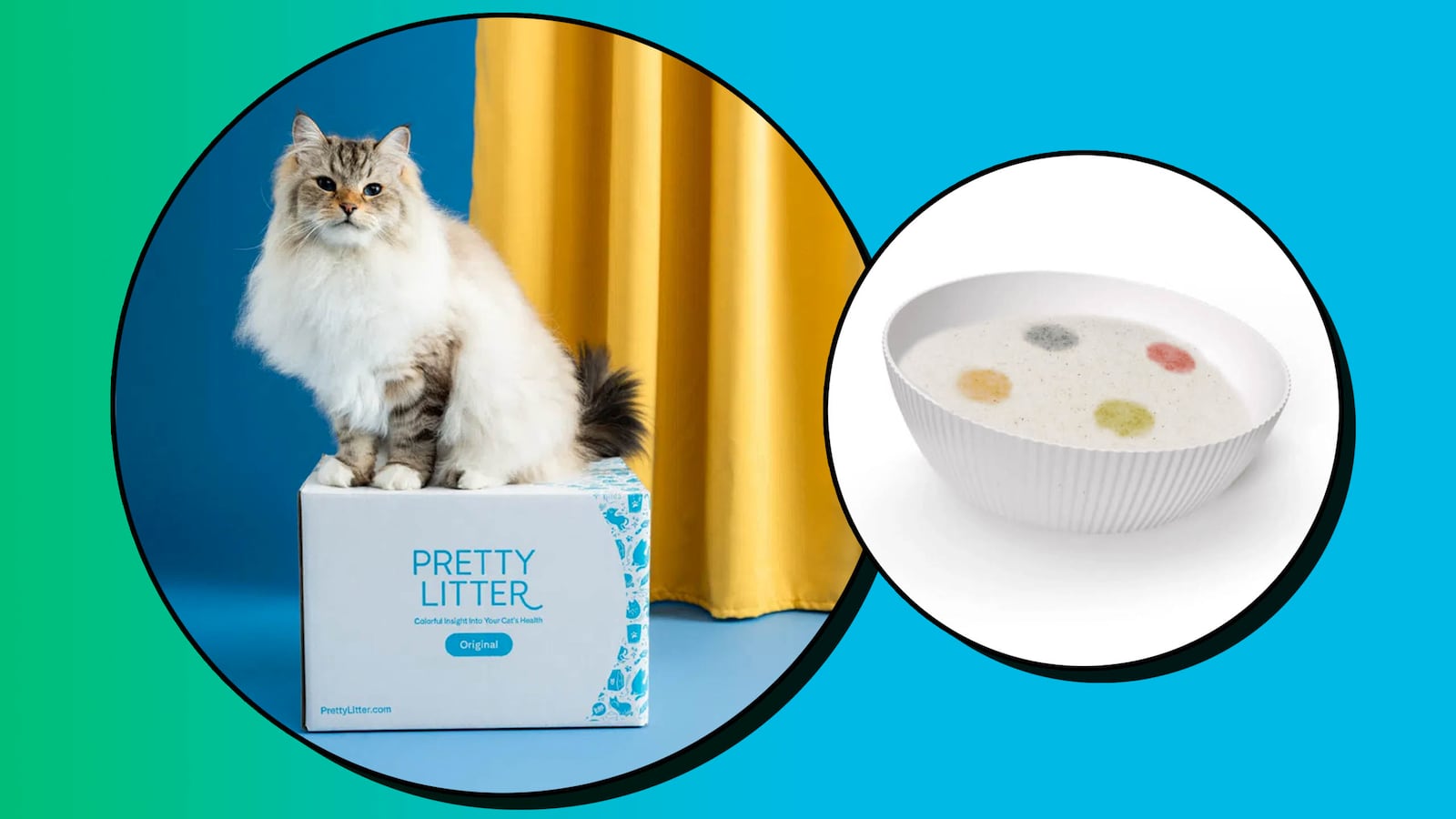
I treat my two black cats like tiny, fur-covered princes (they are my sons; I am, apparently, their full-time butler), so preventative health care is nonnegotiable. My goal is to ensure their immortality—or at least a very long, very healthy life. When a friend and fellow cat parent raved about Prettylitter, I was immediately intrigued by the brand’s innovative technology. The white, crystal-style cat litter is virtually mess-free, odor-resistant, and flushable, but what really sold me is its color-changing, health-monitoring technology.
This veterinarian-approved litter shifts color when it comes into contact with urine, helping flag potential concerns such as urinary tract infections (UTIs) and even kidney issues. The formula reacts to changes in urine pH and other markers, producing visible color variations or highlighting the presence of blood.
For example, dark green or blue hues can signal elevated alkalinity (sometimes associated with struvite stone formation or UTI-causing bacteria) while red tones may indicate blood in the urine, which can be linked to more serious conditions like bladder inflammation, kidney disease, or, in rare cases, cancer.

It’s also virtually dust-free—a win for keeping the house cleaner and for my older cat, Spencer, who has dealt with asthma and respiratory issues. Even better, both cats transitioned to it from the traditional clay litter they’d used all of their lives without protest.
Of course, Prettylitter isn’t meant to be a diagnostic tool, but it can serve as an early warning system, potentially alerting you to changes before you notice shifts in your cat’s behavior, making it easier to loop in your veterinarian sooner rather than later.
The litter itself is made from highly absorbent silica gel crystals and is non-clumping, which means it’s not compatible with certain automatic litter boxes (including some Litter-Robot models). And in multi-cat households like mine, it can be tricky to determine whose urine triggered the color change. Still, as a proactive monitoring tool, it offers added peace of mind by helping you spot potential issues early and start the right conversation with your vet before a minor concern becomes a major one.