Vladimir Putin’s most prized annual spectacle is about to look considerably less impressive, after Russia confirmed it will hold its Victory Day parade without any military hardware for the first time in nearly two decades.
The Russian defense ministry announced that no armored vehicles or missile systems would cross Red Square on May 9, citing “the current operational situation.” Cadets from military schools and youth military institutions will also be absent. The Kremlin blamed what it called “Ukrainian terrorist activity” for the changes.

Russian military bloggers and independent analysts claim that Moscow fears that Ukrainian long-range drone strikes could destroy equipment before or during the parade.
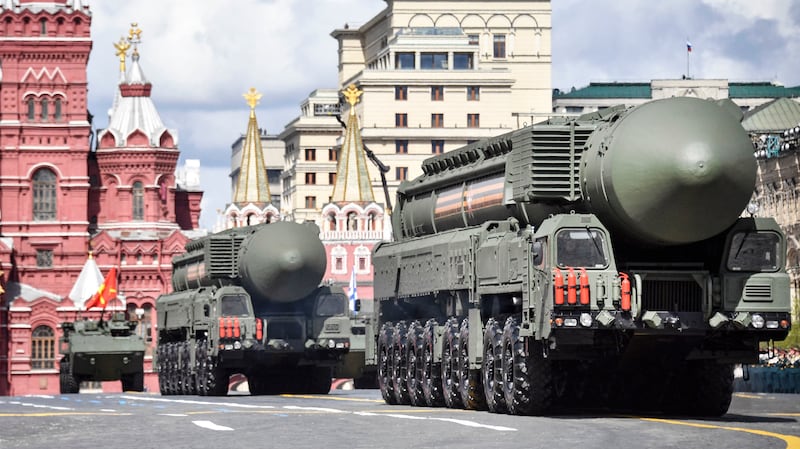
“Equipment is vulnerable even during the preparation stage, as columns park and rehearse outside Moscow on open training grounds that are easy to hit with drones,” independent analyst Ruslan Leviev told TV Rain. “Hitting soldiers in the city center among tourists would not be so straightforward.”
Since Russia’s full-scale invasion of Ukraine in 2022, Victory Day parades have been progressively scaled back. Last year’s 80th anniversary was a notable exception—at least 27 foreign heads of state attended, and a full procession of tanks, rocket launchers, and drones rolled across Red Square. This year’s parade will have none of that.
The climbdown carries symbolic weight. Over Putin’s more than two-and-a-half decades in power, Victory Day—which marks the Soviet victory over Nazi Germany—has become the centerpiece of his vision of Russian national identity.
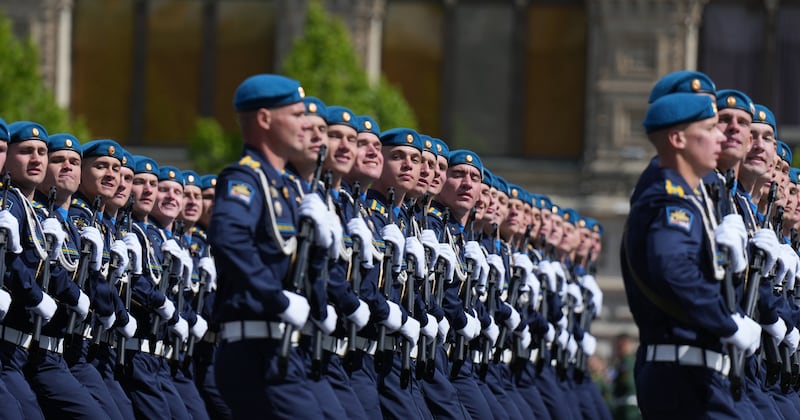
Since the invasion, the Kremlin has leaned on the celebrations even harder, using them to justify the war in Ukraine.
Ukrainian long-range drones continue to strike Russian territory on an almost daily basis, targeting oil infrastructure, military sites, and logistics hubs. President Volodymyr Zelenskyy this week praised the “precision” of Ukraine’s Security Service after strikes hit targets more than 930 miles away. “We will continue to extend these ranges,” he wrote on X.
Analysts have cautioned against overstating the economic damage. A surge in oil prices driven by the Middle East conflict has kept Russia’s energy revenues elevated, allowing Moscow to absorb some of the impact even as its refineries come under attack.