Vladimir Putin’s war has reached his favorite vacation resort in a blaze of fire.
Sochi, a Black Sea city, is known for its beach resort, which before the war was crawling with domestic tourists—and a certain tough-guy dictator.
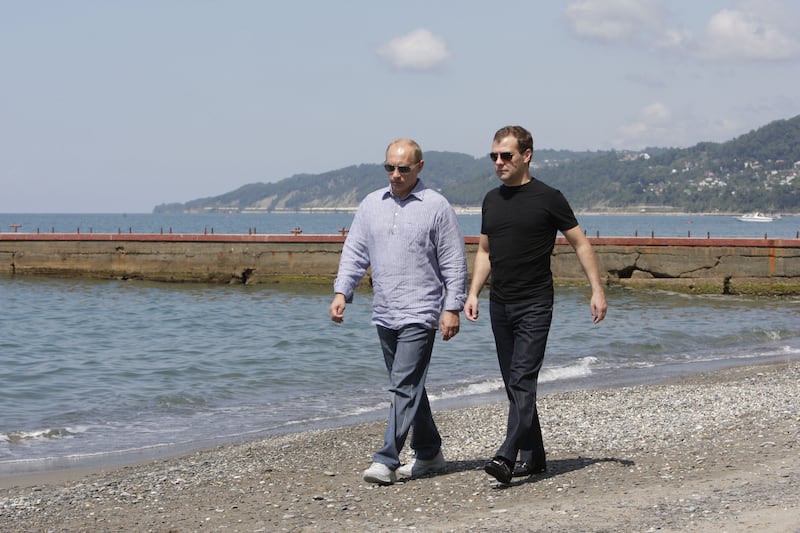
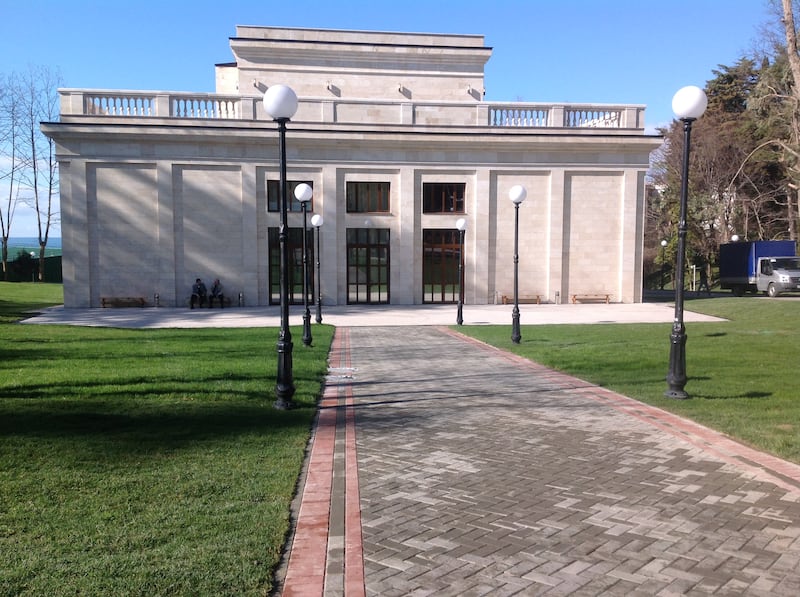
Now, the 74-year-old dictator appears to have deserted it as drones whizz overhead and another explosion rocks the resort, home to Bocharov Ruchey, his Soviet-era official summer residence.

On Tuesday, the day before Putin’s birthday, a drone attack on a tanker triggered widespread panic along the shoreline, forcing local authorities to lock down access to nearby beaches as crude oil burned openly in the water.
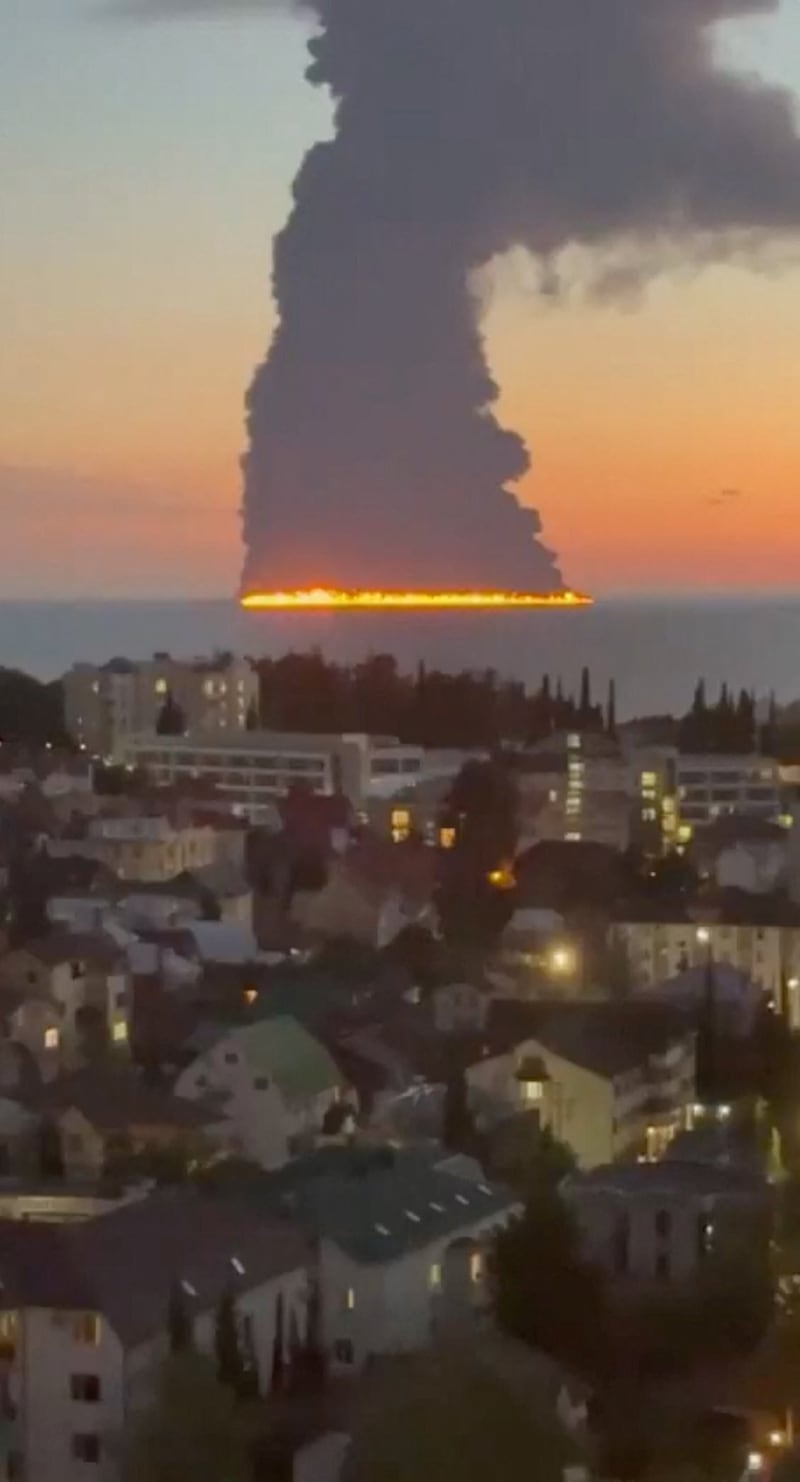
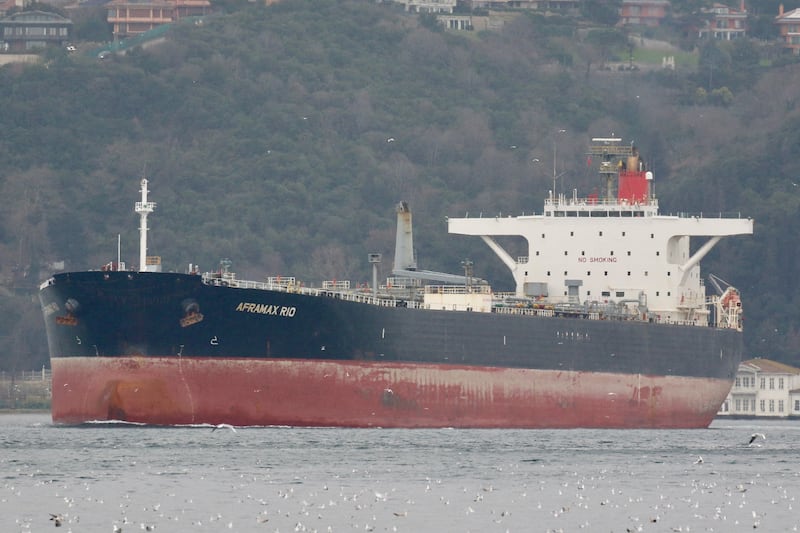
The Liberian-flagged vessel—identified as the Aframax Rio—was struck out at sea near Sirius, 17 miles southeast of Sochi city, by what officials described as a naval drone, igniting an inferno so severe that emergency crews were initially unable to get anywhere near the wreckage.
“Firefighting efforts will begin once the fire’s intensity has subsided and rescue vessels can safely approach the tanker,” Russia’s transport ministry stated, adding that all 23 Indian crew members aboard had been successfully rescued.
It comes after a wave of long-range attack drones slammed into the Moscow region Monday into Tuesday.
Moscow Mayor Sergey Sobyanin reported that 650 drones were launched toward the capital region, with 105 knocked down as they approached. Meanwhile, Moscow Oblast Governor Andrei Vorobyov stated that 185 drones were downed across surrounding municipalities.
The assault killed two people—a 20-year-old man in Radumlya and a 71-year-old man in Barybino—and wounded nine others, while damaging 47 private homes and four apartment buildings.
The attack’s primary target was the Volodarskaya Line Production and Dispatch Station, widely recognized as the largest fuel storage facility in the Moscow region.
The high-profile strike on the oil tanker, meanwhile, dealt another humiliating blow to Vladimir Putin’s prized sanctions-evading shadow fleet, a covert network of illicit vessels Moscow uses to circumvent Western price caps and keep vital energy revenues flowing into the Kremlin’s war chest.
Ukraine officially slapped sanctions on the vessel in February, identifying it as a key node in Russia’s effort to keep oil moving despite international restrictions.
The strike hit directly off the coast of Sochi, a major resort city of roughly 500,000 residents where Putin maintains a sprawling Soviet-era official summer residence.
The Russian leader also owns a multi-billion-dollar palace about 100 miles north in Gelendzhik, though he has increasingly abandoned his once-beloved southern retreats in favor of his northern Lake Valdai hideaway as Ukrainian strikes creep closer to his doorstep.
The visual spectacle of burning oil off Sochi marks the latest headache for local tourism bosses, who are watching pristine holiday beaches transform into war zones.
Dmitry Bogdanov, chair of the hoteliers’ association AMOS, noted in August that visitor numbers across the region are down nearly 11 percent year over year as military activity ramps up along the coastline.
The sea drone assault follows a string of precision strikes targeting military hardware surrounding Putin’s coastal hideouts. Ukrainian forces previously struck Volna Kupol Garant electronic warfare equipment designed to jam Starlink communications just miles from the Russian president’s Gelendzhik retreat.
Days later, a follow-up attack flattened an S-400 anti-aircraft missile system positioned a mere 500 meters away. Major Robert Brovdi, commander of Ukraine’s unmanned systems forces, said the high-tech air defense battery fired just six missiles before it was left “ablaze and sputtering for three hours.”