As Vladimir Putin seems increasingly to be losing the stability he’s always promised, the security services that have long propped him up are creating elaborate fantasies to feed his delusions.
The Federal Security Service (FSB)—the successor to the KGB—has a long history of dealing with Islamic terrorism during Putin’s earlier years in power. But after he sent troops to invade Ukraine in February 2022, things radically changed.
More and more, the agency has turned into an instrument of domestic propaganda tasked with manufacturing the alternate reality envisioned by Putin.
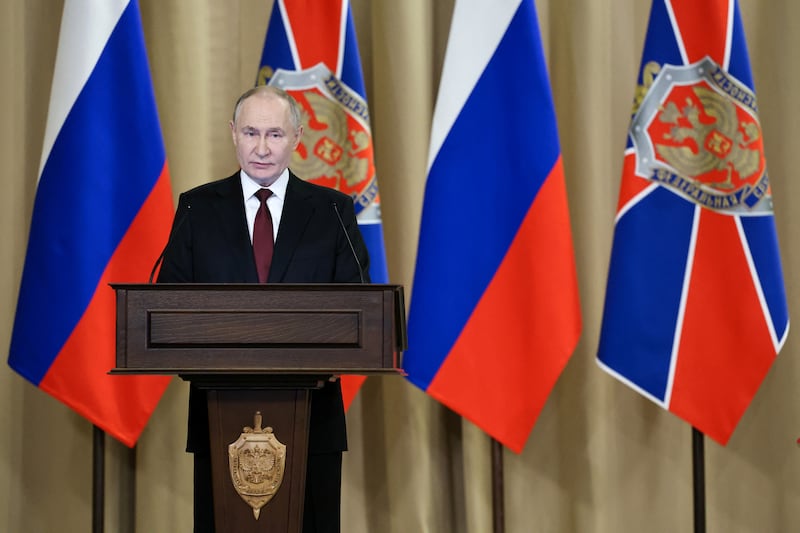
Last month, the FSB reported disrupting 78 alleged Ukraine-orchestrated attacks since the beginning of this year. Longtime Russian observers of the FSB and its reports of countering terrorism tell the Daily Beast that this number is unprecedented.
Ivan Pavlov, a lawyer who founded the First Department, a group that offers legal assistance to Russians charged with state treason and terrorism-related crimes, said there’s more to the numbers than meets the eye.
“These reports are done in order to look indispensable to Putin,” Pavlov told the Beast, adding that the FSB itself often “acts as a recruiter” to boost its success rate.
“We know of concrete cases when it was the FSB calling to recruit Russians, introducing themselves as a Ukrainian special service. Instead of working, they keep statistics high by making up some alleged terrorist attacks,” he said.
Even some within Russia’s elite have become spooked by the FSB’s power to do whatever it deems necessary to strengthen Putin, sources close to the Kremlin told Bloomberg this week. The insiders warned that even the powerful Kremlin figures who would normally serve as a counterbalance to the FSB have effectively been sidelined.
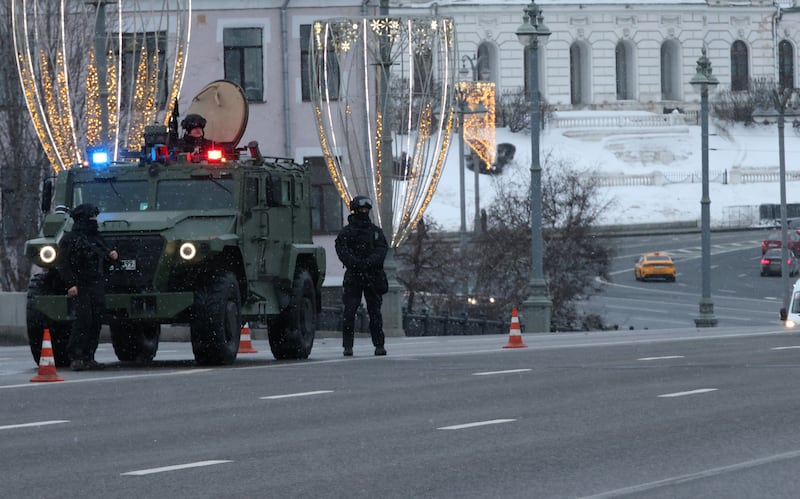
In the past, Putin promised Russians stability, saying he prioritized that over the “alternation of power.” But instead of stability, Russians across the country now wake up to explosions, and nearly every time the FSB blames Ukrainian special services for ordering attacks and assassinations.
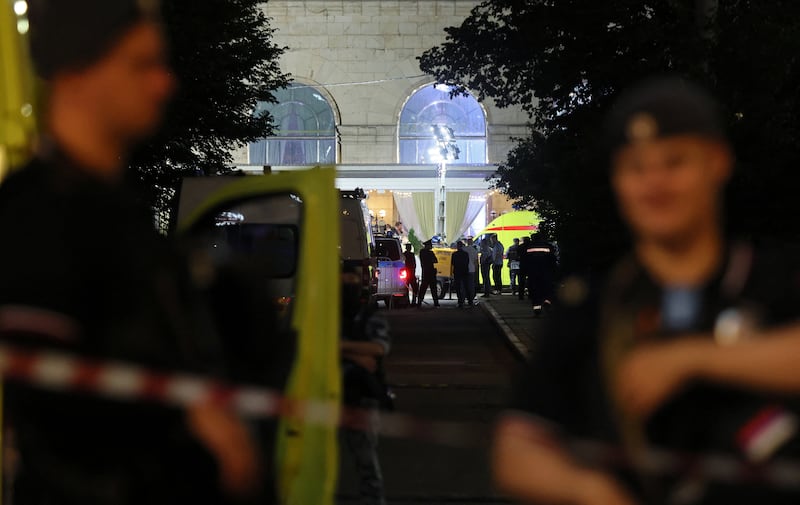
Last Saturday, a bomb tore through a restaurant in Moscow’s famous Seven Sisters, a group of Stalin-era skyscrapers as monumental as the Kremlin. The target was said to be commander-in-chief of the Russian Aerospace Forces, Alexander Chaiko, who was celebrating his birthday at the restaurant. The explosion killed five people and injured at least 20. Chaiko’s daughter and son-in-law were reportedly among the victims.

Russian authorities said the “homemade explosive device” used in the explosion was delivered by a young woman who was also killed in the blast. Aside from deeming the incident a terrorist attack, the Kremlin has been unusually silent about the bombing.
That may be because the FSB prefers not to admit to any failures, opting instead to hype up the attacks it claims to have prevented.
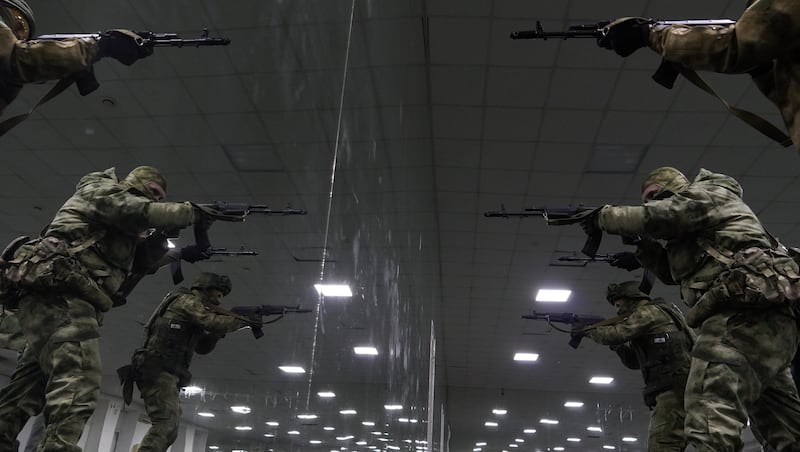
On July 24, the FSB said a 30-year-old woman had been arrested while allegedly trying to install an explosive device under the vehicle of a Russian agent “on orders from Ukrainian special services.” They claimed the woman had been in touch with Ukrainian authorities on WhatsApp and Telegram, and had promised to help Ukraine “in terrorist activity in exchange for permanent residence in an EU country.” The FSB also claimed that the woman had been trained in Turkey and Moldova. No name, no photo. They finished their statement by reminding Russians that “all persons assisting the enemy will be identified and punished.”
Since the beginning of the full-scale war in Ukraine, Russian law enforcement has arrested at least 240 teenagers for terrorism. Famous Russians, including billionaire Telegram founder Pavel Durov and Tikhon Dzyadko, the editor-in-chief of exiled media outlet Rain TV, are also on the list of terrorists and extremists. The list comprises more than 21,000 people this year.
The narrative highlights the FSB’s role in shaping domestic politics, in what critics say is an abandonment of its original duties.
“The FSB’s job is to defend the Kremlin from external threats—and Russia is certainly facing a big one—but the FSB cannot be held accountable because it’s also a pillar of political power in Russia. It divides up the patronage money and controls domestic politics,” Irina Borogan, the author of The Red Web, told the Beast. “When it comes to ordinary citizens falling victims to terror attacks, the FSB is not that concerned; they know they might get punished only if the Kremlin’s men suffer.”
Or if they fail to keep Russians angry with Ukrainians and critics of Putin’s policies.
Earlier this month, the FSB warned Russians that “Ukrainian intelligence services, with the participation of Western curators, were preparing a series of sabotage and terror attacks using drones against military infrastructure,” and that the drones were brought to the Moscow region across the borders in Slovakia, Poland and Belarus.
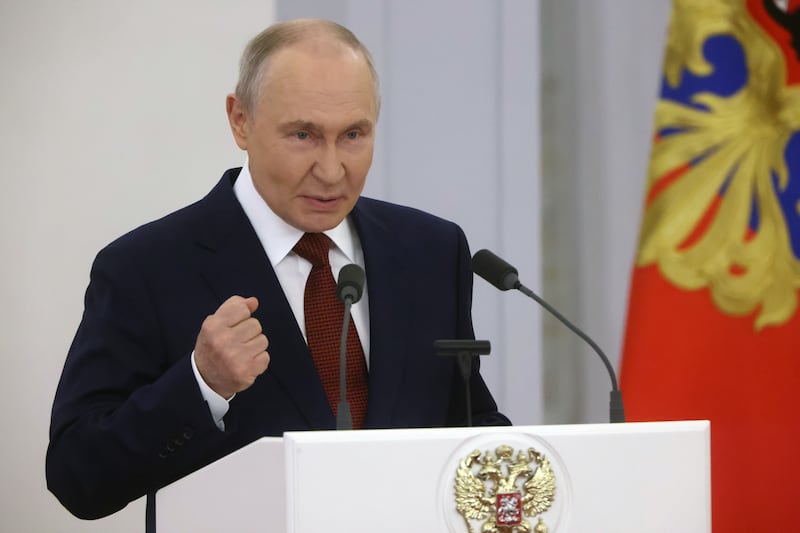
Last year the FSB said they disrupted 308 terror attacks; Russian courts sentenced 1,776 Russians on “terrorism” related charges. Even the founder of Telegram, Russian billionaire Durov, has now been charged for “aiding terrorism,” apparently because he refused to go along with Moscow in its narrative of Ukrainian terrorists using his app.
Alexander Cherkasov, a board member of the Nobel Peace Prize-winning human rights organization Memorial, told the Beast that current FSB tactics were reminiscent of “KGB repressions” and “fabricated cases” studied by human rights researchers.
And now, he said, the crackdown was being done under the guise of “terrorism.”

“There is a war that the Kremlin still calls ‘an operation,’ Ukraine attacks Russia in acts of war; but Moscow calls it ‘terrorism’ and arrests hundreds of people, including at least 150 teenagers, for ‘terrorism.’”
It’s against this backdrop that Donald Trump’s FBI director is reportedly planning a trip to Moscow to meet with the FSB. Kash Patel, 46, and the 74-year-old director of the FSB, Alexander Bortnikov, will surely have a lot to talk about amid the wars in Iran and Ukraine. Moscow describes Washington as “accomplices” in Ukraine’s drone attacks on the Russian capital, and Washington says Russia is helping Iran to target U.S. troops.
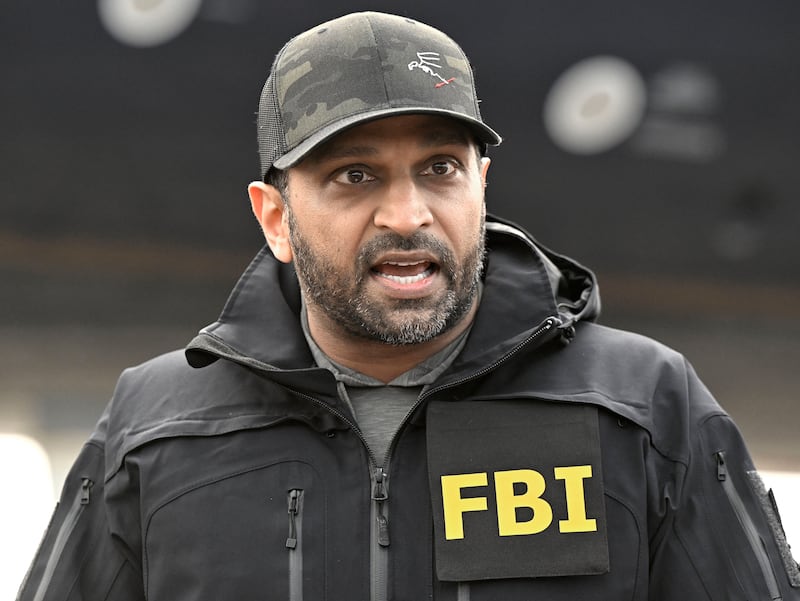
More than 10 years after an FBI director last visited Russia, news of Patel’s purported plans to visit in October have set off rampant speculation about the purpose of the meeting, as well as warnings from within the American intelligence community.
But Russian political analysts see a familiar motive in the trip—one that would allow Trump’s FBI director to shape domestic politics in America much like the FSB does for Putin in Russia.
“According to one version, Kash Patel is coming to find out how communications worked between the Biden administration and the Ukrainian government,” political analyst Pavel Dubrovsky told the Kommersant newspaper, which is read by the Russian elite. “I am more inclined to favor this version.”