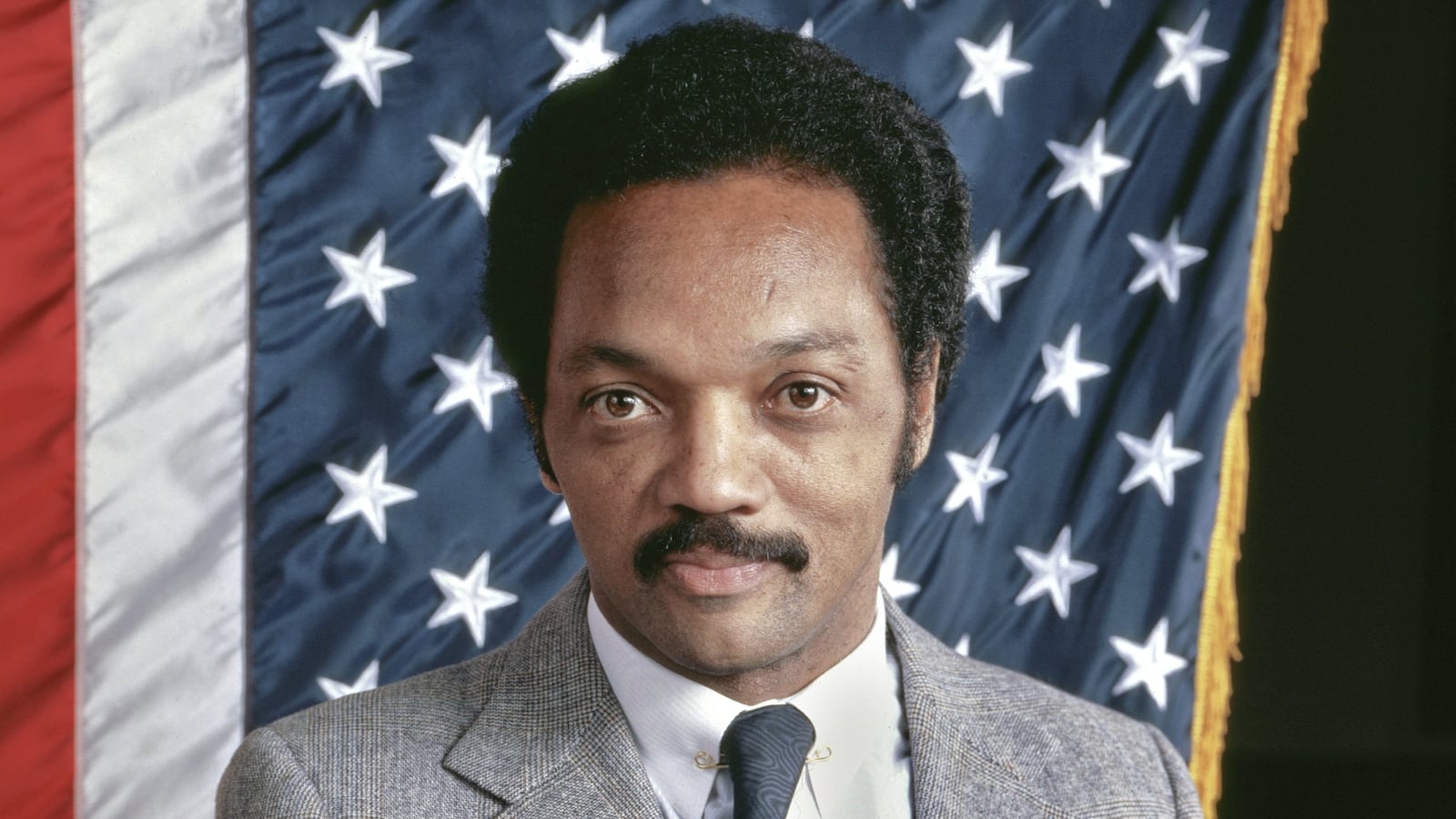
Rev. Jesse Jackson, the civil rights icon and two-time presidential hopeful, has died at age 84.
His family confirmed in a statement that the Baptist minister who marched alongside Dr. Martin Luther King Jr.—and picked up his mantle after King’s assassination in 1968—died “peacefully” on Tuesday morning, surrounded by his loved ones.
“Our father was a servant leader—not only to our family, but to the oppressed, the voiceless, and the overlooked around the world,” the Jackson family said. “We shared him with the world, and in return, the world became part of our extended family. His unwavering belief in justice, equality, and love uplifted millions, and we ask you to honor his memory by continuing the fight for the values he lived by.”
No cause of death was given by the family. Jackson revealed he had been diagnosed with Parkinson’s disease in 2017, and was admitted to the hospital last November for observation for a neurodegenerative condition, progressive supranuclear palsy (PSP), from which he had been suffering for more than a decade.
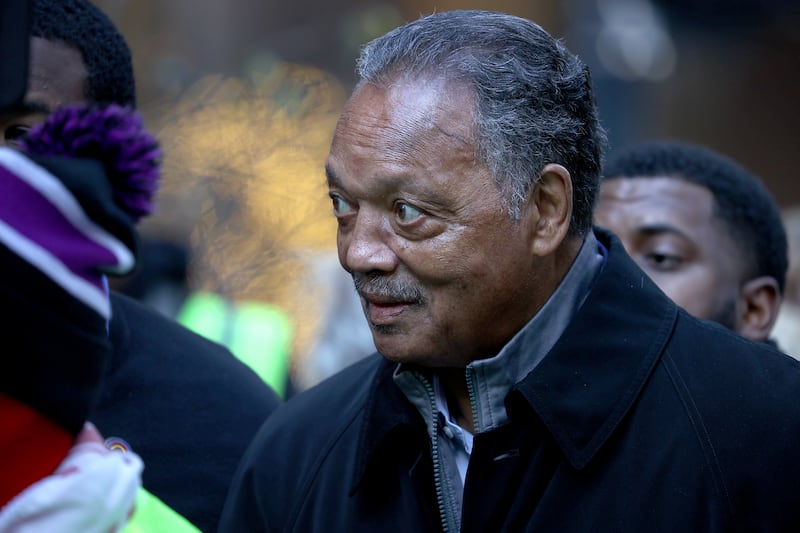
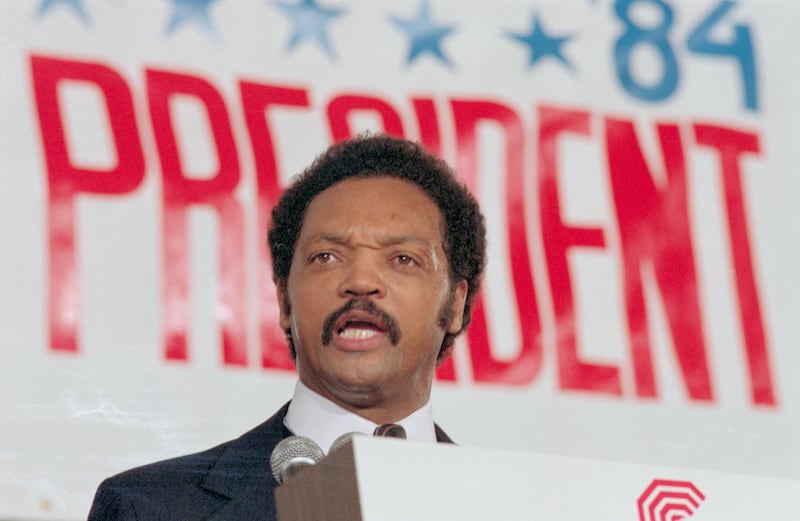
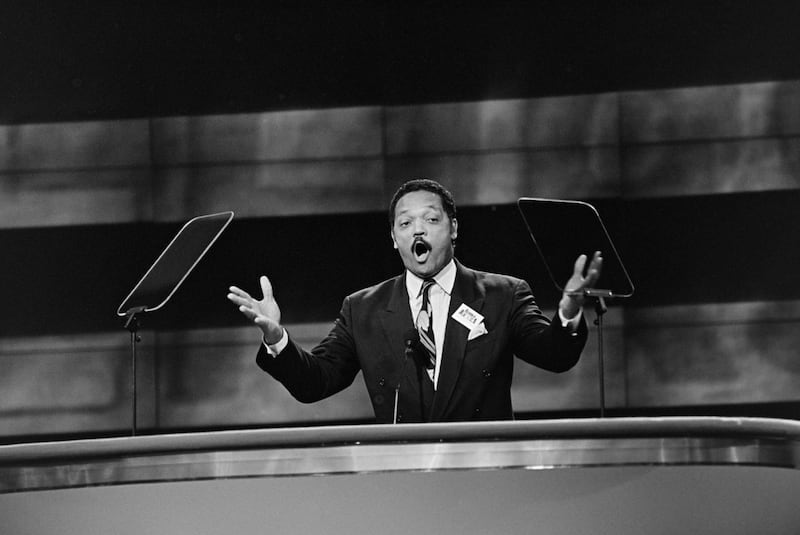
Jackson was a prominent fixture in Democratic politics and the Civil Rights Movement for six decades, known for his soaring oratory. In 1984, Jackson launched his first run for the presidency, following in the footsteps of congresswoman Shirley Chisholm, who had attempted in 1972 to be the first Black major party candidate.
Jackson ran for president again in 1988, but ultimately lost out on the Democratic candidacy to Michael Dukakis.
In 2000, President Bill Clinton awarded Jackson the Presidential Medal of Freedom, the highest civilian honor given in the U.S., for his decades of work in the Civil Rights Movement.
Born in 1941 in Greenville, South Carolina, in the heart of the segregated Deep South at the height of the Jim Crow era, Jackson was largely raised by his mother, Helen Burns Robinson, and later took the surname of his stepfather, Charles Henry Jackson.
He attended Sterling High School, and became involved in student activism while attending the University of Illinois on a football scholarship, going on to pursue theological studies at the Chicago Theological Seminary.
It was during this period he joined the Southern Christian Leadership Conference, acting as a close aide to King.

After King’s assassination in 1968, Jackson helped sustain the Civil Rights Movement’s momentum and went on to found Operation PUSH (People United to Save Humanity), later the Rainbow PUSH Coalition, focused on economic empowerment, voter registration and advocacy.
Jackson also expanded his influence overseas. In 1984, he was involved in negotiations for the release of a U.S. Navy pilot following his capture in Syria, and met with President Fidel Castro to discuss the release of 22 American hostages held in Cuba. His success on both fronts bolstered his run for the presidency that year.
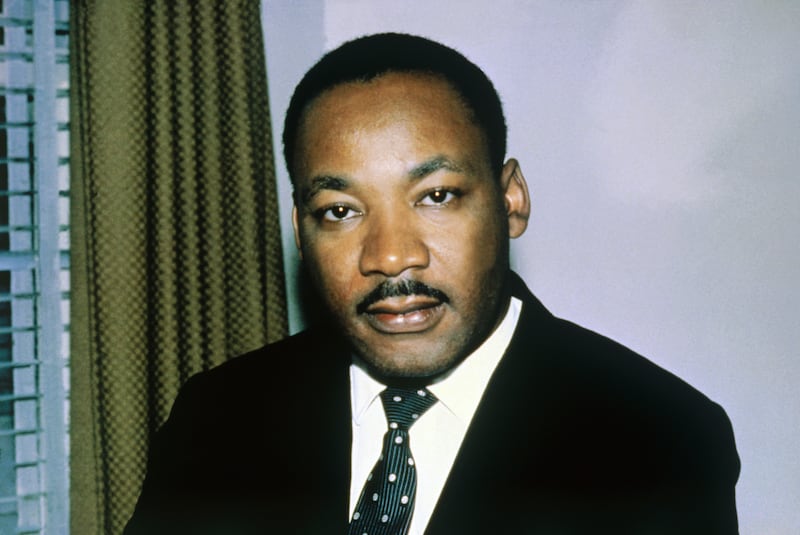
Following his failed bids for the White House, he was elected to the Senate in 1990, serving as shadow delegate for the District of Columbia during the George H.W. Bush and Bill Clinton administrations.
Despite controversy surrounding his admission in 2001 that he had fathered a child outside of marriage—given his status as a minister and public figure—Jackson remained publicly involved in activism and advocacy efforts into his later years, even after announcing his Parkinson’s diagnosis in 2017.
As late as 2021, he was arrested in D.C. for protesting nationwide voter restrictions pushed by the Republican Party, and only formally retired from his role at the Rainbow PUSH Coalition in 2023.
He is survived by his wife, Jacqueline Lavinia Brown Jackson, whom he married on Dec. 31, 1962, and by their five children: Santita, Jesse Jackson Jr., Jonathan, Yusef, and Jacqueline.