RFK Jr. Demands Breakthrough After Sidelining Key Experts
The panel expected to provide recommendations on an issue Kennedy has repeatedly criticized has been unable to convene.

Kevin Wurm/REUTERS
Health Secretary Robert F. Kennedy Jr. has stymied a key panel for Alzheimer’s prevention even as he pushes for better screening.
The U.S. Preventive Services Task Force (USPSTF), the nation’s leading independent panel of experts on preventive care, was poised to issue new guidance on cognitive decline this year but has been unable to meet since March 2025.
“The evidence for dementia screening is not particularly strong,” John Ruiz, a clinical psychology professor at the University of Arizona and a recent task force member, told The Guardian. He added that the panel has called for more funding to strengthen the evidence base, but those recommendations cannot be released because the group has been unable to meet.

Health and Human Services Secretary Robert F. Kennedy Jr. testifies during a Senate Finance Committee Hearing earlier this year.
Heather Diehl/Getty Images
Meanwhile, Kennedy, who has called the lack of early Alzheimer’s screening “regulatory malpractice,” has also criticized the very panel that helps shape such recommendations. The task force, which typically meets three times a year, is not scheduled to meet again until late August, bringing its hiatus to roughly 17 months.
The health secretary has not only blocked the panel from meeting but also dismissed its leadership in May and declined to replace members whose terms had expired. As a result, the task force could convene in August with as many as eight new members, according to Axios.

Speaking to Politico, health experts warned that Kennedy could be attempting to remake the independent task force in the same way he overhauled the Advisory Committee on Immunization Practices—where he fired all 17 members, citing conflicts of interest, and replaced them with vaccine skeptics.
Sign Up for The Swamp Newsletter
By clicking “SUBSCRIBE” you agree to our Terms of Use and Privacy Policy.
“There’s the potential that they could reform [the USPSTF] in a way that is no longer evidence-based or scientific,” Aaron Carroll, president and CEO of AcademyHealth, a nonprofit representing health policy researchers, told Politico.
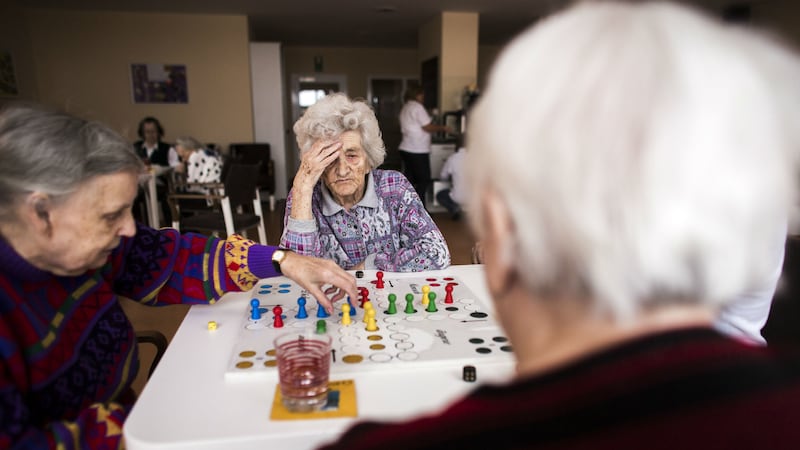
More than 7 million Americans are affected by Alzheimer's.
Carsten Koall/GETTY
“In which case they can force insurance to cover things with no out-of-pocket costs, but things that might not be evidence-based or potentially could cause more harm than good,” Carroll added.
The USPSTF’s recommendations can directly affect Americans’ wallets, as its A-to-D ratings determine which preventive health screenings insurers must cover at no cost under federal law.

Alzheimer’s disease affects more than 7 million Americans, making it the country’s most common form of dementia. Experts say detecting the disease earlier could become increasingly important as new treatments emerge that appear to work best before significant cognitive decline occurs.
But routine Alzheimer’s screening remains a contentious medical question, with experts divided over whether there is enough evidence to support widespread testing. “You get 10 neurologists, you get 10 approaches,” Ruiz told The Guardian.

The debate comes amid broader tensions over how the Trump administration approaches Alzheimer’s research and funding.
Despite Kennedy’s claim that “we should have the cure for Alzheimer’s today” and that its absence is the result of “corruption” at the National Institutes of Health (NIH), 14 of the nation’s 35 Alzheimer’s Disease Research Centers faced funding delays in March 2025 after NIH grant approvals were stalled, leaving researchers struggling to retain staff and keep critical studies running.

“There’s no way around the fact that science has been slowed down,” Ann D. Cohen, co-director of the University of Pittsburgh Alzheimer’s Disease Research Center, which was affected by the funding delays, told The Guardian.

The Trump administration has slowed down research.
Nathan Howard/REUTERS
Following Kennedy’s remarks on Alzheimer’s in May last year, the Alzheimer’s Impact Movement accused him of spreading misinformation about the disease, saying he “owes an apology” to those living with Alzheimer’s and their families.
The group also urged him to “stop spreading these harmful Alzheimer’s myths, and preserve the nation’s investment in Alzheimer’s research so we can accelerate, not stop, scientific progress on diagnosis, prevention, treatments, and eventually cures.”
In response to concerns over Alzheimer’s research funding and screening efforts, a spokesperson for HHS told The Guardian that the department “remains committed to advancing research in Alzheimer’s disease and other serious health conditions.”
The Daily Beast has reached out to the Department of Health and Human Services for further comment.
See more of our coverage in your search results.

Got a tip? Send it to The Daily Beast here.
Register below to read this article for free or subscribe
to unlock unlimited access to The Daily Beast.
Monthly
$1
First month then $5.99/month
Annual
$35
First year then $59.99/year
Premium
$79
First year then $119.99/year
*Substack access provided by the next business day, using your subscription email. Choosing the Premium plan constitutes your permission to share your subscription email with Substack and your agreement to Substack’s Privacy Policy.
Already have an account? Sign In
Looks like you already have a subscription!
You're all set!
Thanks for subscribing.
Sign in or create an account
Login dialog
Loading comments…