Russia has scrapped this year’s edition of its flagship combat drone convention over fears Ukrainian drones would blow it up.
Dronnitsa is the country’s biggest showcase for the drone industry driving Vladimir Putin’s war on Ukraine. It was booked for Aug. 29-30 in the northwestern city of Veliky Novgorod, roughly 75 miles from the lakeside Valdai compound where the increasingly isolated 73-year-old tyrant now spends much of his time.

Organizers announced an indefinite postponement on the messaging app Telegram, popular in Russia, on Wednesday, according to independent media outlet Meduza. They said they’d learned of “the enemy’s plans to strike the gathering while it is underway.” The 2025 edition drew more than 1,500 attendees and exhibits from over 100 Russian manufacturers.
The alleged Ukrainian threat paired ballistic weaponry with what organizers branded “terrorist bio-drones,” the Moscow Times writes. They claimed that guarding the venue would have pulled air defense units and security officers away from plants and military sites across two regions. They published no evidence for their claims.
The event carries a blessing from Putin’s inner circle. Dmitry Peskov—the president’s special representative on digital and technological development, rather than the Kremlin spokesperson of the same name—opened last year’s gathering.
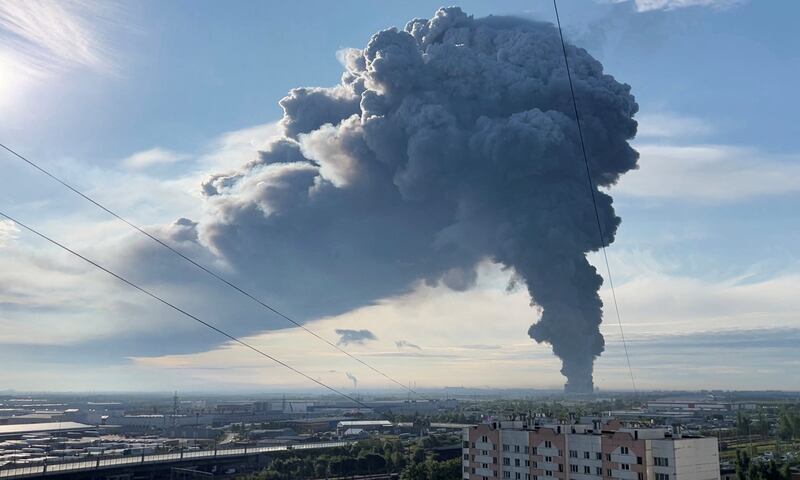
Kyiv has been reaching ever deeper into Russia all year. The cancellation came on the same day Ukrainian drones and missiles tore into the Black Sea port of Novorossiysk. Warships at the naval base were hit and two of the country’s biggest grain terminals stopped work. At least three people died, and 24 were wounded. Russia’s grain lobby is now warning that Black Sea exports could stop altogether.
Refineries have taken the heaviest punishment as Ukrainian strikes have taken huge parts of Russia’s capacity offline. Gasoline exports are banned through the end of 2026, and rationing is in force across dozens of regions, where there have been reports of lines at the pump for up to 36 hours.
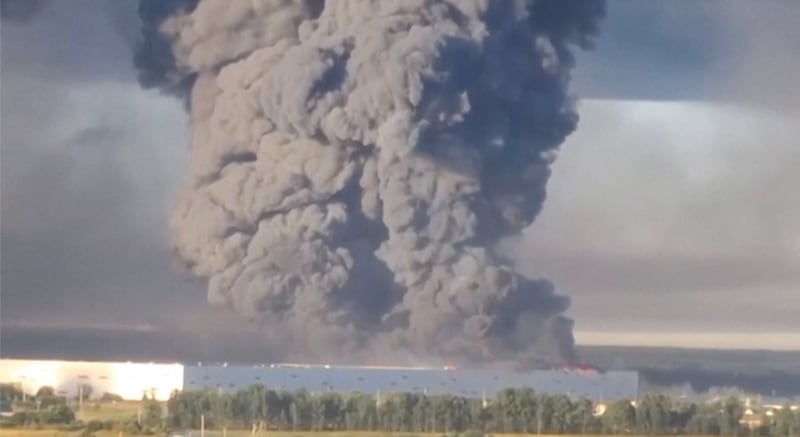
Kyiv has gone after big businesses as well. Ukrainian drones have hit roughly a dozen sites belonging to Wildberries, the Russian analog to e-commerce giant Amazon. The opening wave of attacks killed eight people and injured more than 70, causing what analysts have put at up to $1.3 billion in damages.
The barrage has seen Putin shrink his ordinarily grandiose displays of military might to minimize prospective targets for Ukrainian attacks. Russia dropped its Navy Day parade in St. Petersburg, the country’s second city, for a second straight year in July, leaving the president to greet sailors beside a printed banner of a submarine. May’s Victory Day parade on Red Square was pared back over similar fears.
Those attacks have accompanied a growing economic squeeze as a result of the sheer cost of keeping the president’s war going. Analysts have repeatedly warned that the fuel crunch has pushed Russia into a recession as growth forecasts have been cut dramatically back.
Even pro-Kremlin pollsters now suggest popular support for Putin, especially among the younger generation, is waning, amid reports of discontent in the halls of the Kremlin over a growing lack of progress on the front lines.