Scientists Explain Mysterious ‘Neptune Balls’ Washing Up On Beaches
The spongy balls resemble coconuts or even bird pellets.
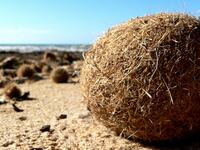
Martino A. Sabia/Wikimedia Commons
Beachgoers finally have an explanation for the mysterious “Neptune balls” that have been washing up on Mediterranean shores. The balls vary in size and shape, from perfectly round to more cylindrical, and resemble coconuts or even bird pellets. Some of them have twine or other pieces of plastic sticking out of them—and now scientists know why. The spongy balls are compact bundles of Posidonia oceanica sea grass, commonly known as Neptune grass. It turns out they’ve been mopping up ocean plastic from the sea floor and throwing it back at us, according to a group of researchers in Barcelona. Fragments of plastic bags, bottles and fishing nets get caught in swaying underwater meadows of Posidonia. Every fall, the grass sheds its leaves, and the fibrous strands tangle into dense balls. “As they move, they transport plastic intertwined within the fibers,” one of the researchers, Anna Sanchez-Vidal, told the BBC. Not all Neptune balls contain plastic, but the ones that do are densely packed, and the seagrass is estimated to catch nearly 900 million plastic fragments each year. “It’s a way of the sea returning the trash to us that was never meant to be on the seafloor,” Sanchez-Vidal said.
Register below to read this article for free or subscribe
to unlock unlimited access to The Daily Beast.
Monthly
$1
First month then $5.99/month
Annual
$35
First year then $59.99/year
Premium
$79
First year then $119.99/year
*Substack access provided by the next business day, using your subscription email. Choosing the Premium plan constitutes your permission to share your subscription email with Substack and your agreement to Substack’s Privacy Policy.
Already have an account? Sign In
Looks like you already have a subscription!
You're all set!
Thanks for subscribing.