Feuding between the Supreme Court’s justices has spilled further into the open after a rare public apology from one of its members.
Obama-appointed Justice Sonia Sotomayor apologized to Trump-appointed Justice Brett Kavanaugh on Wednesday, after she took a personal swipe at Kavanaugh last week.
“At a recent appearance at the University of Kansas School of Law, I referred to a disagreement with one of my colleagues in a prior case, but I made remarks that were inappropriate,” Sotomayor, 71, said in a statement. “I regret my hurtful comments. I have apologized to my colleague.”
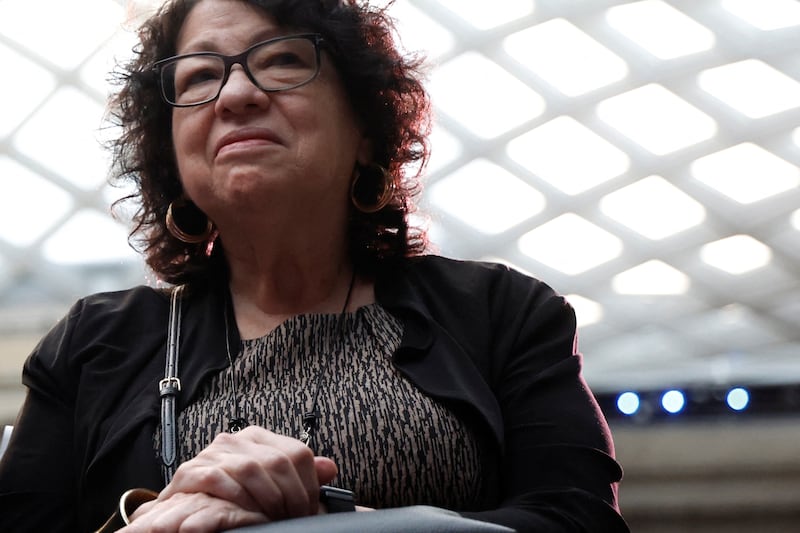
The highly unusual public apology comes after Sotomayor tore into Kavanaugh, 61, over his concurrence with an emergency order last September that paused lower court rulings barring President Donald Trump’s immigration patrols from targeting people based on their race, language, or where they work.
Kavanaugh had written that people’s encounters with immigration enforcement tend to be “typically brief,” and that most “promptly go free.”
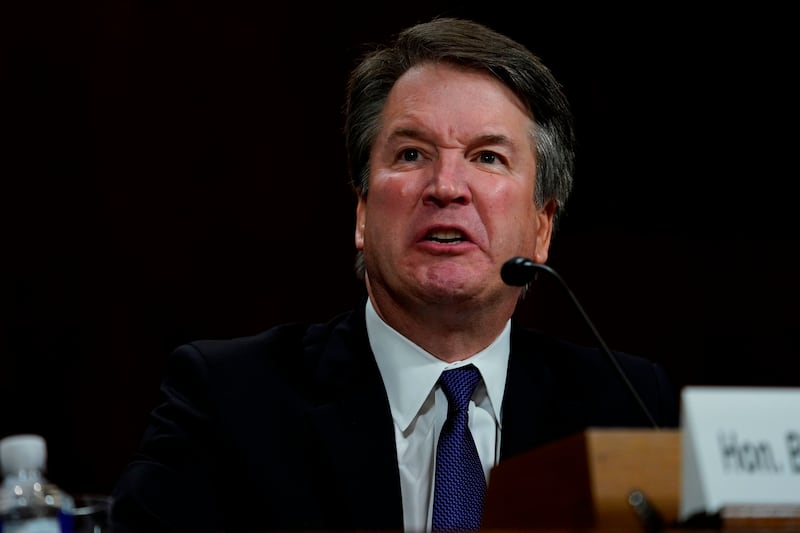
“I had a colleague in that case who wrote, you know, these are only temporary stops,” Sotomayor said during an event at the University of Kansas, Bloomberg reported. “This is from a man whose parents were professionals. And probably doesn’t really know any person who works by the hour.”
She added that when ICE detains people on suspicion of being undocumented, “nobody’s paying that person.”
“And that makes a difference between a meal for him and his kids that night and maybe just cold supper,” the court’s senior liberal said.
The Daily Beast has reached out to the Supreme Court’s Public Information Office for comment.
Kavanaugh, who lives in a $1.6 million home in affluent Chevy Chase, Maryland, has not publicly responded to Sotomayor’s takedown, nor to public outcry over his reasoning on ICE encounters, which his critics have dubbed “Kavanaugh stops.”
The conservative justice had written that factors such as ethnicity, language, or someone’s presence in locations such as a farm or a bus stop “taken together can constitute at least reasonable suspicion of illegal presence in the United States.”
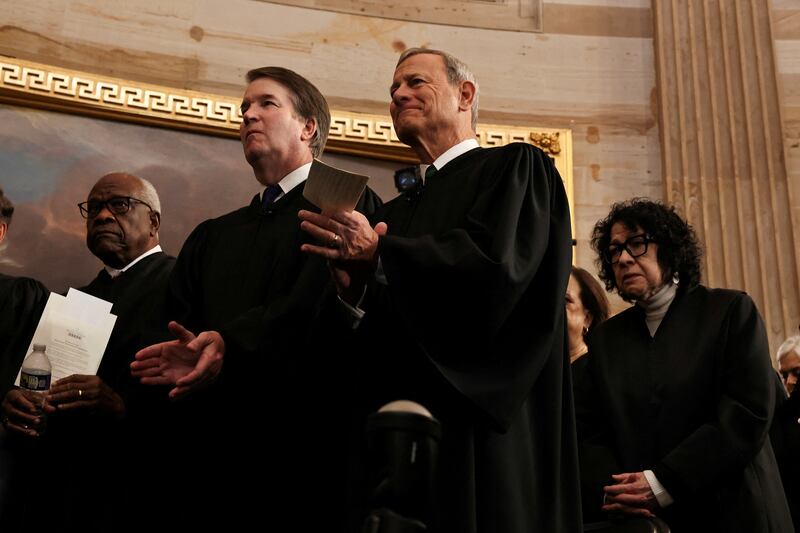
“To be clear, apparent ethnicity alone cannot furnish reasonable suspicion; under this court’s case law regarding immigration stops, however, it can be a ‘relevant factor’ when considered along with other salient factors,” wrote Kavanaugh, whom Trump appointed in 2018 amid significant controversy to fill the Supreme Court seat vacated by Anthony Kennedy.
Sotomayor’s journey to the nation’s top court began in very modest circumstances. She was born in a housing project in the Bronx to Puerto Rican parents in 1954 and was diagnosed with Type 1 diabetes at a young age. Her father died when she was nine, after which her mother raised her and her brother alone, working long hours to provide for the family.
Kavanaugh, meanwhile, grew up far more comfortably. His father was a lawyer and business executive, and his mother was a judge. He attended Georgetown Preparatory School, an elite private learning establishment known for educating students from affluent and politically connected families.