Carlos Watson was on his way to the federal correctional facility in Lompoc, California—to serve an almost-10-year prison sentence—when President Donald Trump saved him.
Just hours before Watson was to surrender last Friday, he heard that Trump had commuted his sentence. The order also meant he would no longer have to pay $96 million in restitution and forfeiture.
It was an extraordinary plot twist for Watson. In July, he was convicted of a massive fraud in an eight-week trial which revealed how his media company Ozy—the buzzy start-up that seemed to be inexplicably everywhere and nowhere at once throughout the 2010s—had been built on lies.
I spent my summer watching that trial for a three-part podcast on Watson’s rise and fall.
Now, it seems, he is rising again. And dodging 10 years in federal prison might not even be the final twist in the plot. I’m told by a source close to Watson that a full pardon is still being explored and may come next.

The clemency was facilitated by Dr. Topeka Sam, a prison reform activist, who was introduced to Watson by his spokesperson Juda Engelmayer.
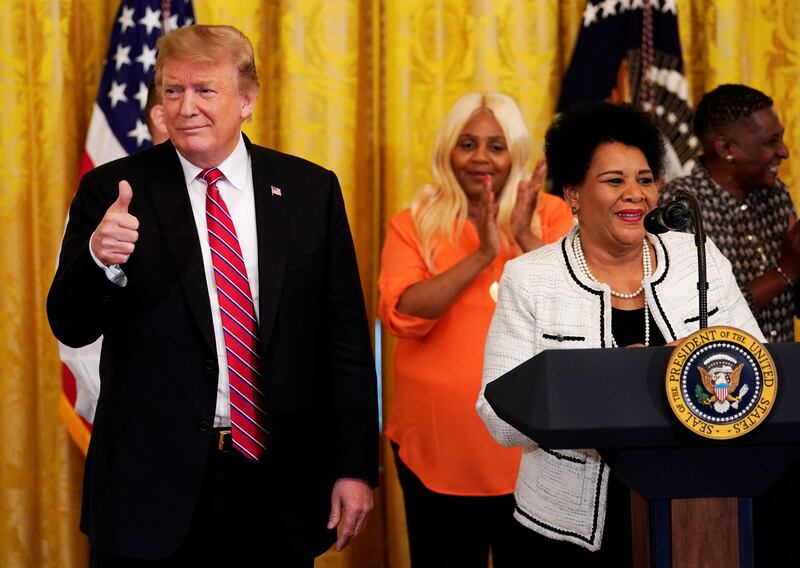
Sam is perhaps best known for bringing attention to the case of Alice Marie Johnson, a mother of five who was then serving a life sentence for a nonviolent drug offense, ultimately inspiring Kim Kardashian to lobby the first Trump administration on her behalf.
Johnson’s sentence was commuted in 2018 and she was granted a full pardon two years later. She currently serves as the Trump administration’s “pardon czar.” Sam and Johnson remain close, according to Engelmayer.
For a Black man who will tell you himself he embodies the American dream—born to teachers of modest means in Florida and educated at Harvard and Stanford—his sudden turn to Trump is shocking but not entirely surprising. Watson is a man who has always been able to talk his way into and out of anything.
When Watson spoke at his sentencing in December, he turned his back to the judge and faced the gallery to talk directly to his family and friends. After thanking them for their support, he began to reel off a list of the accomplishments of his now-defunct media company, concluding, “I loved what we built with Ozy.” Eventually the judge cut him off and ordered him to turn back and face the court.

It felt more like a campaign stop—or acceptance speech—than the show of remorse or heartfelt plea for leniency one might expect from a man who had just months before been convicted of aggravated identity theft and conspiring to defraud investors of millions of dollars and facing up to 37 years in prison.
As a reminder, Carlos Watson’s company began to unravel when The New York Times published this article revealing that in February 2021 Watson’s co-founder, Samir Rao, used a voice-changing app to impersonate a YouTube executive on a funding call with Goldman Sachs. The call was a desperate attempt by Watson and Rao to raise $45 million because Ozy was running out of cash.
Instead, it led to an FBI investigation and a criminal indictment. Rao and Watson’s former chief of staff Suzee Han were also indicted and turned on Watson, testifying at his trial that he was the driving force behind the fraud and a domineering leader who demanded total control.
In one particularly dramatic piece of testimony, Han, who was 25 when she went to work for Watson, said that at some point the pressures of the conspiracy got so great that she told Watson she could understand “why someone would want to kill themselves” and Watson’s response was to suggest that he or Rao should go to therapy with her.
Rao testified for six days, detailing a number of lies he helped Watson tell investors. Watson told them that Oprah was investing $10 million in Ozy (she was not).
That A-Rod and Jennifer Lopez were leading an investment round (they were not).
That Google’s CEO had offered to buy the company for $600 million (he testified at trial that he had not).
Prosecutors also said that Watson lied about the size of Ozy’s audience; about TV shows he never sold; and about revenue numbers, doubling and tripling them to show enormous growth that did not exist. And because of those lies, investors put at least $75-100 million into Ozy Media over the course of six years. (Notably, Laurene Powell Jobs, who he had been friends with for 20 years, was his lead investor at launch.)
But in court, Watson conceded nothing. He stood by everything he has said—even when presented with clear evidence to the contrary. He took the stand and said he did nothing that others in digital media and Silicon Valley more broadly weren’t doing and that his company was brought down by ruthless competitors (The New York Times and Buzzfeed) intimidated by his enormous success. He insisted that the company was poised for a comeback when he was arrested in 2023, even though it had lost the majority of its board, investors, and staff.
He repeated those claims in his statement Friday, calling the cases “baseless” and saying he was the victim of “a malicious campaign orchestrated by a jealous competitor at a rival media company.” But he also took them a step further, saying that “OZY... was on the brink of becoming Silicon Valley’s first Black-owned publicly traded company before these wrongful actions derailed our progress.”
There’s no evidence that Ozy was on the brink of any such thing and plenty of evidence that it was not. It’s that very tenuous relationship to the truth, the utter lack of remorse and that complete abdication of responsibility that has left some of his former employees who I spoke to over the weekend absolutely furious at this turn of events.
They couldn’t quite believe that he had somehow managed to work the system yet again and will now likely never have to admit to any wrongdoing.
It’s an interesting case for the Trump administration to take up—seemingly at odds with much of their stated views on racial issues and DEI. Watson, who is Black, insisted throughout his trial and sentencing that the charges against him were racially motivated.
He launched a website called “Too Black for Business” where he has railed against “white collar racism,” pointing out that the “hostile white judge” overseeing his case was a Trump appointee and said his prosecution was “part of a broader pattern in America’s history of tearing down Black excellence.” He called the case a “modern lynching” in his sentencing speech.
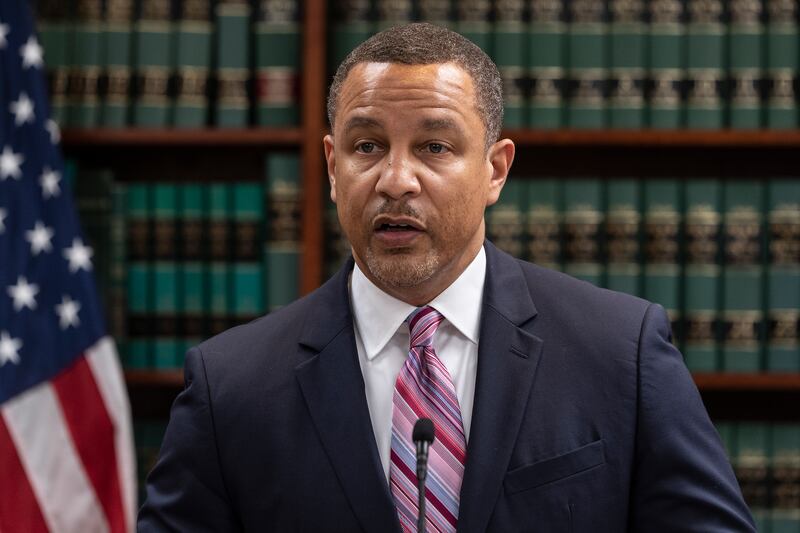
Other Black entrepreneurs have not rallied in his support, rejecting his racial framing of the charges. The most vocal, Roland Martin, called him “OJ two point oh” and said of Watson’s troubles “If you’re doing some illegal s---, don’t be trying to all of a sudden cloak yourself in blackness.” And it’s worth noting that U.S. Attorney Breon Peace who brought the charges against Watson is himself a Black man.
Watson made no mention of any racial issues in his statement about his commutation, instead thanking the president, with whom he is not known to have a relationship, for “his unwavering commitment to fairness and justice” and saying, “President Trump has once again demonstrated his courage in standing up against the weaponization of the legal system by unscrupulous actors who aim to destroy innovative companies.”
When the judge imposed his sentence in December, he talked about Watson’s “denial of responsibility” and “striking determination” to blame others. And he said that he was concerned that Watson would likely reoffend if given the opportunity: “I don’t see any reason why, as soon as you were able to, that you wouldn’t simply repeat the behaviors that led us to this point.”
That opportunity has come now, so much sooner than even Watson dared to dream it could.
- Listen to Susie Banikarim’s full podcast The Unraveling of Ozy Media by clicking here.