
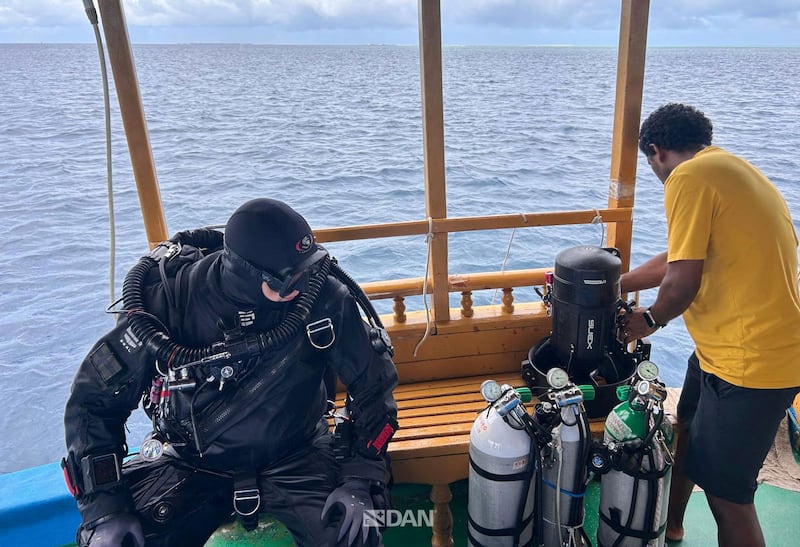
A member of the diving team that recovered the bodies of the five Italian scuba divers who drowned in the Maldives said their equipment “was not optimal.”
Four of the divers’ bodies were found together in a cave 164 feet underwater. The divers died just 15 minutes from reaching the surface.
Finnish diver Sami Paakkarinen told Italian media that “tragic human error” was the main reason for their deaths.
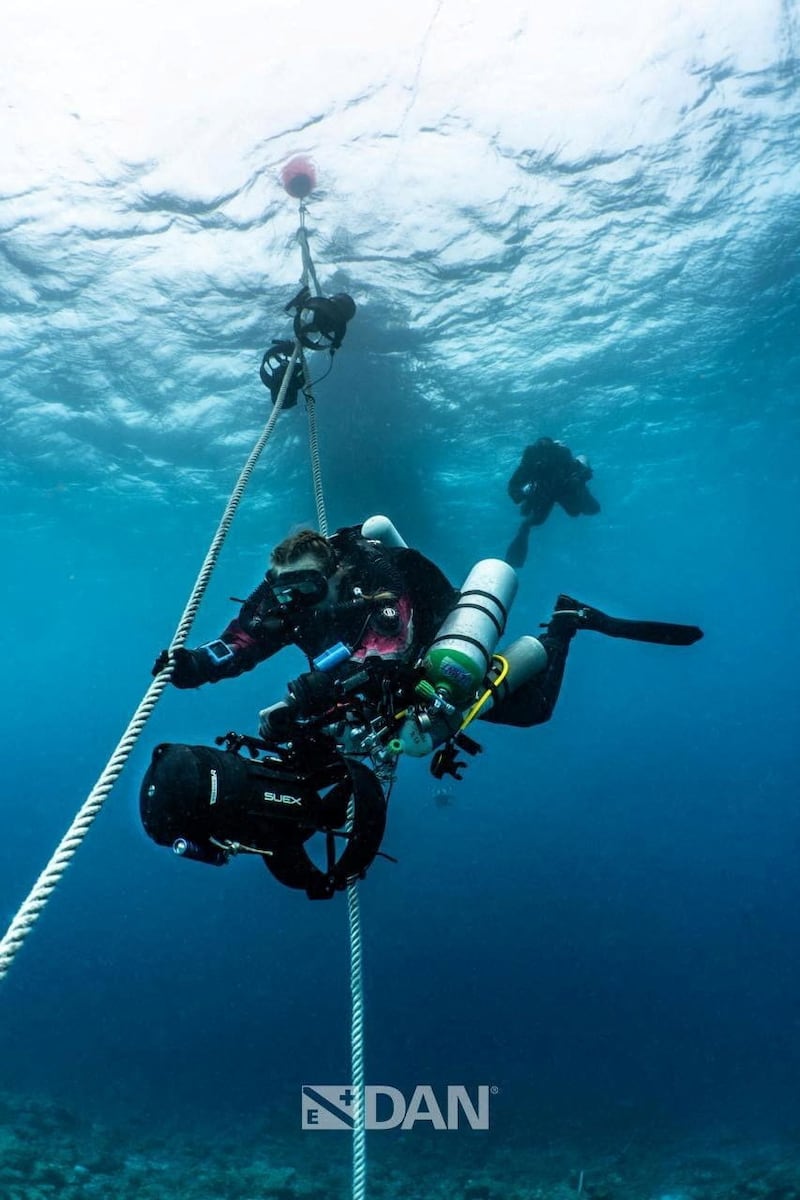
“In general, for those who visit caves, it’s known that it’s not very wise to do so without a safety line,” he said.
“Unfortunately, in most cave diving accidents, the main cause is always human error,” he noted.
The accident is believed to be the worst diving incident in Maldives history, with six lives lost.
Two of the Italian divers, Professor Monica Montefalcone and research fellow Muriel Oddenino from the University of Genoa, were in the country studying the impact of climate change on biodiversity.
Montefalcone’s daughter, Giorgia Sommacal, and Federico Gualtieri, a recent graduate, were also part of the diving group. The group’s diving instructor, Gianluca Benedetti, was also found dead.
A Maldivian navy rescue diver who drowned while searching for their bodies, Staff Sergeant Mohamed Mahdhee, died of decompression sickness after partaking in a recovery mission.

Jonathan Volanthen, an experienced cave diver, told The Guardian that cave diving has risks that are fundamentally different to that of open water diving.
“If something goes wrong, you can’t simply head to the surface because there’s usually something that’s preventing that,” he told the outlet. “Quite often in caves as well, it’s very easy to swim in somewhere and then find you stirred some silt up.”
The blackout conditions in underwater caves could also have been a factor in their deaths, Edd Sorenson, an American cave-diving expert, told the outlet.
“Caves are not dark. Everybody thinks they’re dark … They’re devoid of light. Your house at night is dark … When your light goes out [in a cave], there’s nothing,” Sorenson told The Guardian. “You don’t see a reflection, your eyes don’t get used to it.”
He noted that it can be easy for divers to loose spacial awareness in a cave, adding, “That’s why we learn to always have a continuous guide line to the surface.”