Winter Olympic ski jumpers are allegedly artificially inflating the size of their equipment in order to fly further down the slopes.
The allegations, first reported in the German newspaper Bild, suggest that male athletes at the games currently taking place in Italy are taking needles to their members and filling them with hyaluronic acid.
The cosmetic filler can add an extra centimeter or two to the overall circumference of their tackle, which can make all the difference when catching air down the hill.
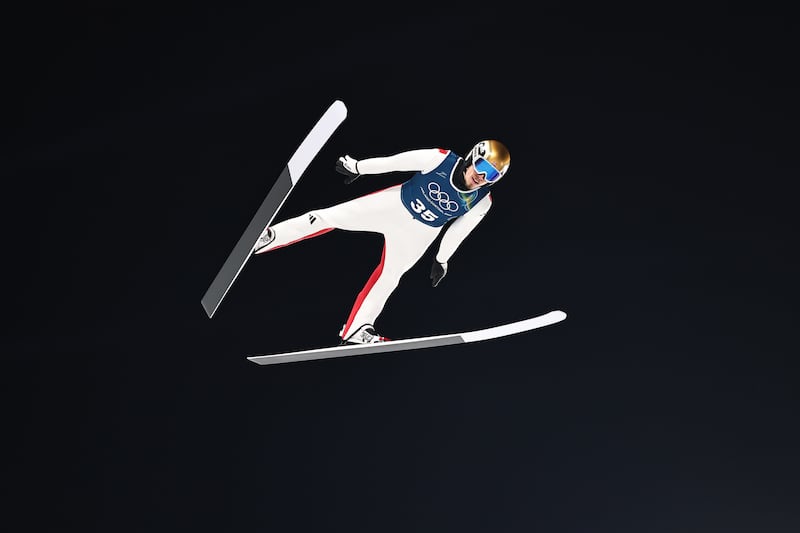
The World Anti-Doping Agency said that they would be looking into the claims, but they aren’t sure that it technically counts as doping.
“I am not aware of the details of ski jumping, and how that could improve performance,” WADA director general Olivier Niggli said at a press conference at the Milan-Cortina games.
“If anything was to come to the surface, we would look at it and see if it is doping-related. We don’t address other means of enhancing performance.”
WADA’s Polish president, Witold Bańka, appeared highly entertained by the allegations and said he would be investigating.
“Ski jumping is very popular in Poland, so I promise you I’m going to look at it,” Bańka said.
“There is no accusation of any athlete here so far at the Olympic Games,” said Sky Sports News correspondent Geraint Hughes in Milan. “Perhaps one of the more ridiculous stories we are going to get during these Games.”
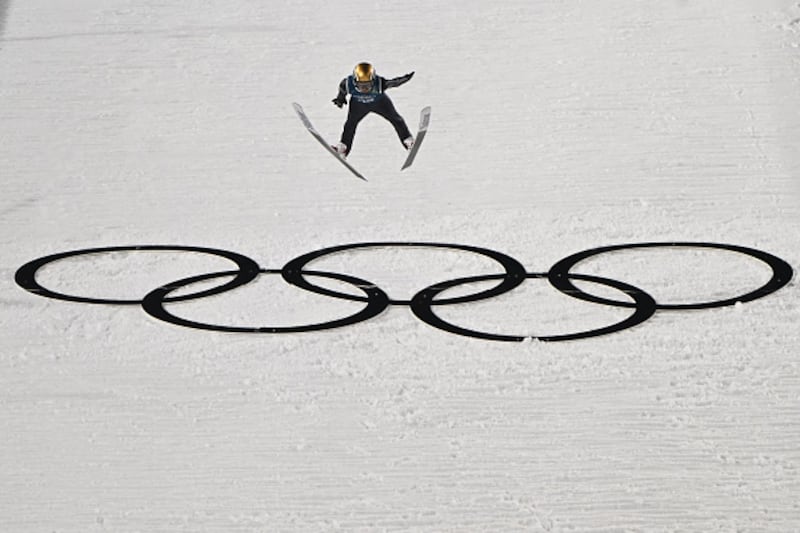
The alleged body modification is thought to have occurred during the measurements for the jumper’s outfits. In an effort to clamp down on illegal suit modification that has recently rocked the sport, 2026 Winter Olympic athletes are now subjected to a high-tech, full-body 3D scan while wearing skin-tight underwear ahead of the games. The measurements taken will determine the uniform they are given.
The International Ski and Snowboard Federation (FIS) has said that any extra fabric, particularly hanging between the legs, could give jumpers a major advantage when sailing down the slopes.
“Every extra centimeter on a suit counts. If your suit has a 5 percent bigger surface area, you fly further,” FIS ski jumping men’s race director Sandro Pertile has said.
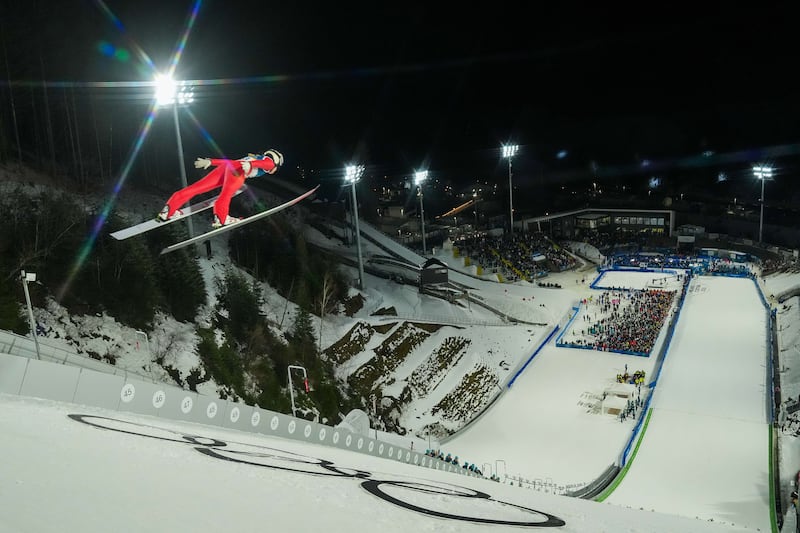
Athletes attempting to bend the rules to gain very slight advantages have such a long history in the sport of ski jumping that it is almost considered part of the game. Extra layers of gloves, weights in the shoes, and soaking their suits in hairspray to increase their stiffness have all been tried in the past.
However, the sport has come under serious scrutiny following a major cheating scandal in March of last year in which the Norwegian team was caught on camera altering their suits.

At the World Championships in Trondheim, Norway, the country’s head coach, Magnus Brevik, and assistant coach, Thomas Lobben, were seen sewing extra fabric into the crotches of their team uniforms to gain an advantage.
They, along with a third staff member, were handed 18-month suspensions while Norwegian ski jumpers Marius Lindvik and Johann André Forfang were given three-month bans and Lindvik was stripped of his silver medal.
Eager to stamp out the controversy this time around and not have what has become known as the “Penisgate” scandal detract from the main event, the FIS has overhauled its rulebook. Uniforms are now fitted with microchips, athletes are now checked before and after they jump, and a new yellow/red card system is in place to punish cheaters.
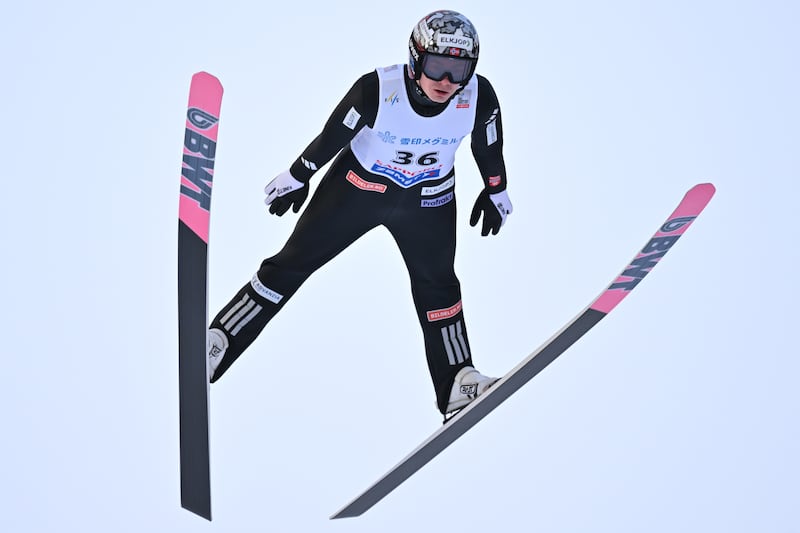
“I have a zero-tolerance policy,” FIS chief equipment controller Matthias Hafele said. “I’ve told all the teams: Don’t push to the limit. Otherwise, the probability of being disqualified is very high.”
Despite all the effort the FIS has gone to, it seems athletes are still finding ways around the rules in a way that threatens to pull focus from the events in Milan-Cortina.
The men’s long-hill solo ski jump finals will take place on Sunday, Feb. 15.