
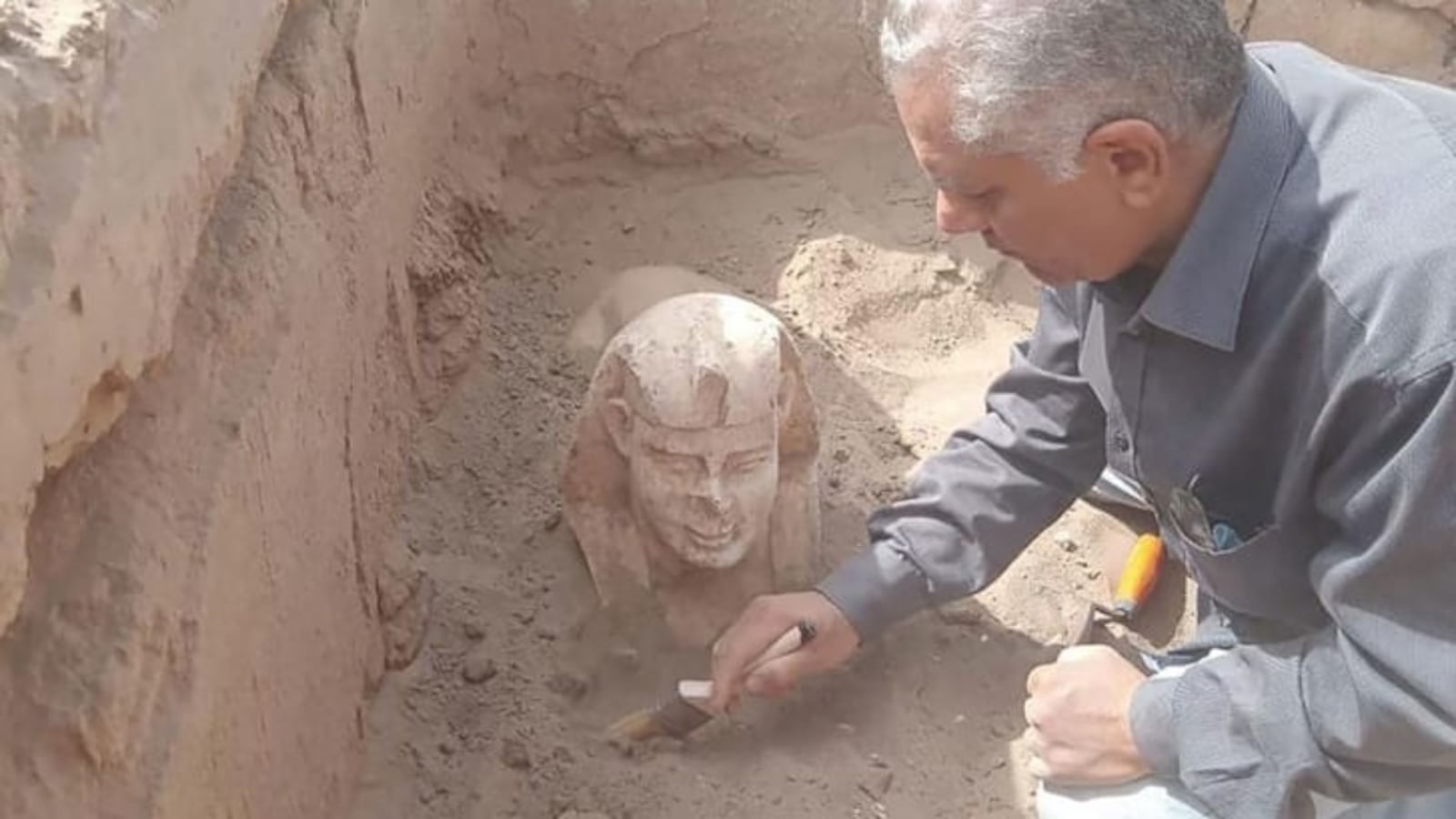
A smiling statue and the remains of a shrine on the site of an ancient temple were discovered by archaeologists in southern Egypt, authorities said Monday. The treasures were found on an excavation mission in Qena, a province 280 miles south of Cairo, Egypt’s tourism and antiquities minister said in a statement. Researchers believe the sphinx-like sculpture’s “royal facial features” may have been carved to resemble that of the Roman emperor Claudius, with the statue also bearing a nemes, or a striped headdress traditionally worn by Egypt’s pharaohs, according to CNN. Further study will be needed to determine its exact origin, however. A stela with hieroglyphic and demotic writings from the Roman era was found below the sphinx. The statue was carved out of limestone, similar to the shrine inside of which it was found. The shrine, consisting of two platforms, also housed a ladder and a mud-brick basin believed to be from the Byzantine era, the ministry said.
Read it at CNN